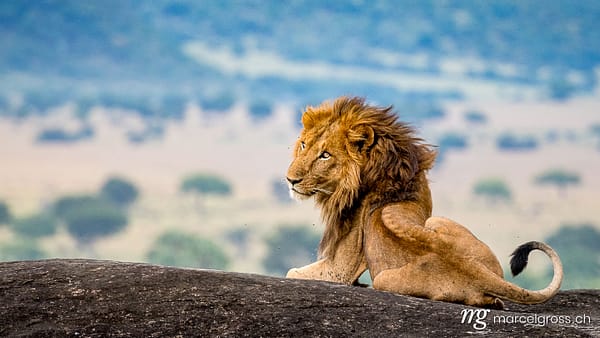
Kingfisher pictures – Alcedo atthis in Switzerland


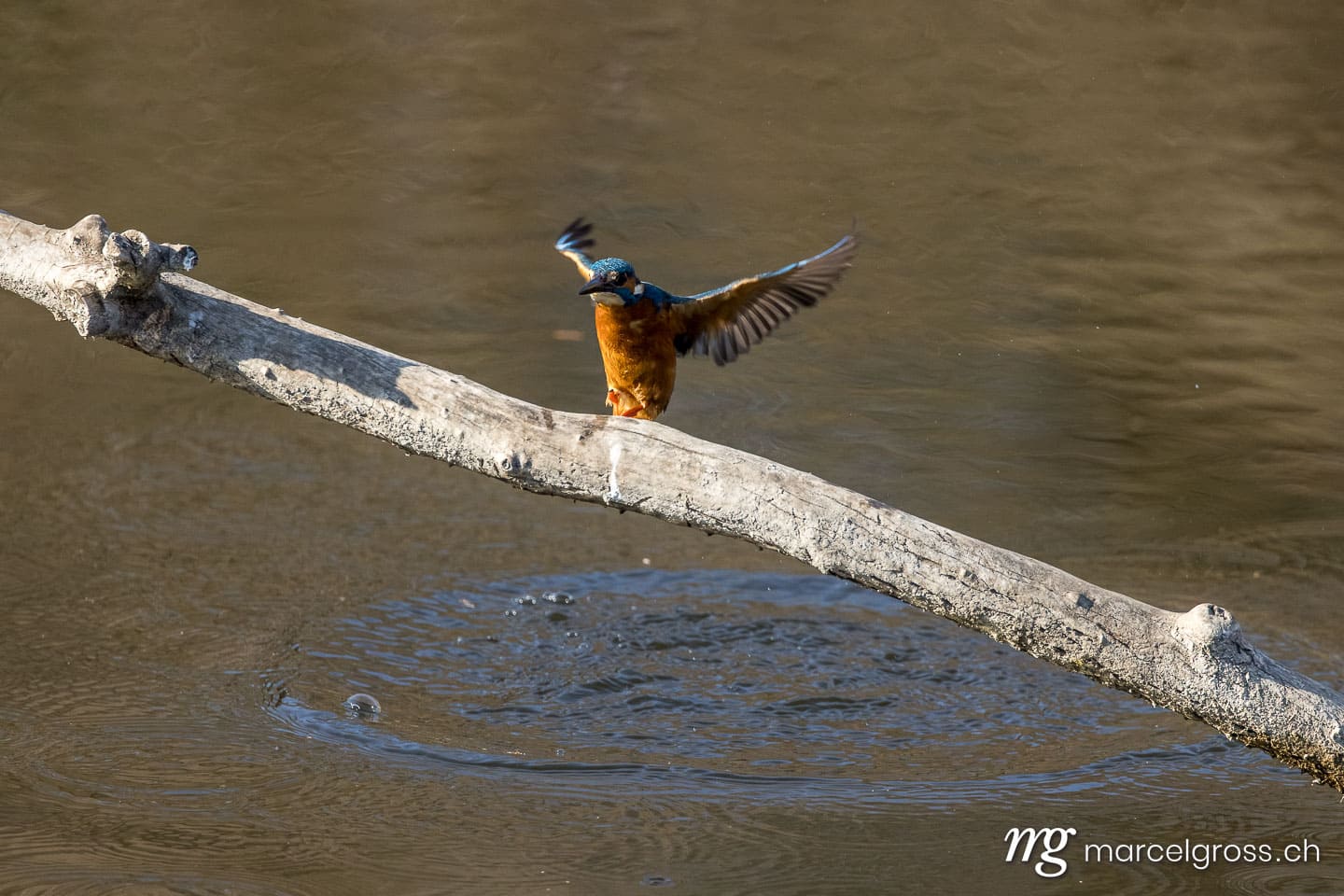


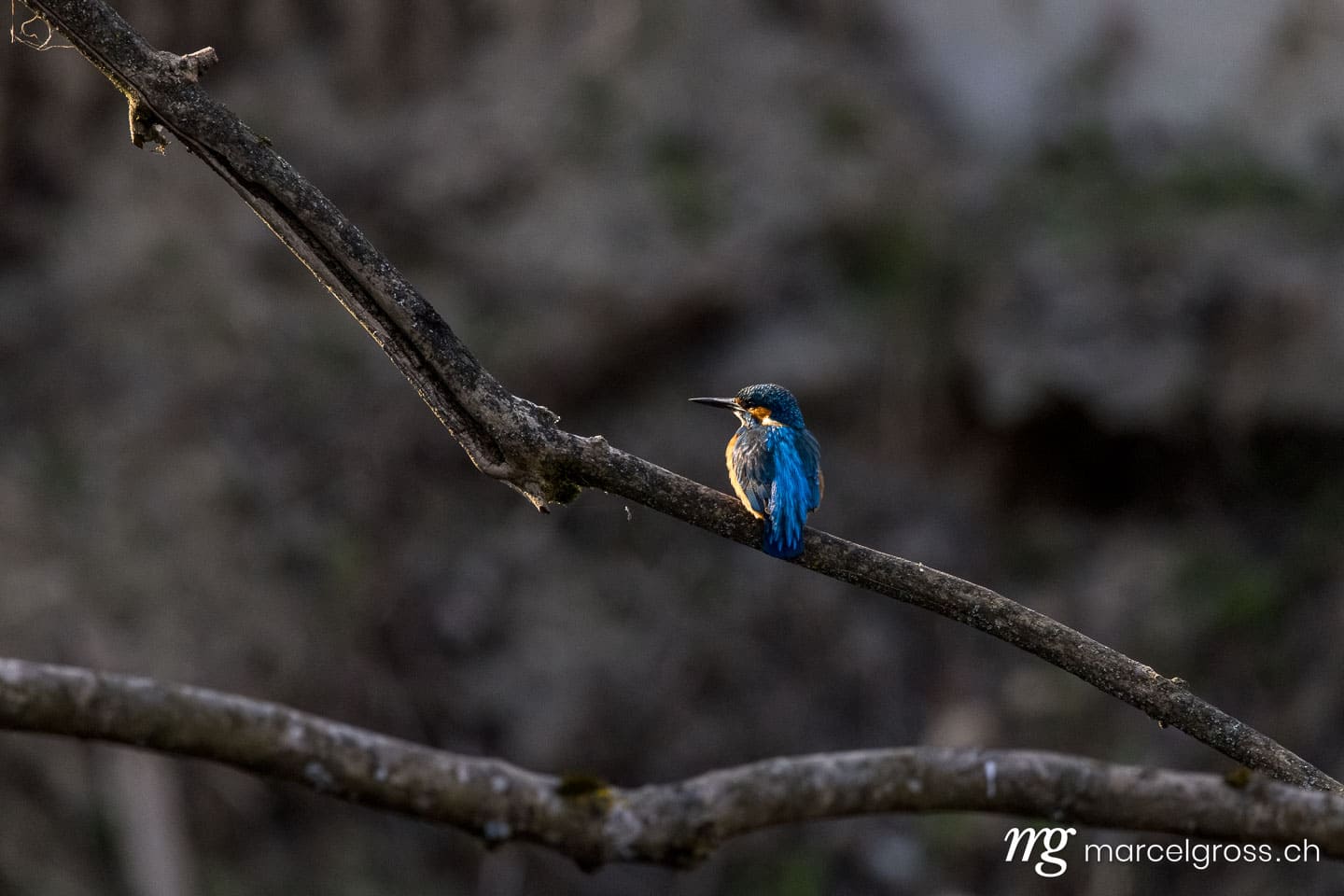
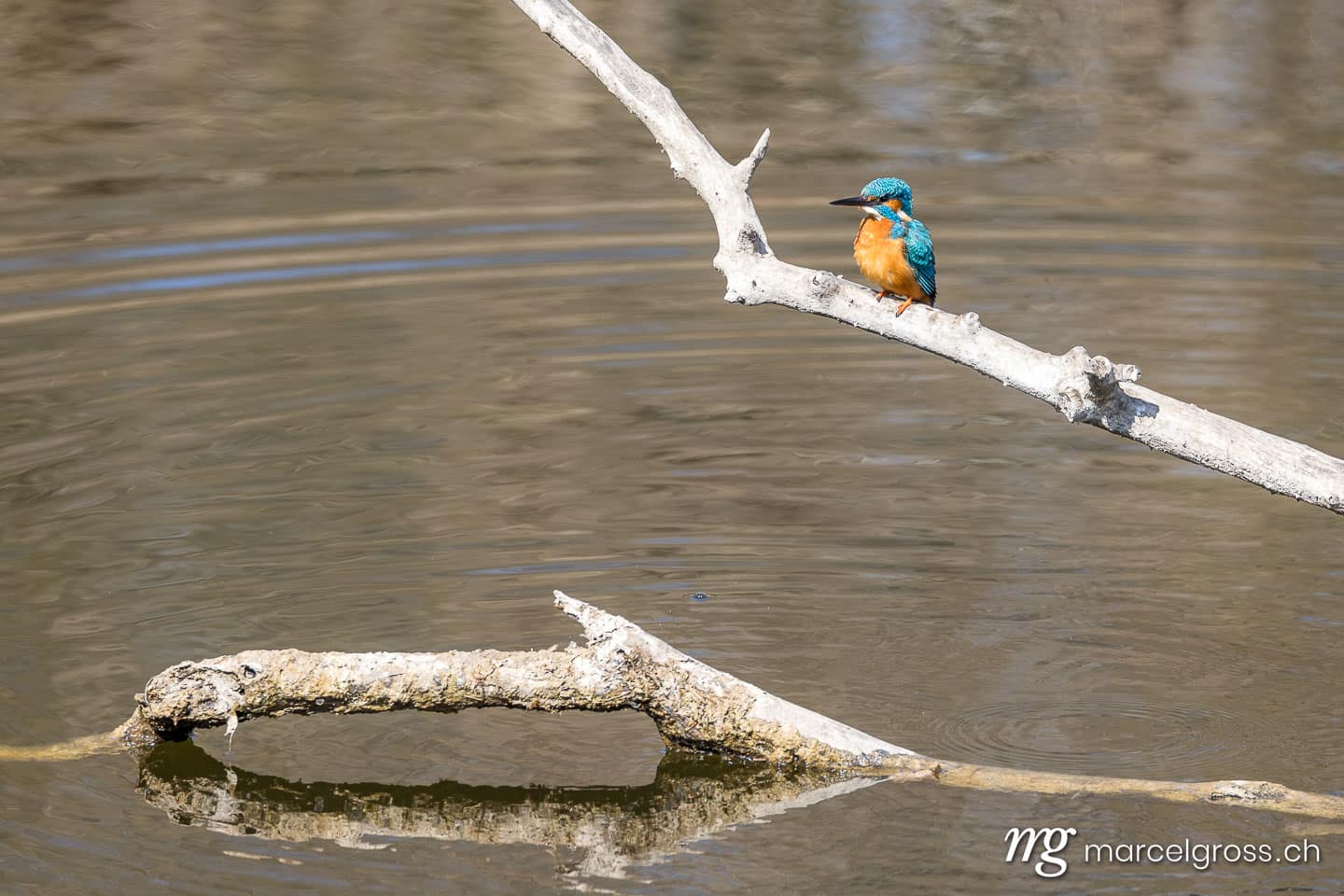
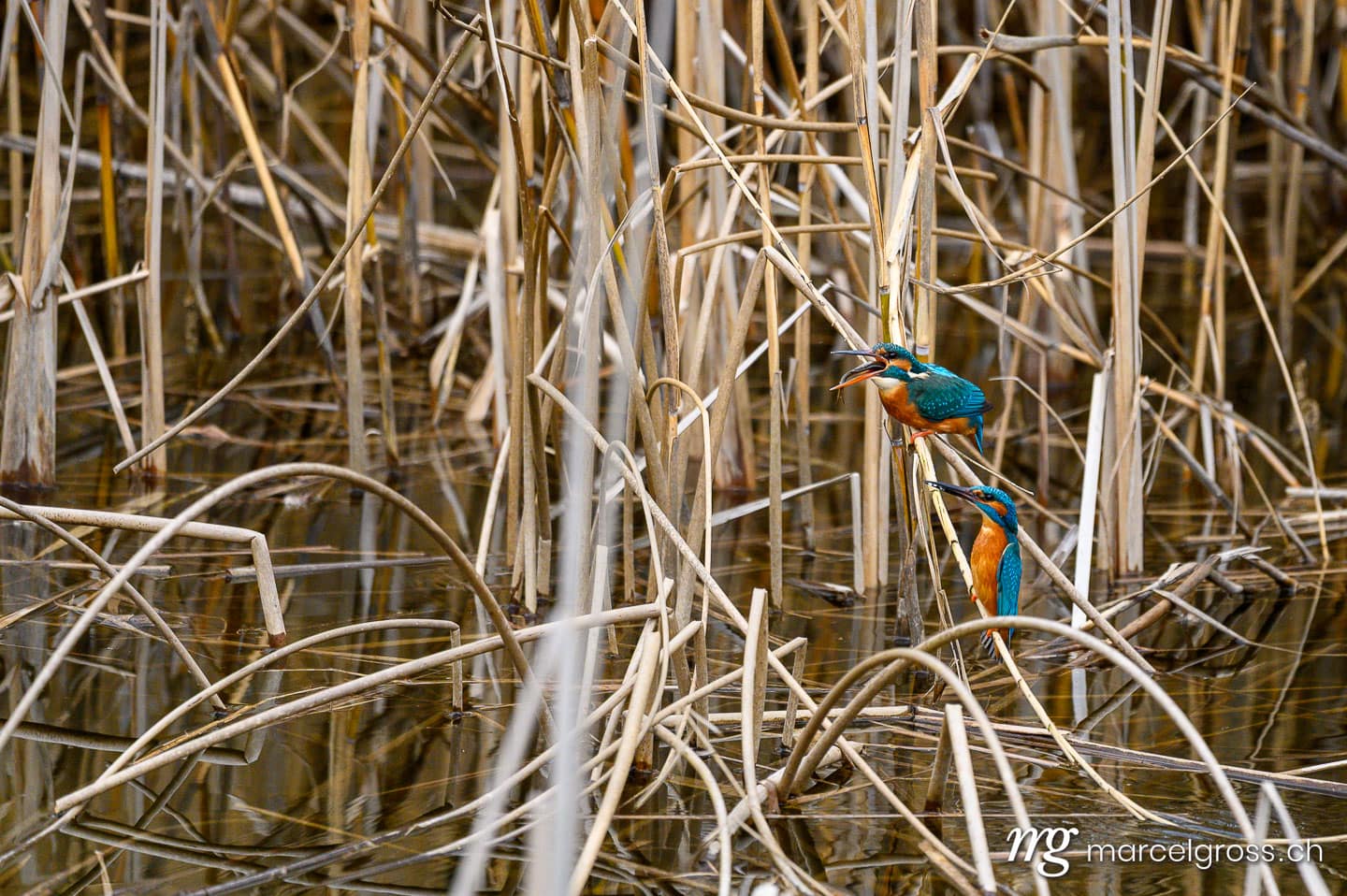
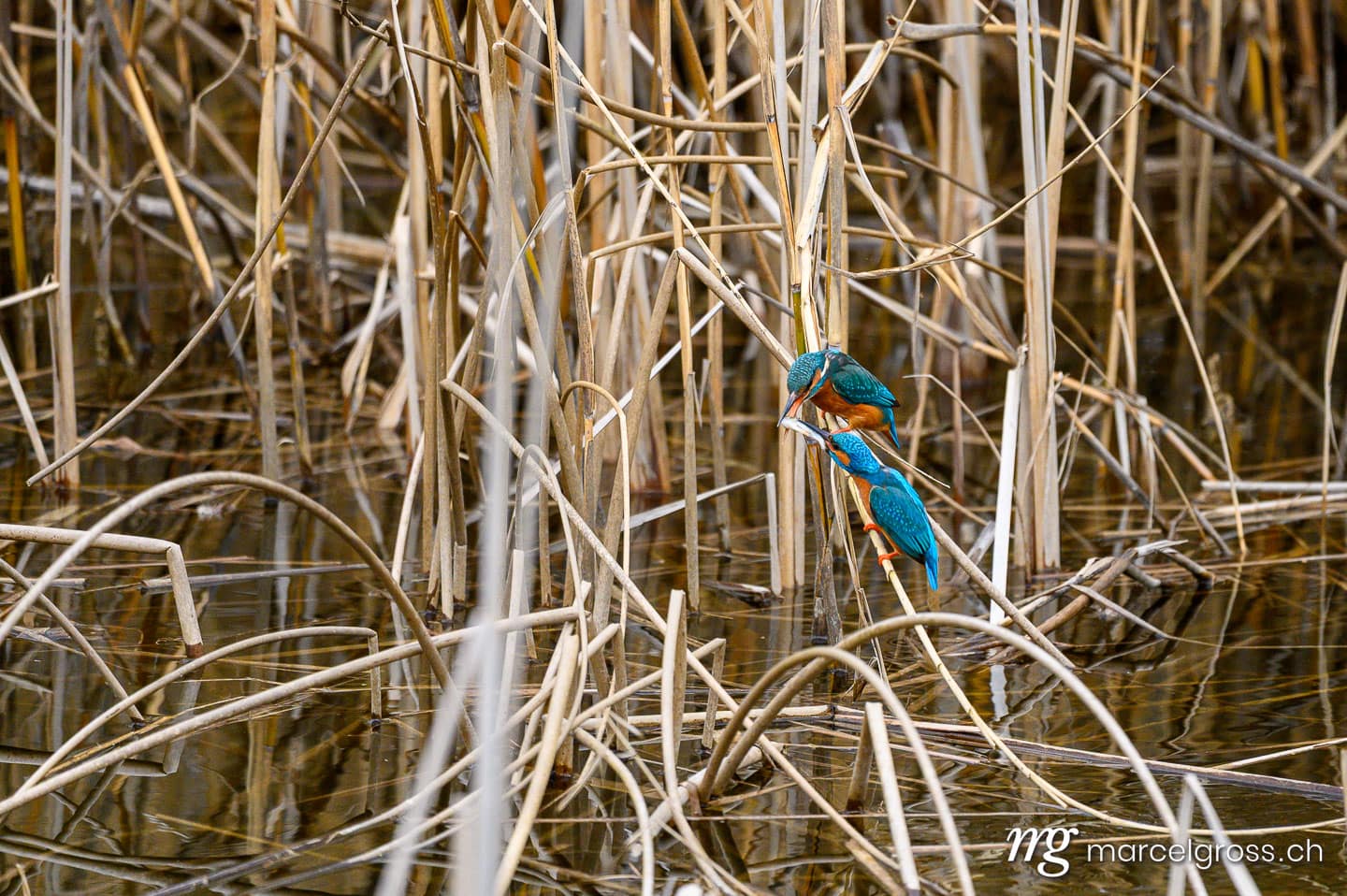
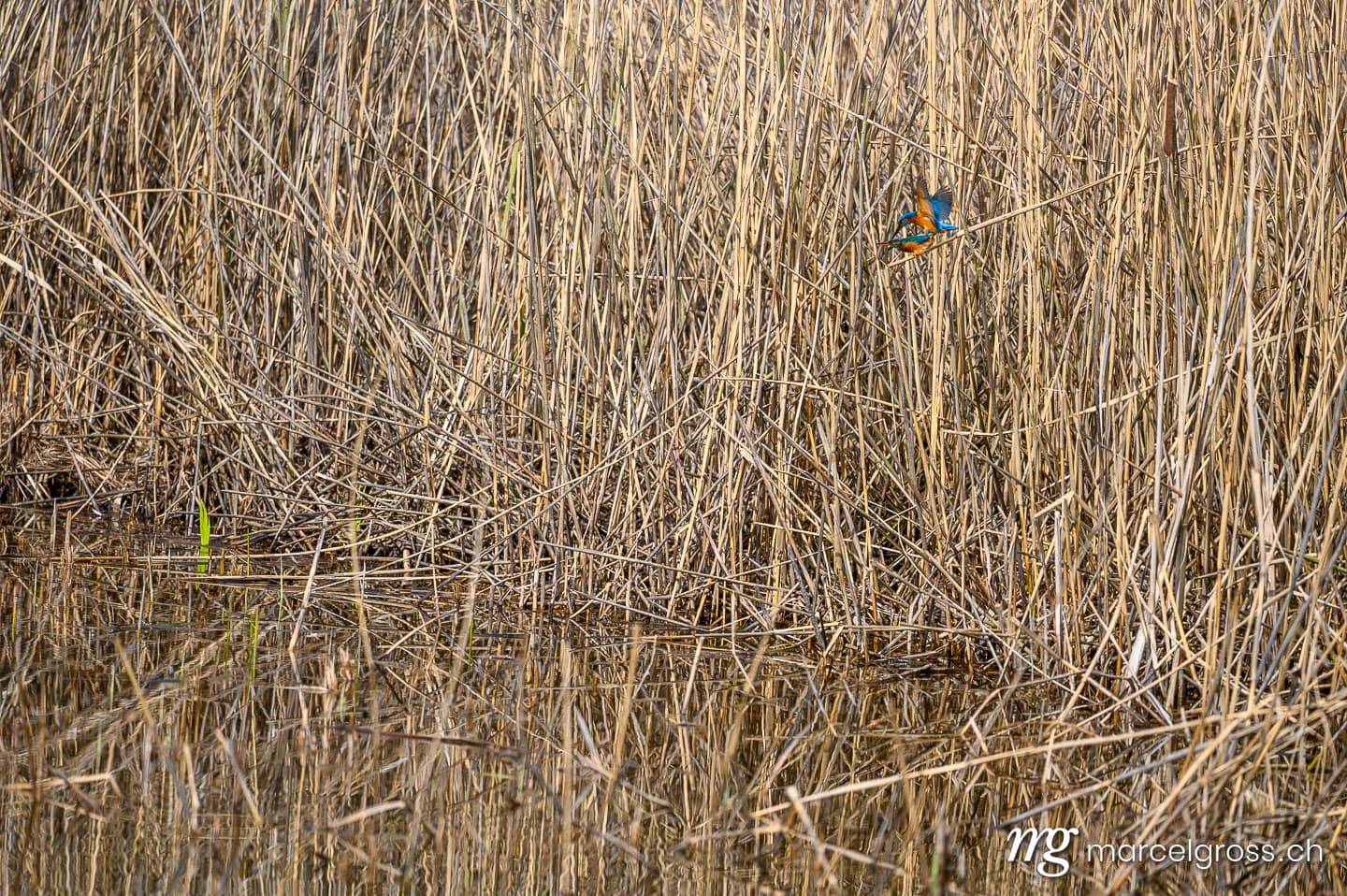

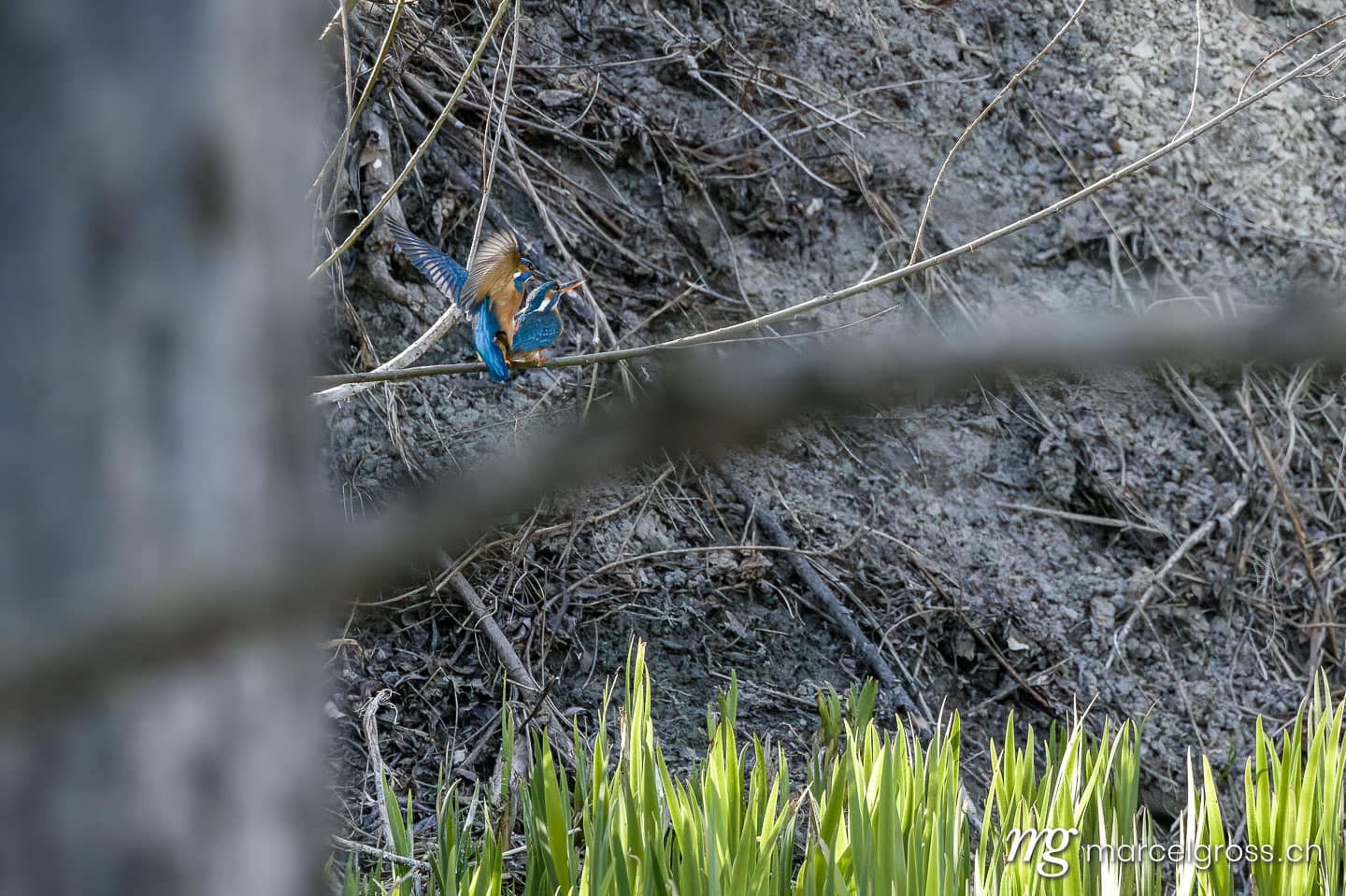
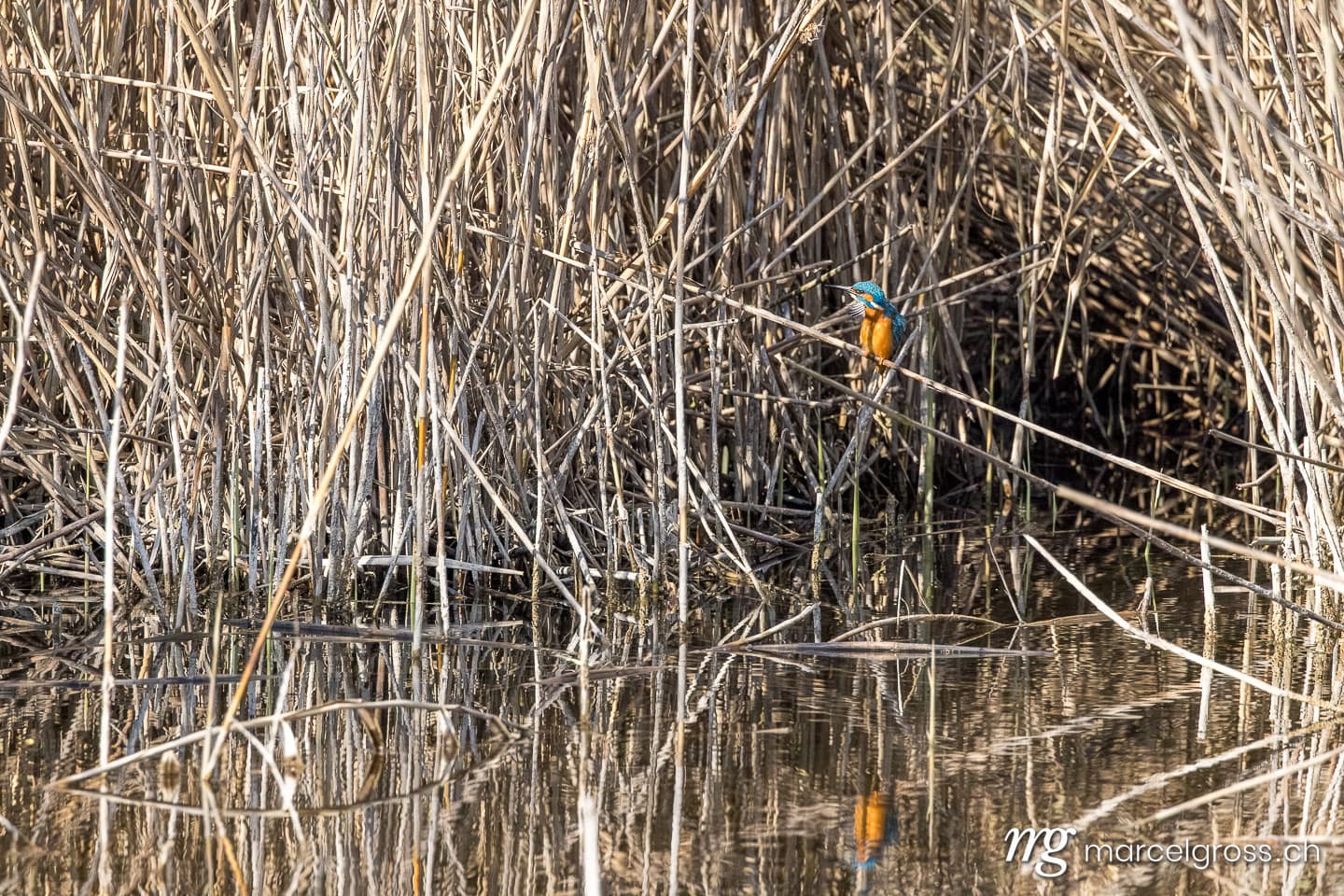
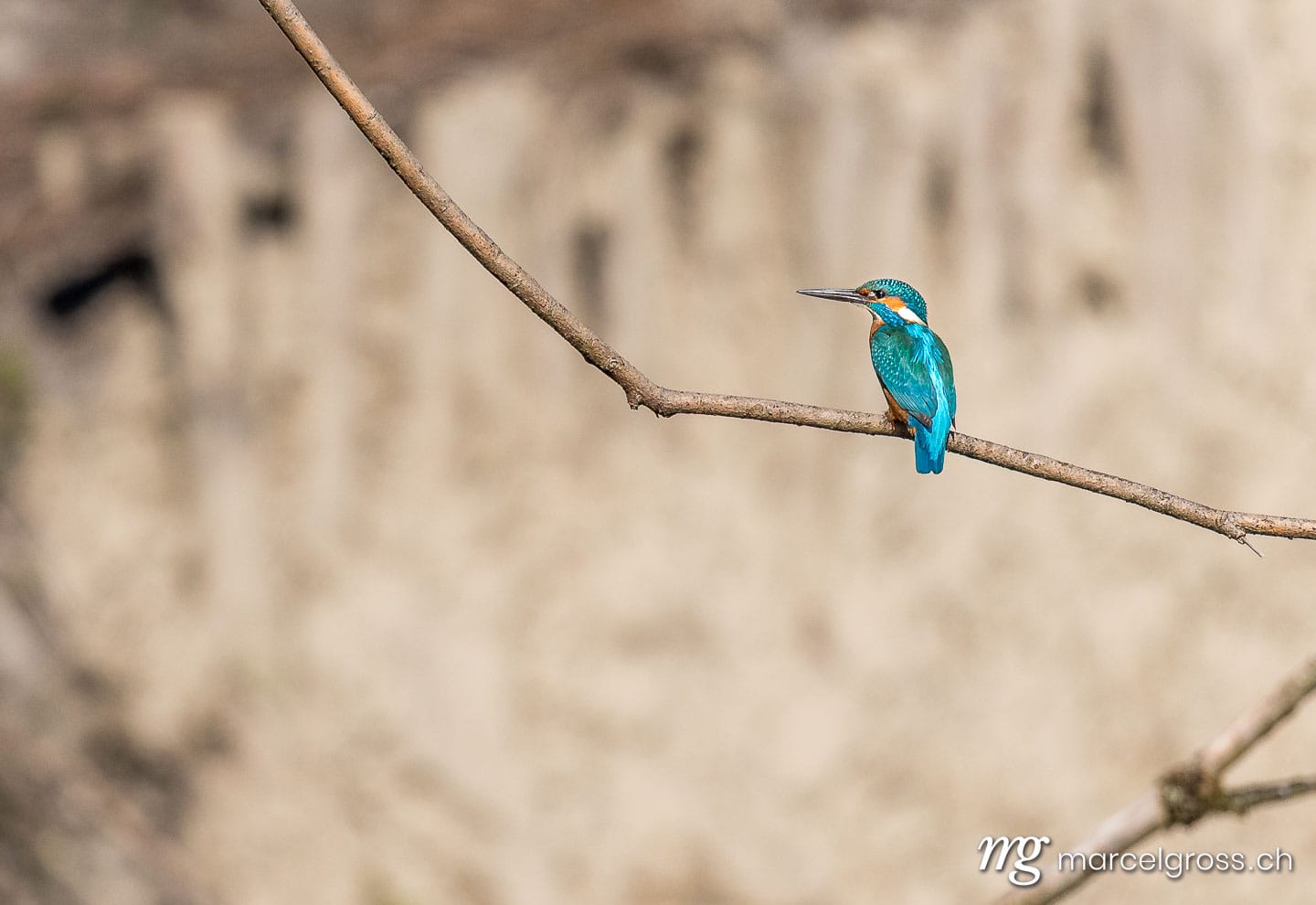


The kingfisher (Alcedo atthis) is the jewel among Swiss birds: sparrow-sized, turquoise-blue on its back, rust-red on its belly, and usually only seen as a blue flash over the water. As a nature photographer, I spend many hours silently camouflaged by bodies of water until a bird lands on its perch. Even a brief rustle or a careless movement is enough, and it's gone again. On this page you'll find my most beautiful photos. Kingfisher pictures from Switzerland, as a fine art print or wall art for your home.
Patience by the water – waiting in a hide and lightning-fast dive
The fish hunter sits on a branch or reed just above the water, watching the surface until a small fish appears. Then, in a lightning-fast dive, it strikes, seizes its prey with its beak, and flies back to its perch, where it first stuns the fish and then swallows it headfirst. Getting a good picture requires camouflage, quiet, and plenty of time, as this shy bird notices every movement.
Alcedo atthis – flying jewel of Swiss waters
The kingfisher, or Alcedo atthis as it is scientifically known, is striking in its plumage: its crown and back shimmer blue to turquoise-green depending on the light, while its underside glows a rusty red. This coloration arises from the structure of the feathers, not from pigments, which is why it changes with the angle of the light. Males and females differ primarily in their beaks: in females, the lower mandible is orange-red at the base, while in males it is black. It is precisely this effect that I try to capture in my kingfisher photographs.
Blue flash over the stream – gemstone in motion
In flight, the small bird usually skims just above the water's surface, swiftly and almost in a straight line. Often, all that remains is a blue streak and a high-pitched, piercing whistle. With rapid wingbeats, it reaches a remarkable speed, often following the course of the water. Capturing these moments requires preparation, experience, and a bit of luck.
Kingfisher in the Seeland region and along the Aare River – fish hunters in clear waters
Kingfishers need clear, fish-rich water with perches and steep banks. In the Seeland region and the Swiss Plateau, they find such habitats along streams, canals, and lake shores, as well as along the Aare River between Bern and Thun. Where gravel bars, willow thickets, and deadwood are preserved along the banks, the birds find food, cover, and suitable nesting sites. Out of respect for these shy birds, I will not specify exact locations.
Blue against a calm background – minimalist kingfisher images
When the background softly blurs into green or gray, the bird stands alone on the scene. Such serene kingfisher images work particularly well in living spaces because the turquoise of its plumage becomes the sole accent color. A minimalist composition with ample space around the bird allows the colors to shine and complements modern, light-colored furnishings as well as dark walls.
Nesting burrow and territory – interesting facts about the kingfisher
Kingfishers dig their nesting burrows, 50 to 90 centimeters long, into steep banks of clay or sand. Breeding begins in late March or April; six to seven chicks are normal, and second broods are common. Both parents incubate the eggs and feed the young with small fish. Males establish their territories by February at the latest. Harsh winters with frozen waterways can severely decimate the population because the birds cannot hunt fish without open water. Restoring natural riverbanks helps the populations recover.
Kingfisher photos as fine art prints – wall decorations featuring the jewel of the waters
All designs are available as high-quality prints. A fine art print brings color and life to any room, whether as a small print in the hallway or as a large statement piece in the living room. The vibrant turquoise of the plumage adds a striking accent to tranquil spaces. Take a look at the Webshop or write to me if you are looking for an image in a specific format.
A notice: All photos are taken with respect for the animals. These birds' breeding grounds are very sensitive to disturbance; please always keep a safe distance from bodies of water and stay on the paths.