Cheetah pictures – Africa's fastest hunters



Cheetahs in the Serengeti, Namibia, Tarangire, Kgalagadi and Kruger National Park
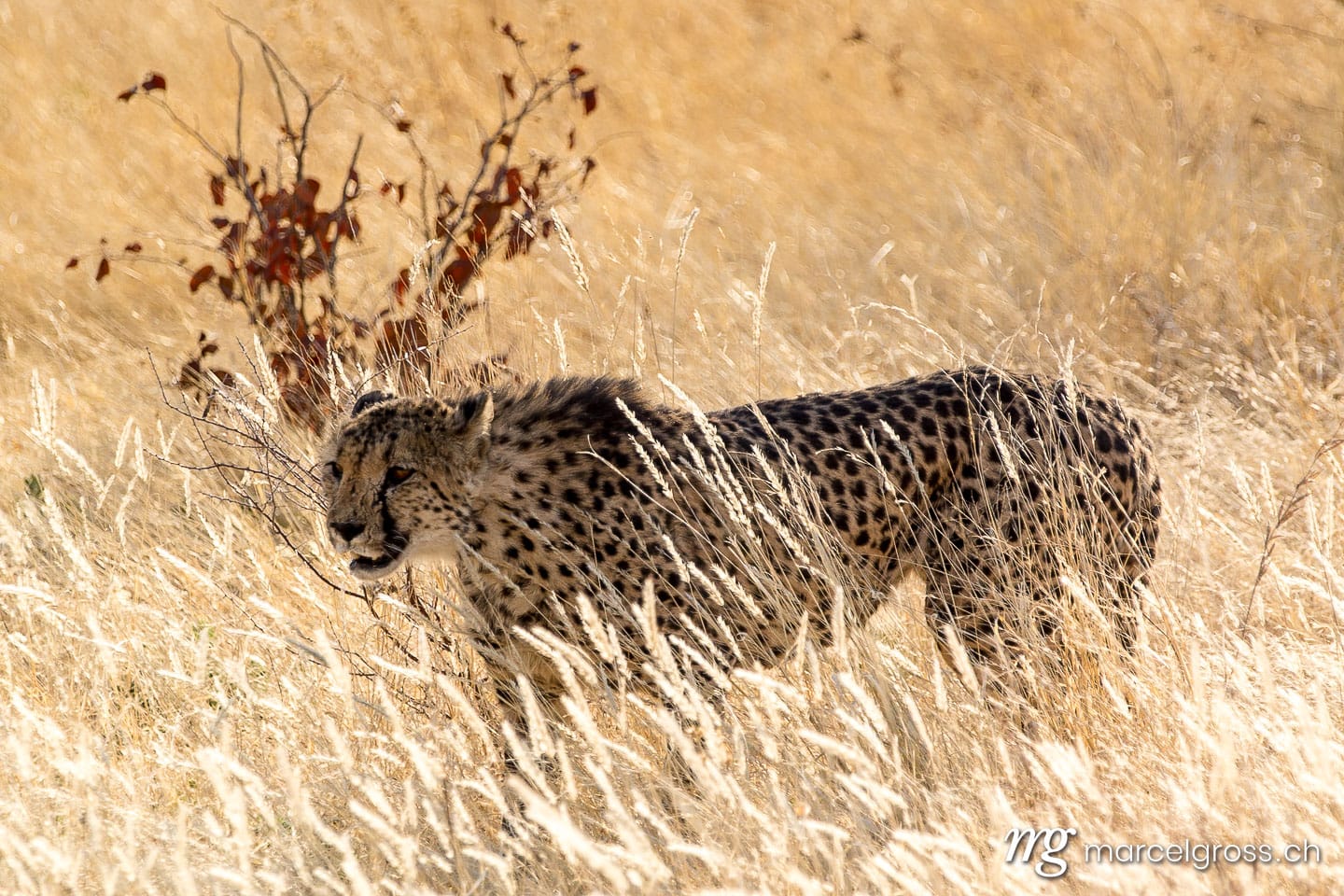
The Cheetah (Acinonyx jubatus) The cheetah is the fastest land mammal on Earth, reaching speeds of up to 120 km/h over short distances. Its slender build, long legs, small head, and characteristic black tear stripes make it unmistakable. No other big cat is as perfectly adapted to hunting in open landscapes as the cheetah.
Unlike lions or leopards, the cheetah doesn't rely on strength, but on speed, acceleration, and agility. It is precisely this elegance that makes it one of Africa's most fascinating big cats for many nature photographers. The ones shown here Cheetah pictures originated during safaris in Tanzania, Namibia and South Africa.
The Cheetah – Evolutionary Perfection
With its streamlined body, the cheetah is perfectly adapted for hunting on open savannas. It accelerates faster than a sports car in just a few seconds, reaching speeds unmatched by any other land mammal. Its preferred prey consists of gazelles, impalas, and other medium-sized antelopes.
Because cheetahs are significantly lighter in build than lions or leopards, they must eat their prey as quickly as possible. Hyenas, lions, or jackals often try to steal their hard-earned meal. This regularly leads to thrilling scenes in the African wilderness.
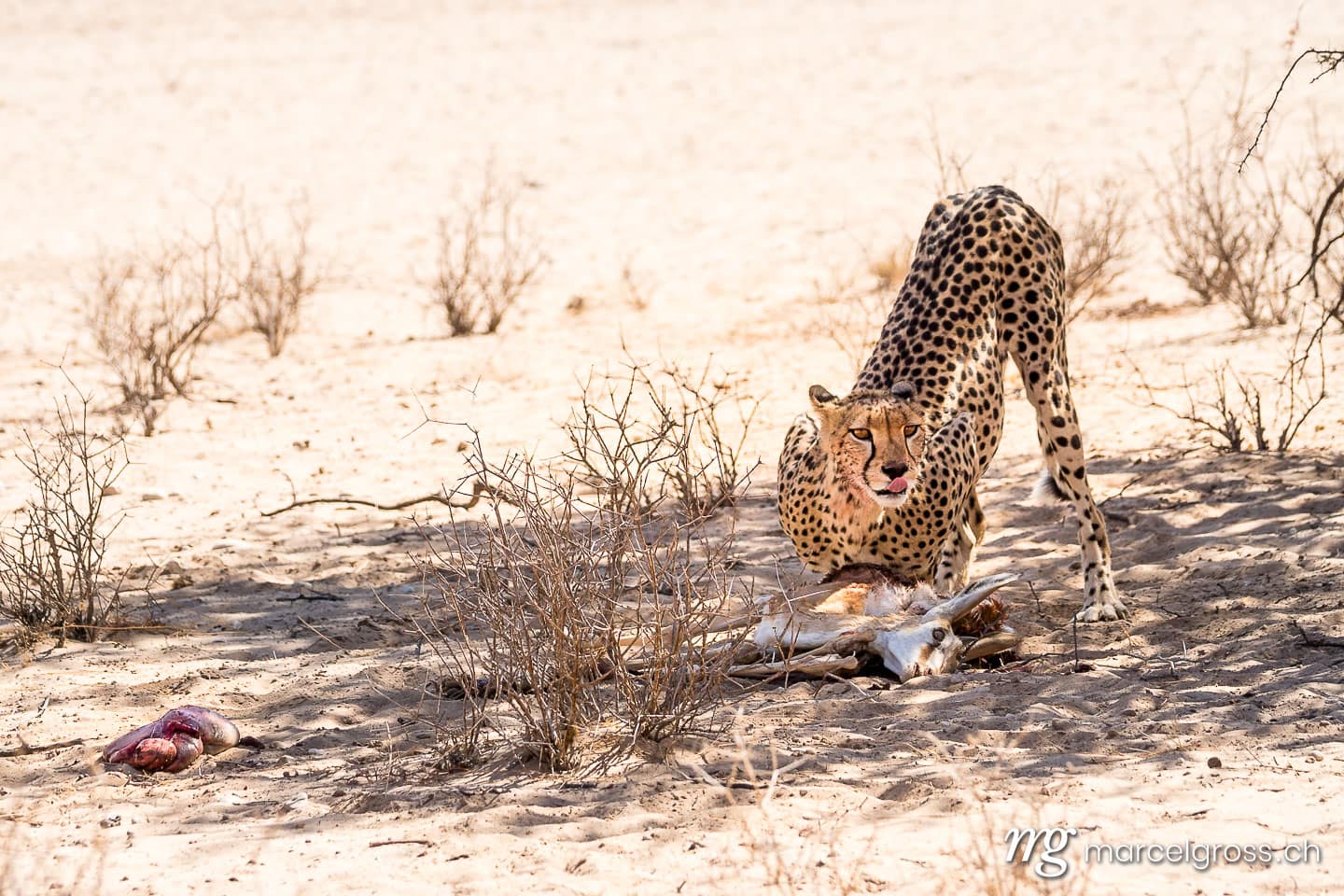
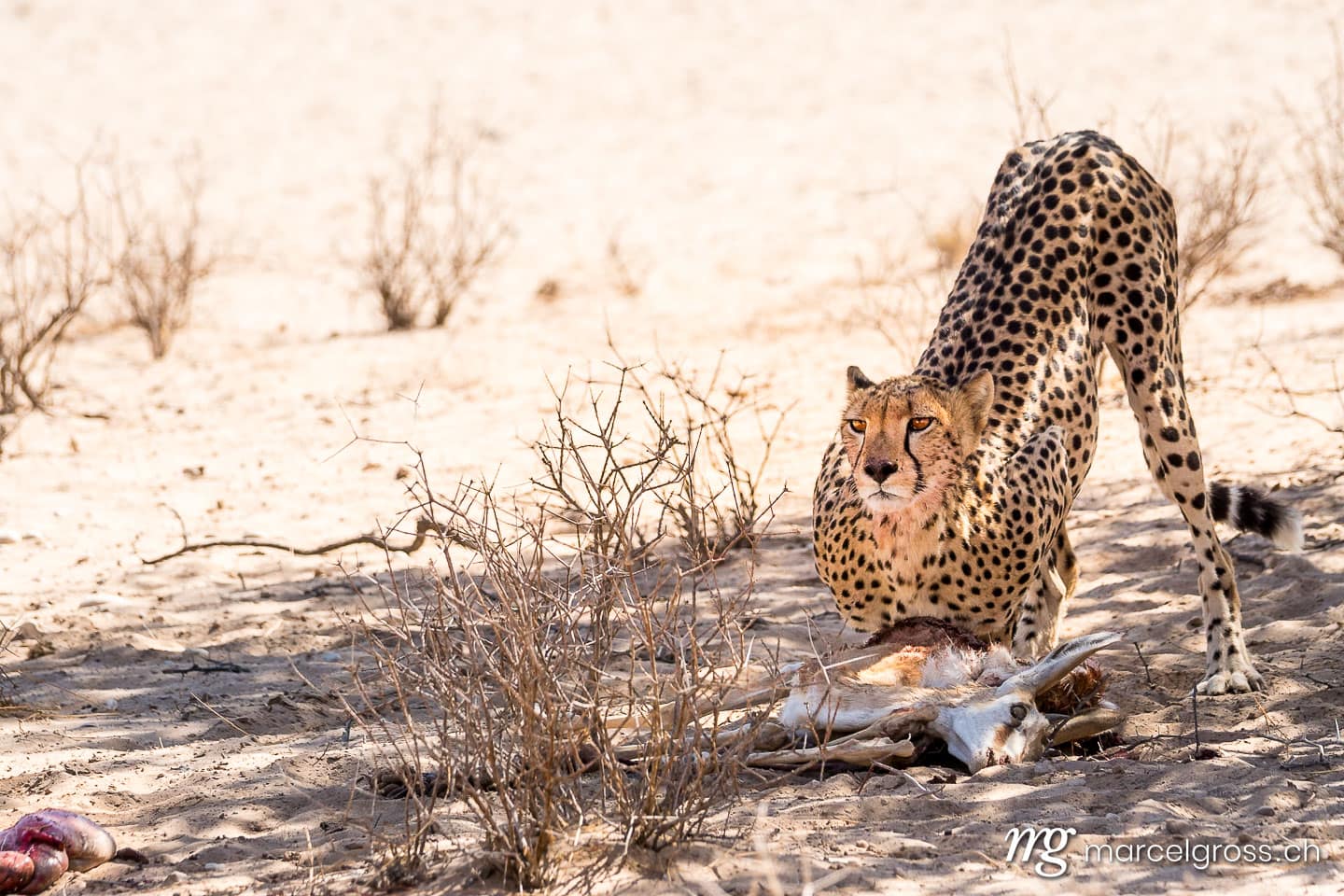
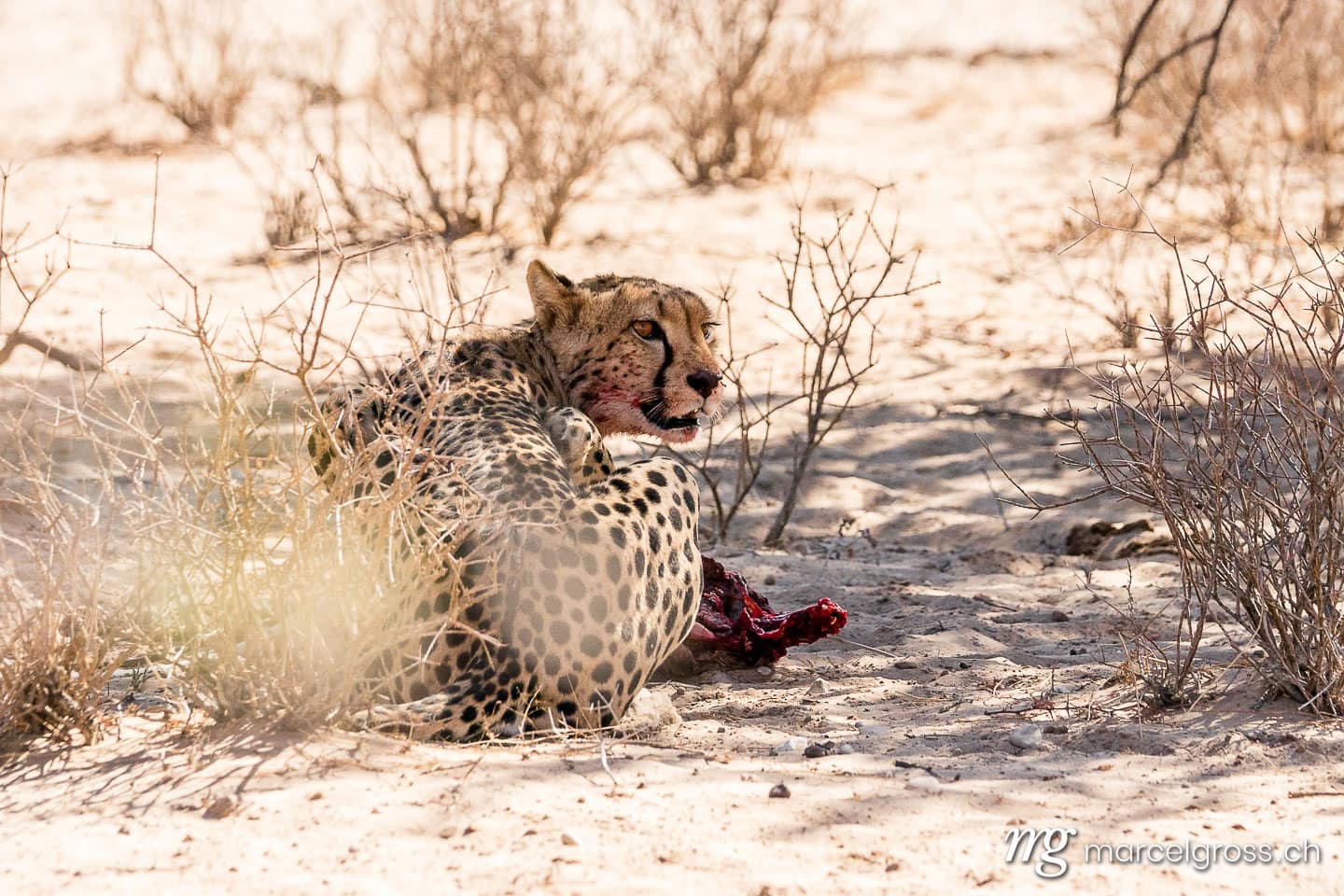
Kgalagadi – Cheetah killed in the Kalahari
One of my most impressive cheetah sightings was an encounter in Kgalagadi Transfrontier Park On the border between South Africa and Botswana. The red dunes of the Kalahari, the golden light, and the vast plains are among the most beautiful landscapes in Africa for wildlife photography.
Here I was able to find Cheetahs on a fresh kill Observe. While the hunter attentively kept an eye on his surroundings, the red earth of the Kalahari provided a spectacular backdrop. Such moments vividly illustrate the challenges of survival in the African wilderness and are among the most impressive subjects in cheetah photography.
Namibia – Cheetahs in the land of the largest wildlife population
Namibia is considered the heartland of the cheetah: it is home to the largest remaining population of wild cheetahs in the world. The vast savannas and thornbush landscapes offer these swift hunters precisely the open space they need for hunting.
It is remarkable that around 90 percent of Namibian cheetahs live outside of protected areas, primarily on farmland. Consequently, the animals are very shy, and sightings are rare and often only possible with great patience.
Cheetahs and farmland – protection and coexistence in Namibia
Because cheetahs occasionally prey on livestock, conflicts with farmers repeatedly arise on farmland. The Cheetah Conservation Fund has been researching Namibia's cheetahs since 1991 and is searching for ways in which livestock farming and predator conservation can coexist.
Tarangire – A cheetah mother with two almost fully grown cubs
The Tarangire National Park Tanzania is primarily known for its huge elephant herds and mighty baobab trees. Cheetahs are also regularly sighted here.
The encounter with a Cheetah mother and her two almost fully grown cubs. The two siblings attentively followed their mother across the savanna, learning the skills they would need for a later life as independent hunters. Such family scenes are among the most emotional moments of a safari and offer unique insights into the behavior of these fascinating big cats.
Serengeti – Two brothers in the endless plains of Africa
The world-famous Serengeti It is one of the best places in the world to observe cheetahs. The open grasslands offer ideal conditions for these swift hunters and often allow for excellent sightings. The Serengeti Cheetah Project has been studying the cheetahs of this ecosystem since 1974.
Here I saw two fully grown adults Cheetah brothers I photographed them roaming the savanna together. Such so-called coalitions of brothers are relatively common among male cheetahs and increase the chances of successful hunts as well as the defense of a territory. With their attentiveness and synchronicity, the two animals provided some of my most beautiful cheetah photographs ever.
Hunting on the plains – How cheetahs survive in the Serengeti
Cheetahs hunt during the day in the Serengeti, largely avoiding the nocturnal lions and hyenas. They stalk prey such as Thomson's gazelles on termite mounds and rocky outcrops, known as kopjes, relying on their excellent eyesight.
Females are solitary and raise their young alone. Mortality among the cubs is high, as they are preyed upon by lions and hyenas. This makes every quiet observation of these predators on the vast plains of East Africa all the more rewarding.
Kruger National Park – Cheetahs in the heart of South Africa
Besides lions, leopards and wild dogs, the famous Kruger National Park a healthy cheetah population. Although cheetahs are observed here much less frequently than in the open plains of East Africa, exciting sightings are still made along the open savannas and grasslands of the park.
Precisely because cheetah encounters are less frequent in Kruger National Park, every sighting is particularly memorable. The combination of African wilderness, diverse landscapes, and impressive biodiversity makes the park one of the world's most famous safari destinations.
Why cheetahs fascinate nature photographers
Few other big cats combine elegance, speed, and grace as impressively as the cheetah. Whether perched on a termite mound, stalking across the savanna, or engaged in a high-speed hunt, cheetahs are among the most fascinating subjects in African wildlife photography.
Their slender appearance, striking facial features and often surprisingly calm behavior enable exceptional animal portraits and emotional nature shots.
My cheetah pictures for your home
A selection of my most beautiful Cheetah pictures You'll find them in this gallery. The photographs were taken in Tanzania, Namibia, and South Africa and show Africa's fastest hunters in some of the continent's most spectacular landscapes.
You are welcome to contact me. to contact, if you would like to order one of my photos as a high-quality wall art print on canvas, Alu-Dibond, poster or acrylic glass for your home, office or as a special gift.