Bearded Vulture Pictures – Gypaetus barbatus in the Swiss Alps
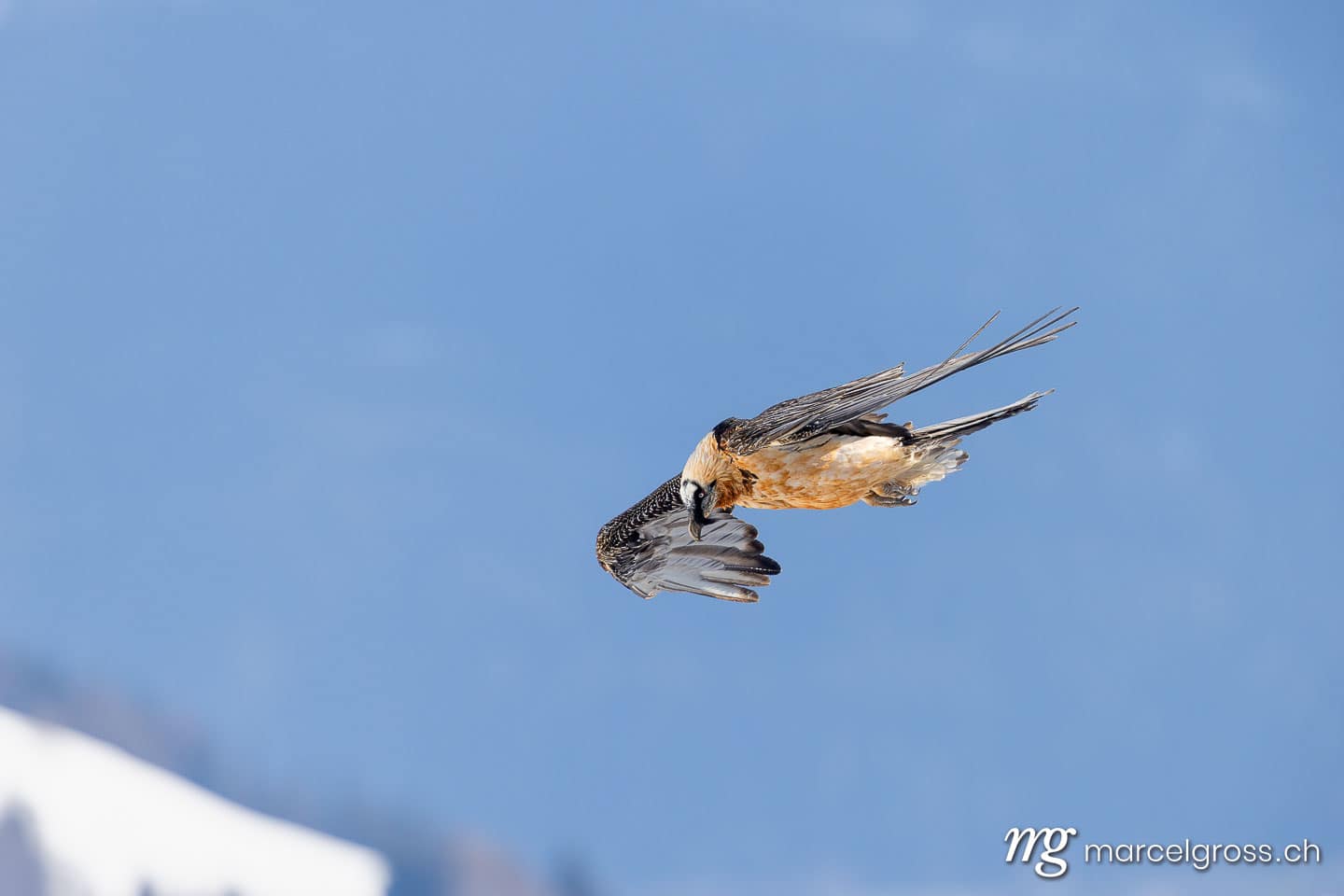


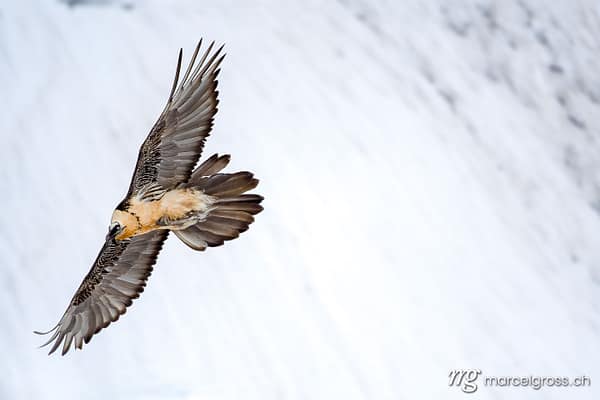
The bearded vulture (Gypaetus barbatusThe bearded vulture (also known as the lammergeier) is the largest bird in the Alps and, with a wingspan of up to three meters, an unforgettable sight in the sky. Here you'll find my most beautiful photos. Bearded vulture pictures from the Bernese Oberland, the Gemmi Pass and the Swiss National Park as fine art prints.
Lamb vultures in the Kiental valley – Bearded vultures in the Bernese Oberland
In the Kiental valley Bernese Oberland Over the years, I encountered the bearded vulture repeatedly by chance. The remote valley, with its rock faces and open slopes, offers the large bird precisely the space it needs for soaring. Such encounters cannot be planned and therefore remain particularly memorable.
Gypaetus barbatus at the Lämmerenhütte – Bearded Vulture at the Gemmi Pass
Near the Lämmerenhütte mountain hut in the Gemmi area near Leukerbad, our paths crossed again by chance. With a wingspan of up to three meters, the bearded vulture glides almost silently along the rock faces, using the updrafts. Anyone wishing to observe it here needs above all patience and a keen eye for the sky.
Gemmi Pass – historic crossing between Kandersteg and Leukerbad
The Gemmi Pass (2314 m) connects Kandersteg in the Bernese Oberland with Leukerbad in Valais. As early as 800 AD, Alemanni crossed the higher-lying Old Gemmi Pass into central Valais. The current route was blasted into the rock face between 1739 and 1741 by the Tyrolean Anton Lung and his team of builders; without him, the Gemmi Pass would be impassable.
Return of the Bearded Vulture – Reintroduction to the Swiss National Park
The bearded vulture was eradicated from the Alps at the end of the 19th century, but reintroduction efforts began in 1986. The first bearded vultures were released into the wild in the Engadine region of the Swiss National Park in 1991. Today, wild-born pairs breed again in the Alps, and the National Park has been the oldest protected area in the Alps since 1914.
Bone eaters of the Alps – lifestyle and wingspan of the bearded vulture
The bearded vulture feeds primarily on the bones of dead animals, which make up the bulk of its diet. Weighing five to seven kilograms and with a wingspan of up to three meters, it is a giant among Alpine birds. It lays its eggs between December and February, and the incubation period lasts 52 to 58 days.
Bearded vulture photos as fine art prints – wall art from the Alps
All the motifs of my bearded vulture pictures are available as high-quality wall art in the Webshop Available now. Bring the king of the skies of the Alps home.
A notice: All photos and videos are taken with respect for the animals. Please always keep a safe distance from breeding grounds.