Rock ptarmigan pictures – Lagopus muta in the Swiss Alps
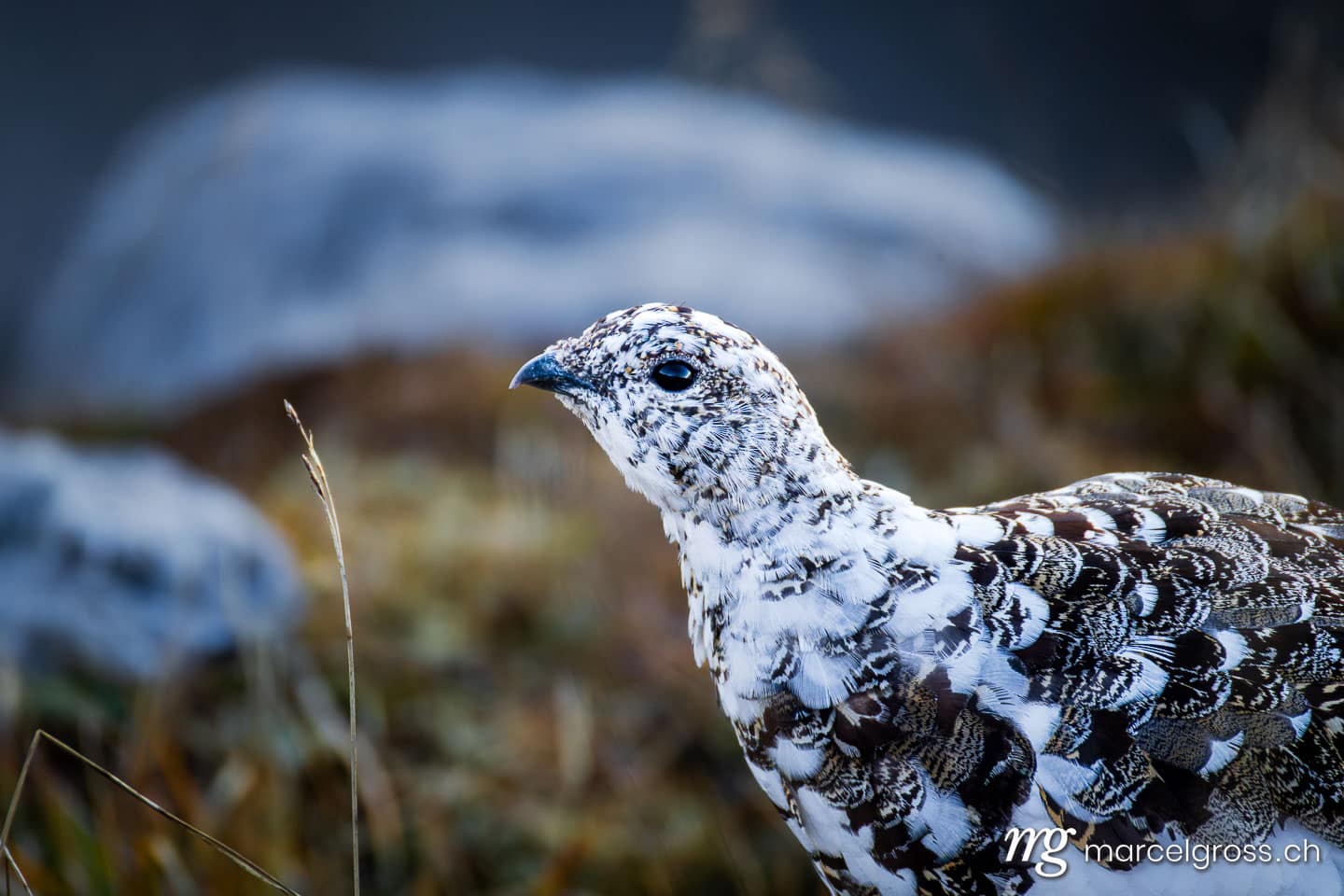
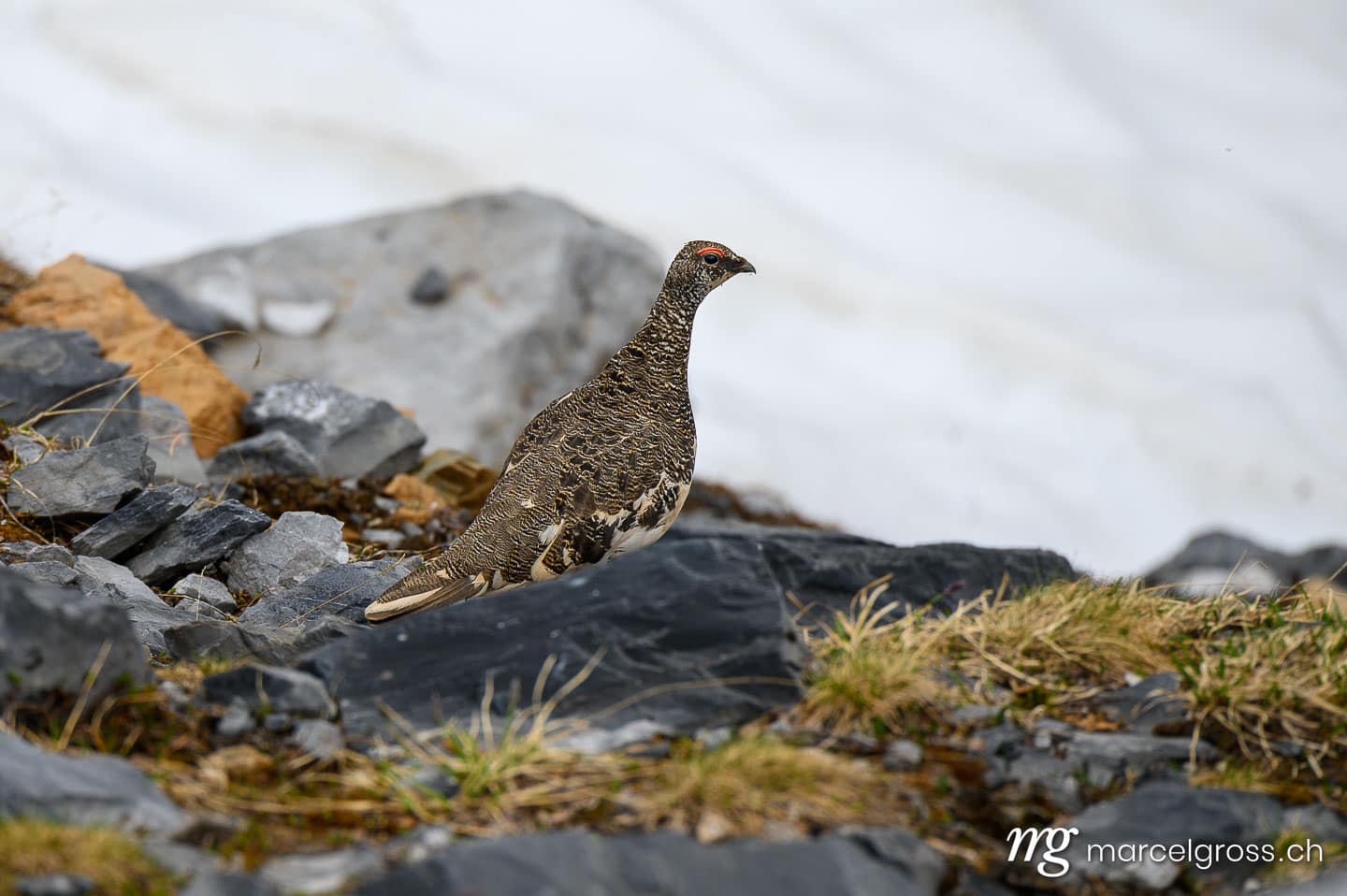
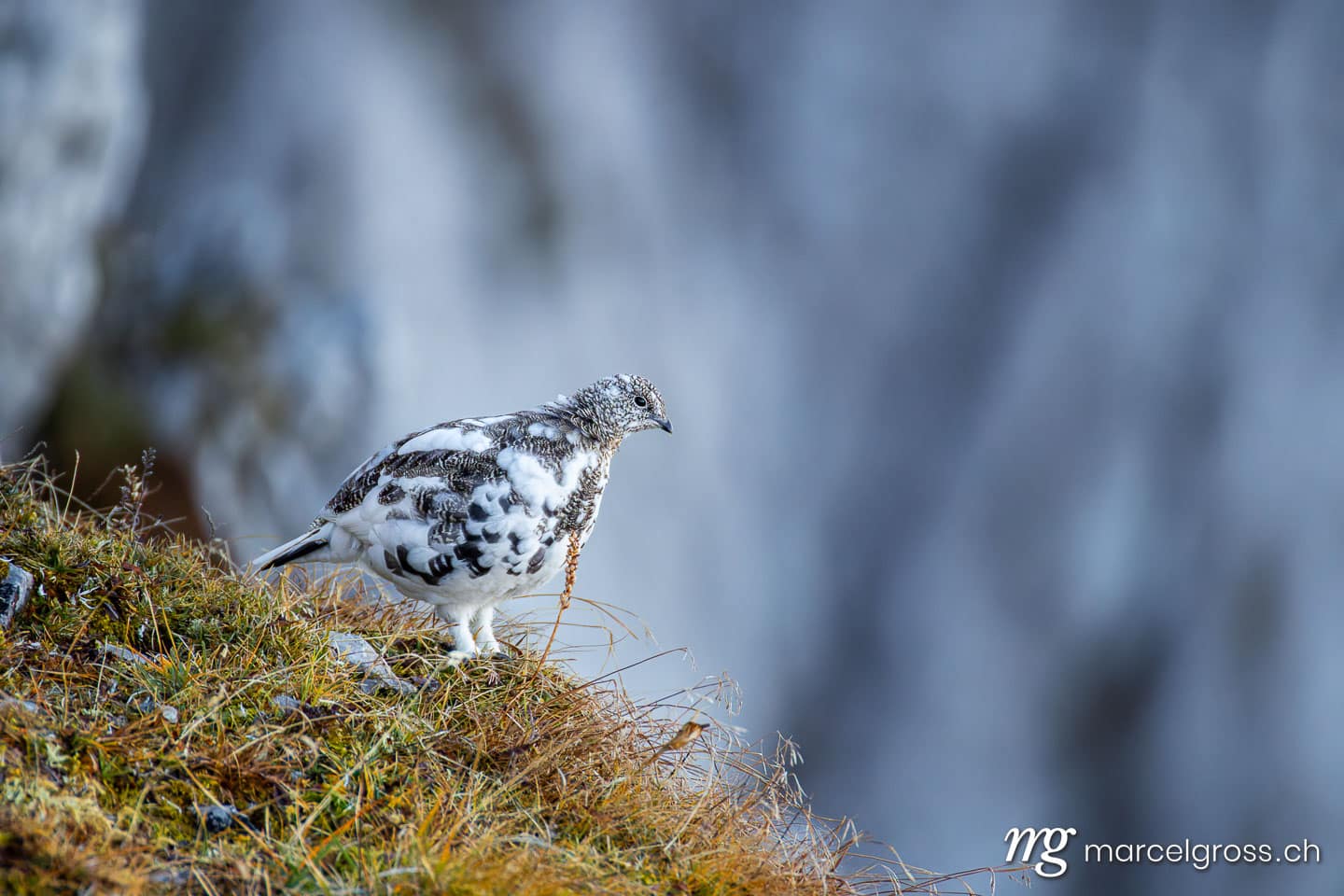
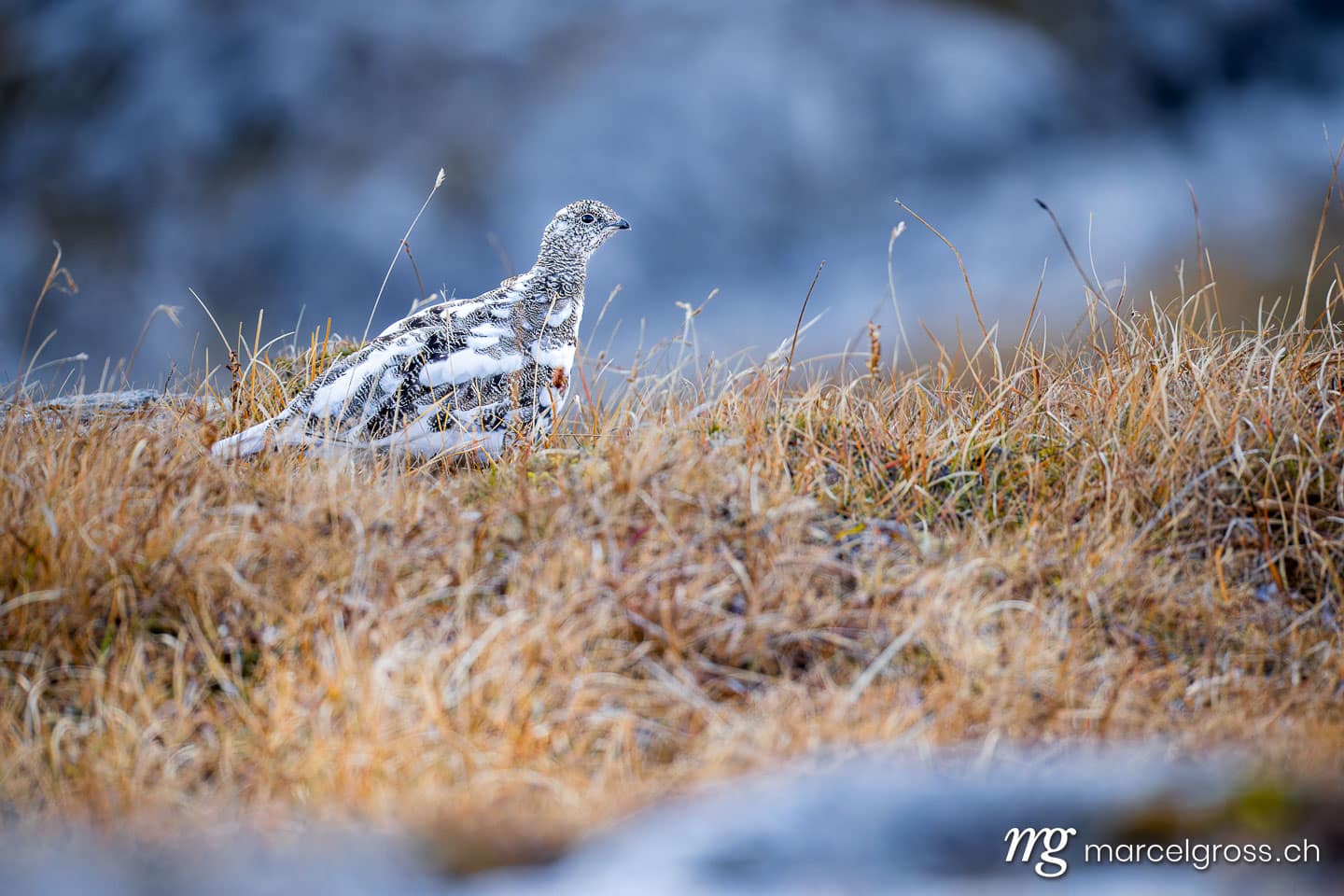

The rock ptarmigan is one of the most fascinating birds of the Swiss Alps for me. It lives where forests and meadows have long since ended, among rocks, scree, and the last patches of snow, in a world of wind, cold, and expansive views. The photographs on this page were taken with great patience, distance, and long hikes in the high mountains. Here you will find my most beautiful ones. Rock Grouse Pictures from the Bernese Alps and the Glarus Alps, also available as a fine art print for your home.
Rock ptarmigan pictures – masters of camouflage between rock and snow
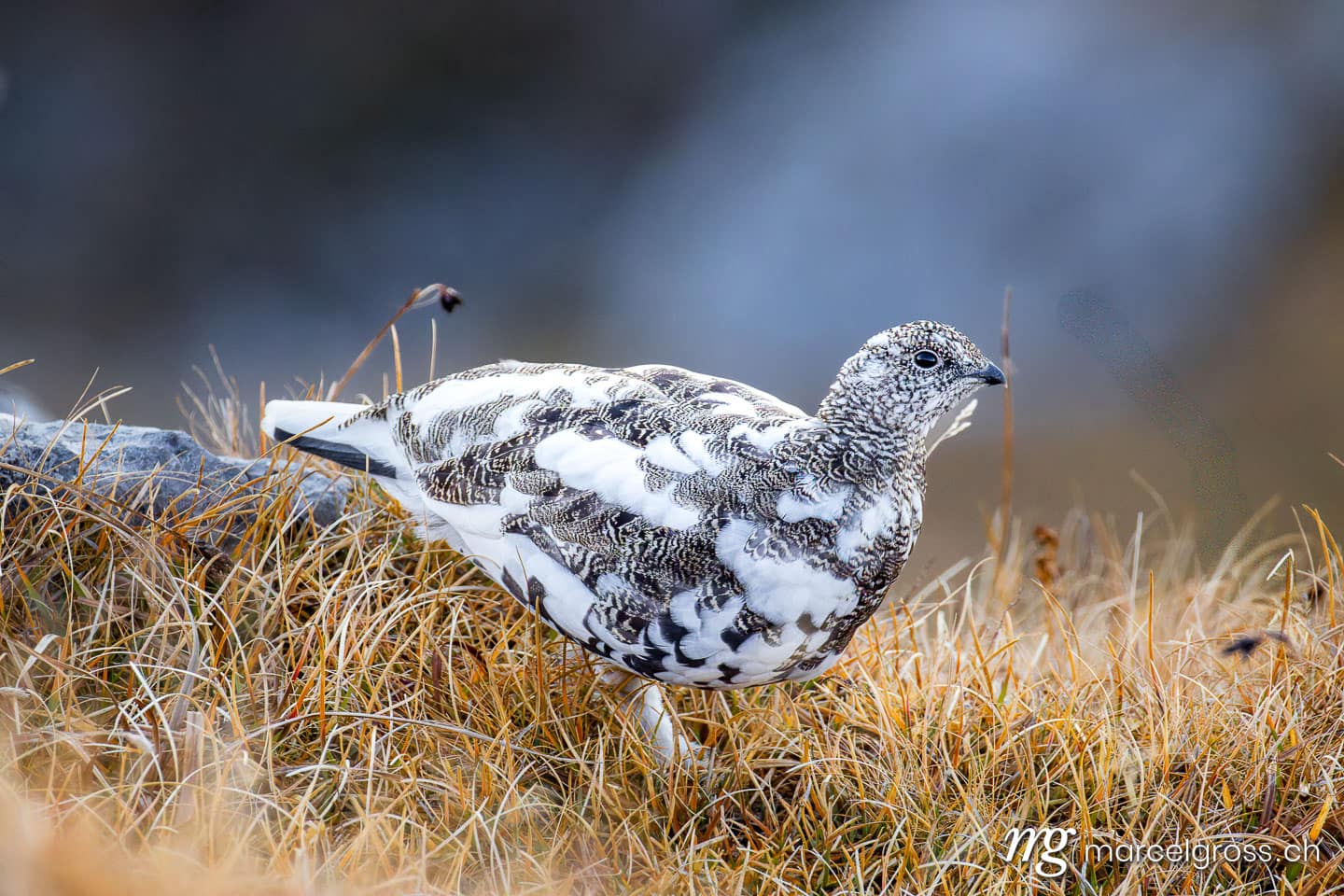
Spotting a ptarmigan in the field requires sharp eyesight. Its plumage blends so perfectly with its surroundings that the bird often only becomes noticeable when it moves. On rocks and scree, it merges seamlessly with the stones, and in winter, with the snow. This camouflage is precisely what makes photographing them so challenging, as even from just a few meters away, the birds are easily overlooked among lichens, grass, and rocks. All the more rewarding, then, is the moment when a bird appears still and the light is just right.
Lagopus muta – Profile of the Rock Ptarmigan
The rock ptarmigan (Lagopus muta) belongs to the grouse family and is about the size of a pigeon. Its feet and toes are densely feathered, resembling a pair of snowshoes in winter. It is a resident bird that lives year-round in high mountain regions, usually above the tree line between approximately 1,900 and 2,800 meters above sea level. The male has a striking red stripe above its eye, known as the rose, which is particularly noticeable during the breeding season. The females are generally more inconspicuous in color and even harder to spot in the field.
Three coats a year – winter white, summer camouflage and autumn plumage
Few other birds shed their plumage so dramatically. In winter it is almost entirely white, in summer marbled brown to gray, and in autumn a mottled transition develops in between. Several of my photographs show precisely this phase, with the new white feathers emerging among the brown remnants. Only the wings remain predominantly white throughout the year, which is immediately apparent when the bird takes flight. This change is vital for the bird's survival, as only a well-camouflaged animal can escape the notice of foxes and eagles.
Life above the tree line – food, snow cave and breeding
In high mountain regions, food is scarce. The ptarmigan feeds on shoots, buds, berries, and seeds of dwarf shrubs and grasses, while the chicks primarily eat insects. In winter, the birds like to burrow into the snow, where they can rest sheltered from the wind and conserve energy. The nest is simply a shallow depression between stones, and the incubation period lasts about three weeks. Afterward, the chicks soon follow the hen through the rocky terrain, pecking for their first insects. Raising young in high mountain regions is delicate, as sudden cold snaps and wet weather in early summer can endanger entire broods.
Climate change and disturbance – A mountain bird under pressure
Since the mid-1990s, the population in Switzerland has declined by about a third. Rising temperatures are pushing the tree line upwards, shrinking their habitat. The birds begin panting at temperatures as low as 15 degrees Celsius. Disturbances from winter sports and hiking further exacerbate their situation, as energy reserves are scarce in winter. Around 40 percent of the Central European population breeds in Switzerland, which is why we bear a special responsibility for this mountain bird, which depends on cool, open high-altitude habitats.
Encounters in the mountains – early summer, autumn gold and distance
My photographs were taken in early summer in the Glarus Alps and in autumn in the Bernese Alps. In early summer, patches of snow still linger among the rocks, while in autumn the grass turns golden yellow. The birds can only be photographed with patience and a long telephoto lens, and I always maintain a sufficient distance so as not to disturb them. The resulting images, amidst patches of snow, rocks, and alpine meadows, capture the unique character of this habitat.
Rock ptarmigan photos as fine art prints – wall decorations from the high mountains
All designs are available as high-quality fine art prints. Whether as a large statement piece for the wall or a subtle detail in the hallway: a picture of this mountain bird brings a piece of the high mountains into your home. Take a look in the Webshop or write to me if you are looking for an image in a specific format.
A notice: All photos are taken with respect for the animals. In winter, ptarmigan need peace and quiet; please keep a safe distance in the area, stay on the paths, and avoid wildlife sanctuaries, especially during the colder months.