Black grouse pictures – Lyrurus tetrix in the Swiss Alps
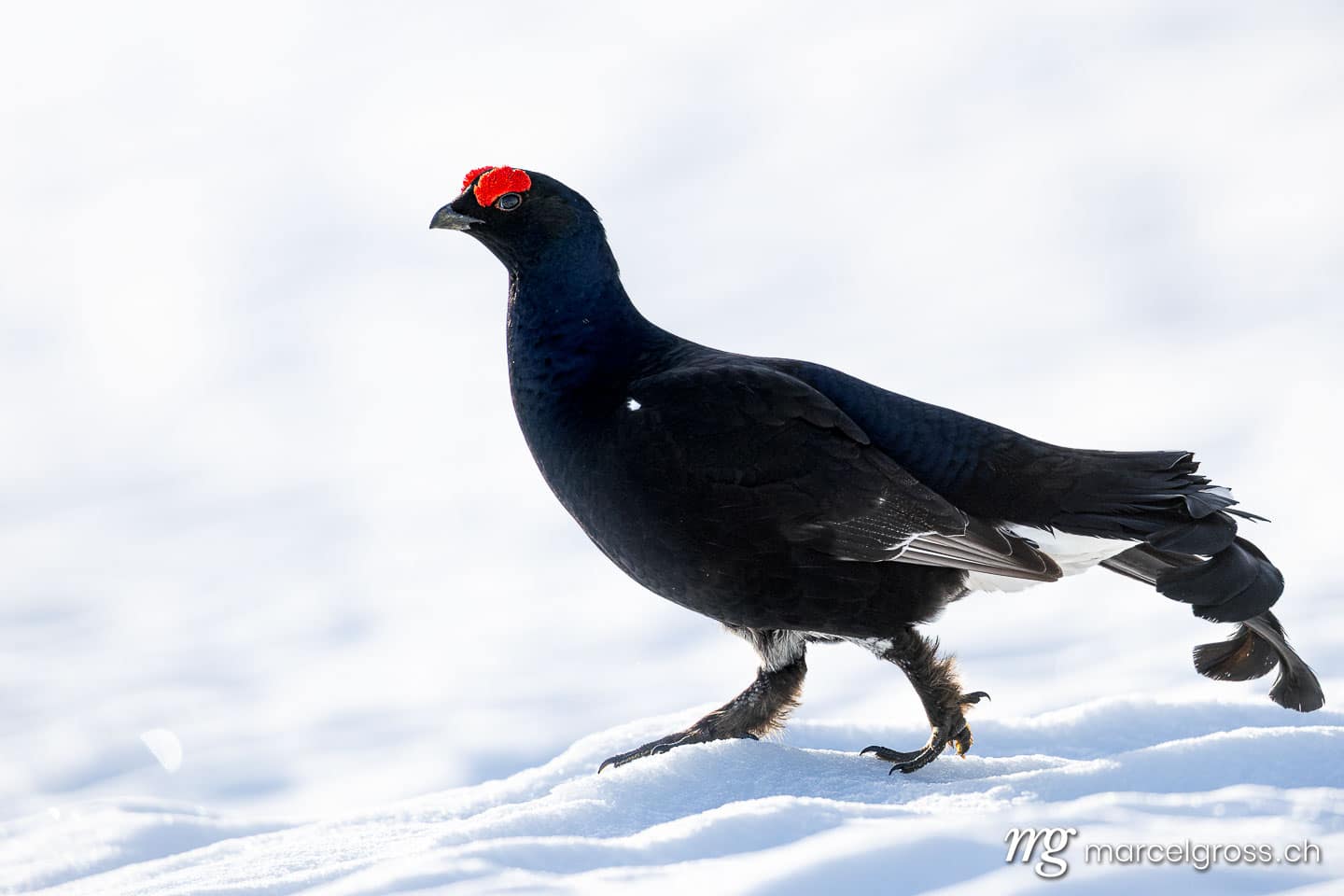
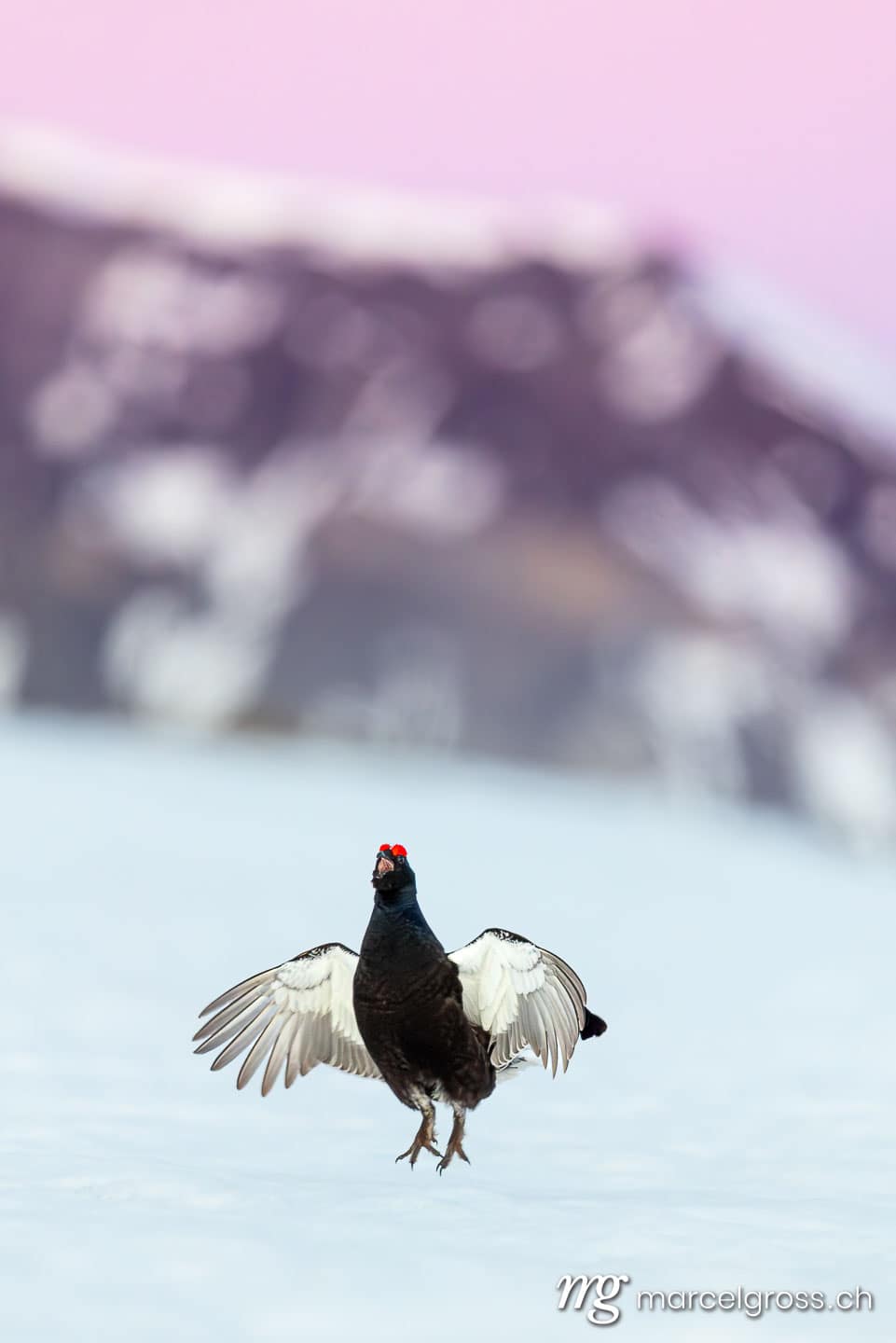
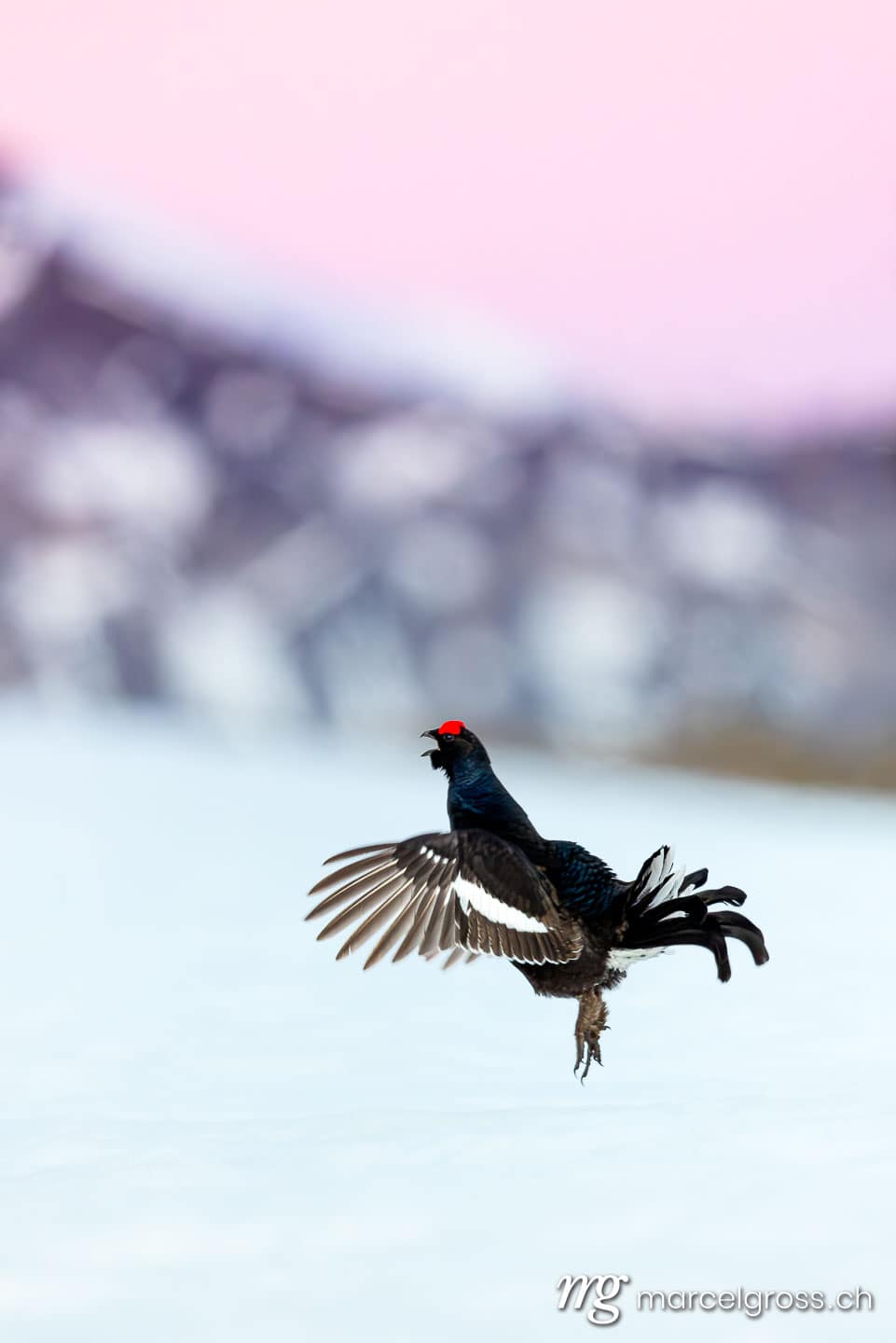
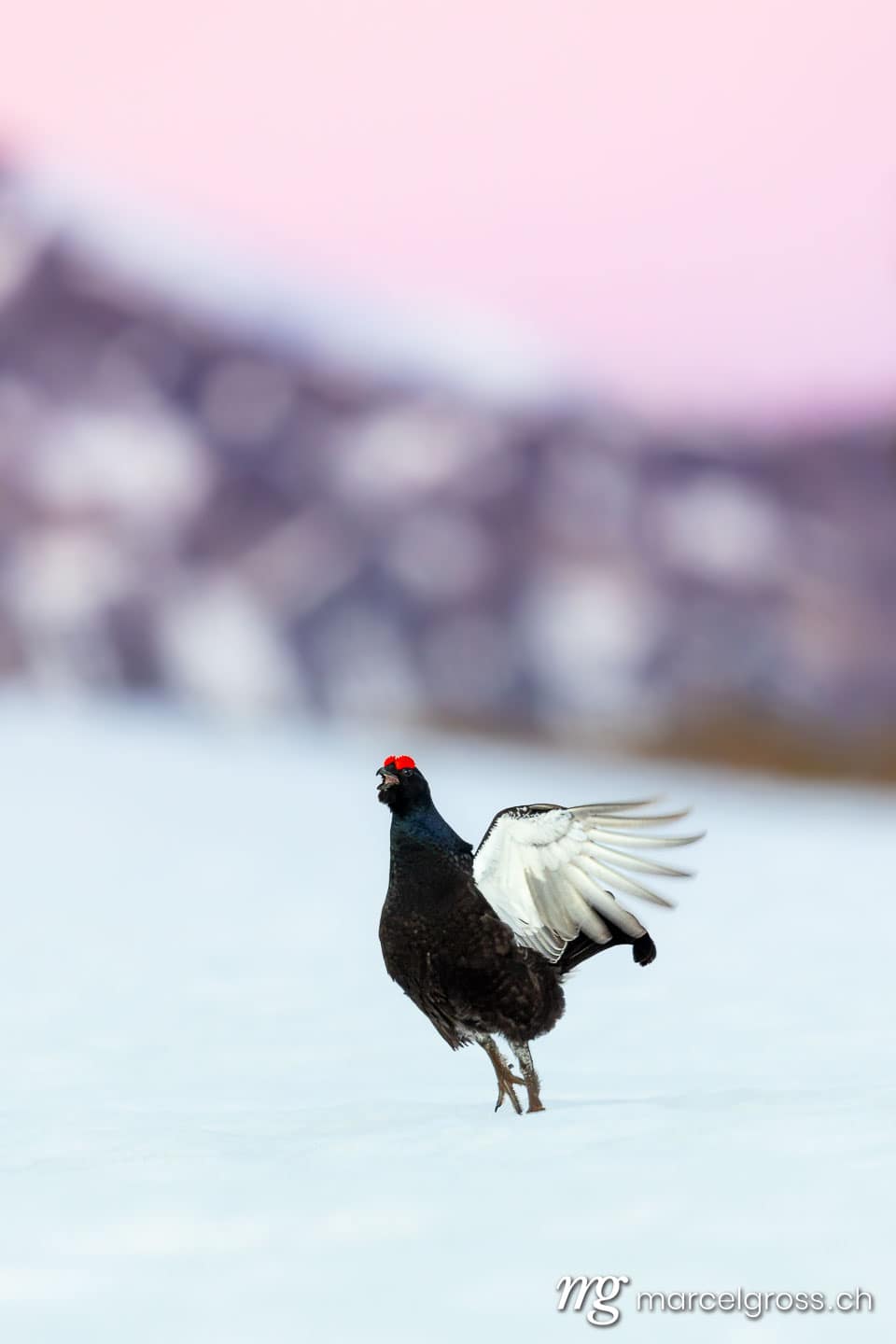
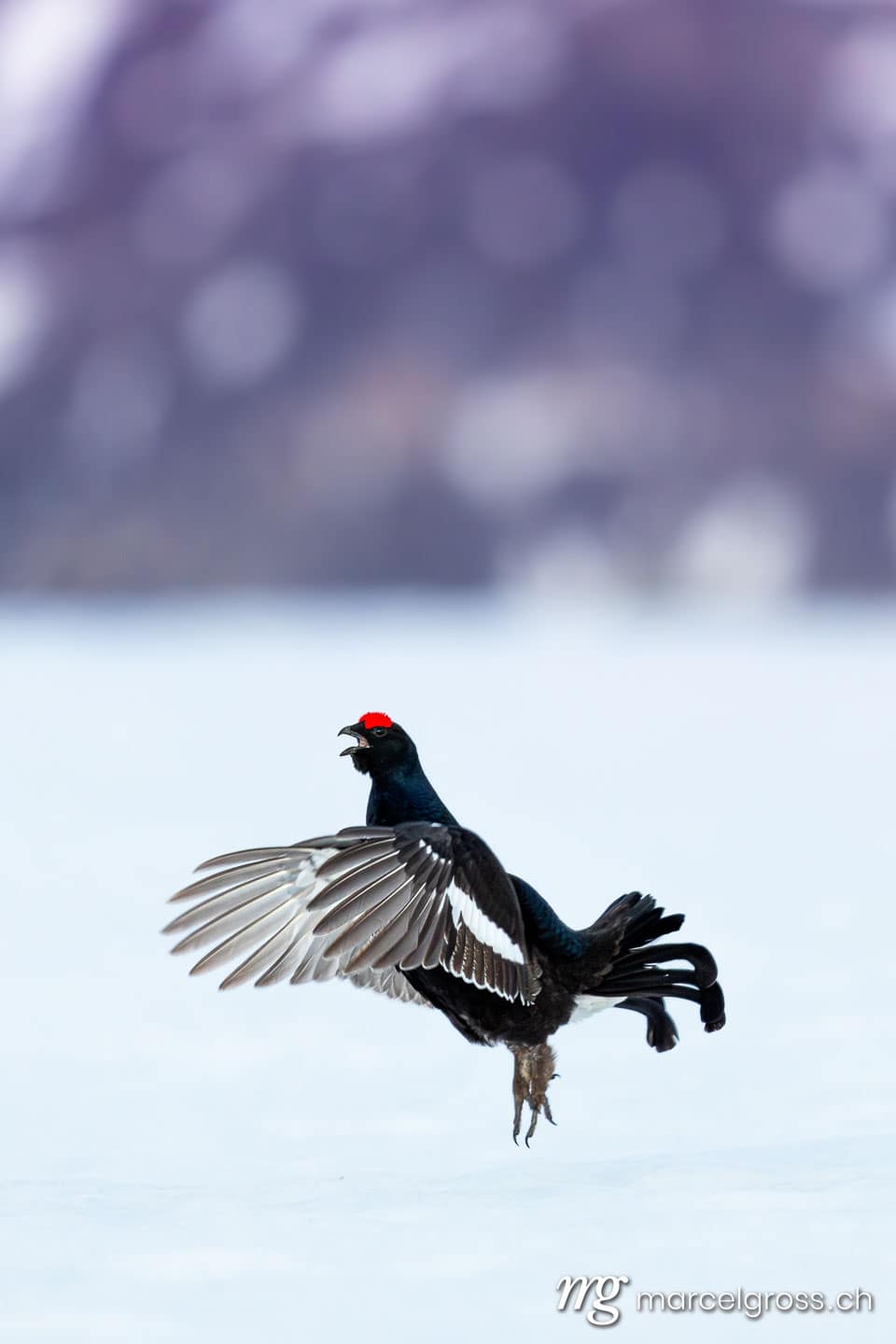
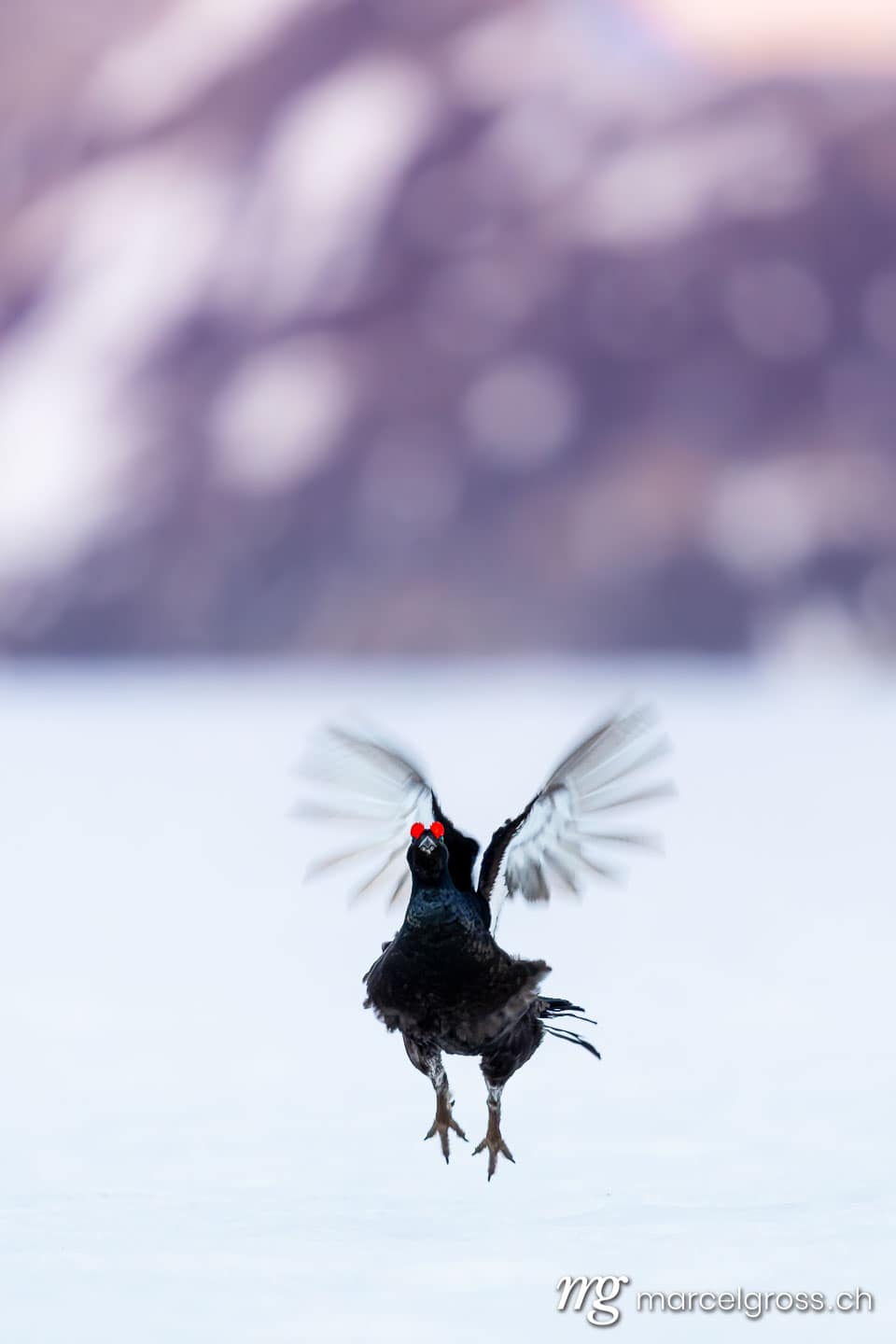
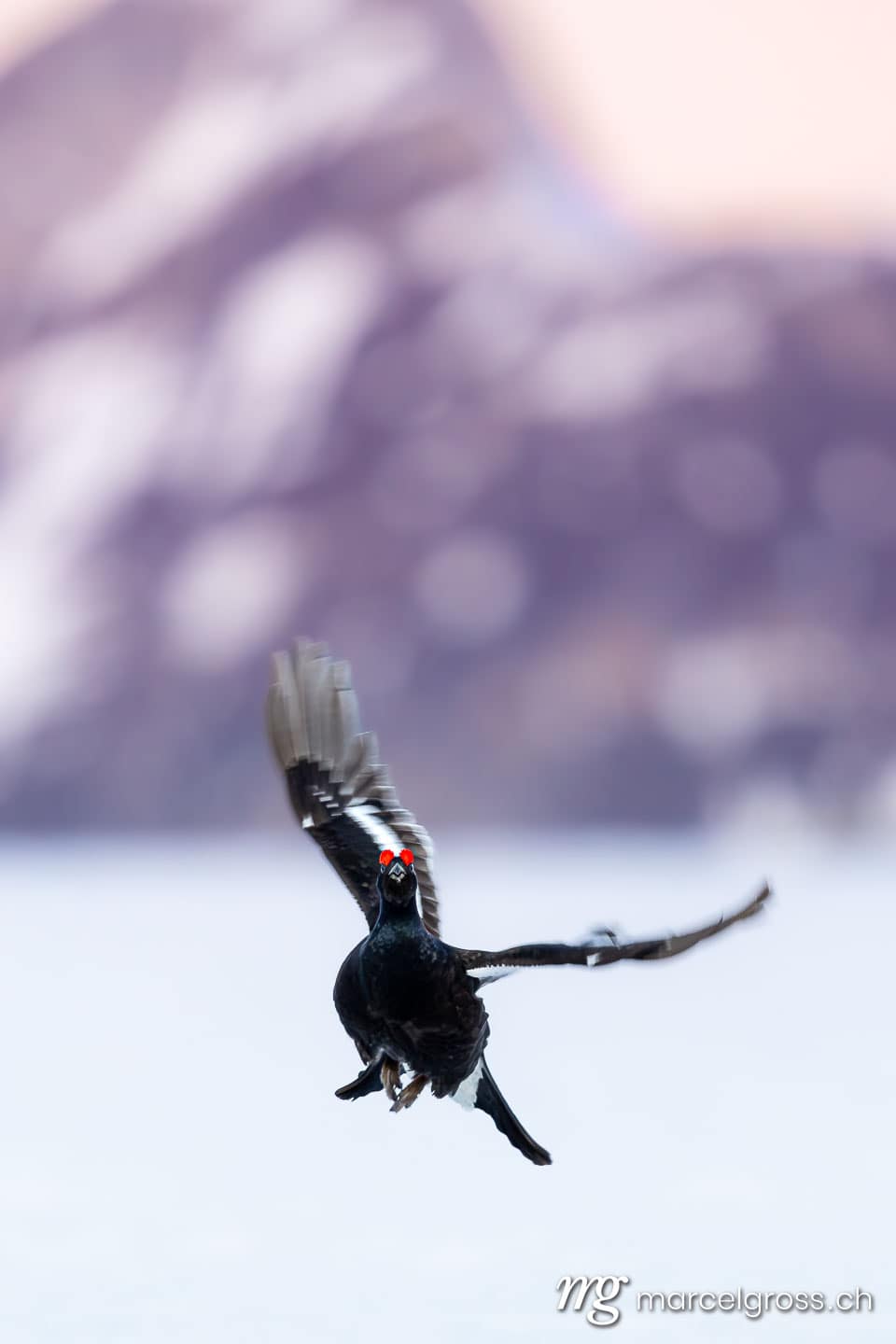
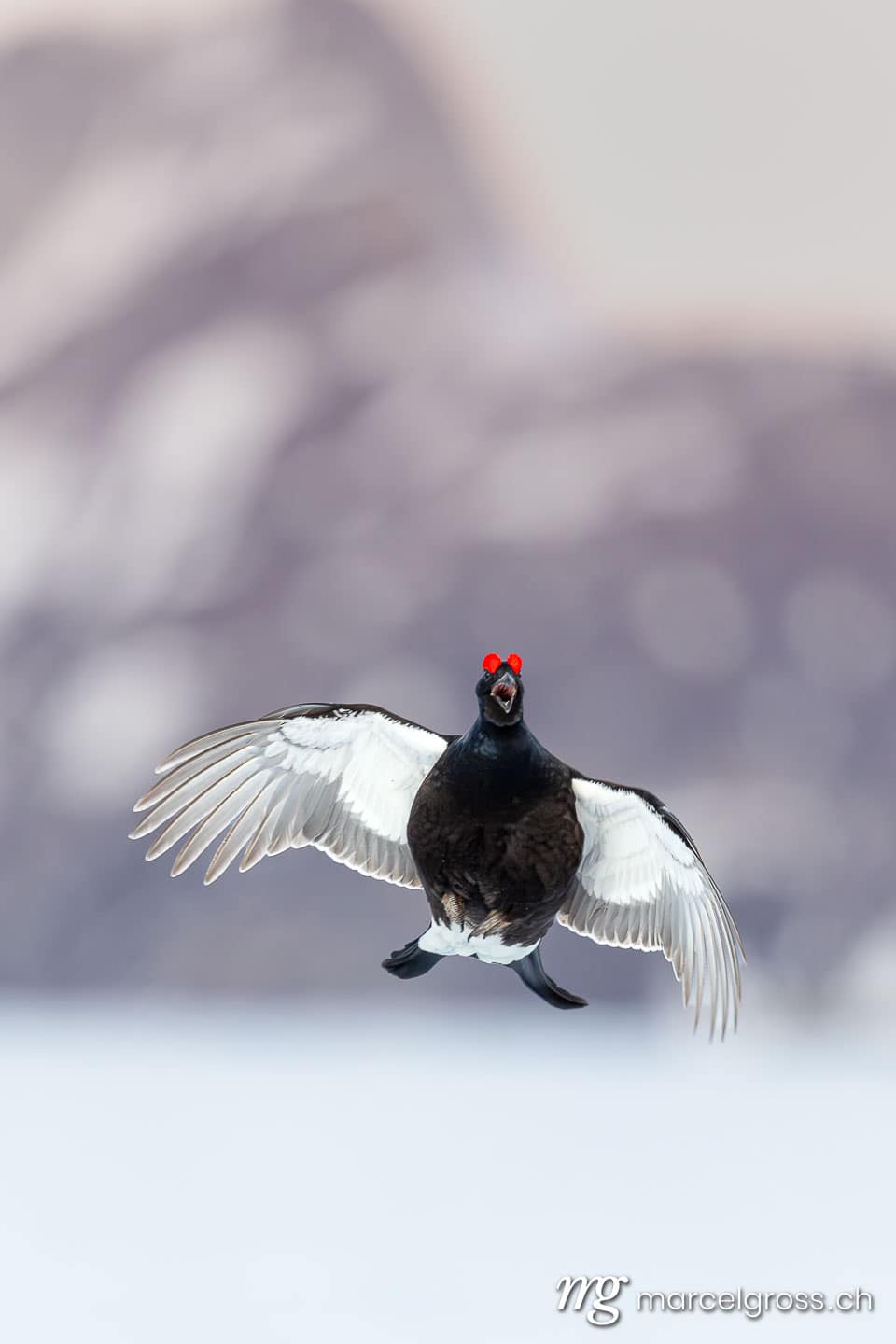
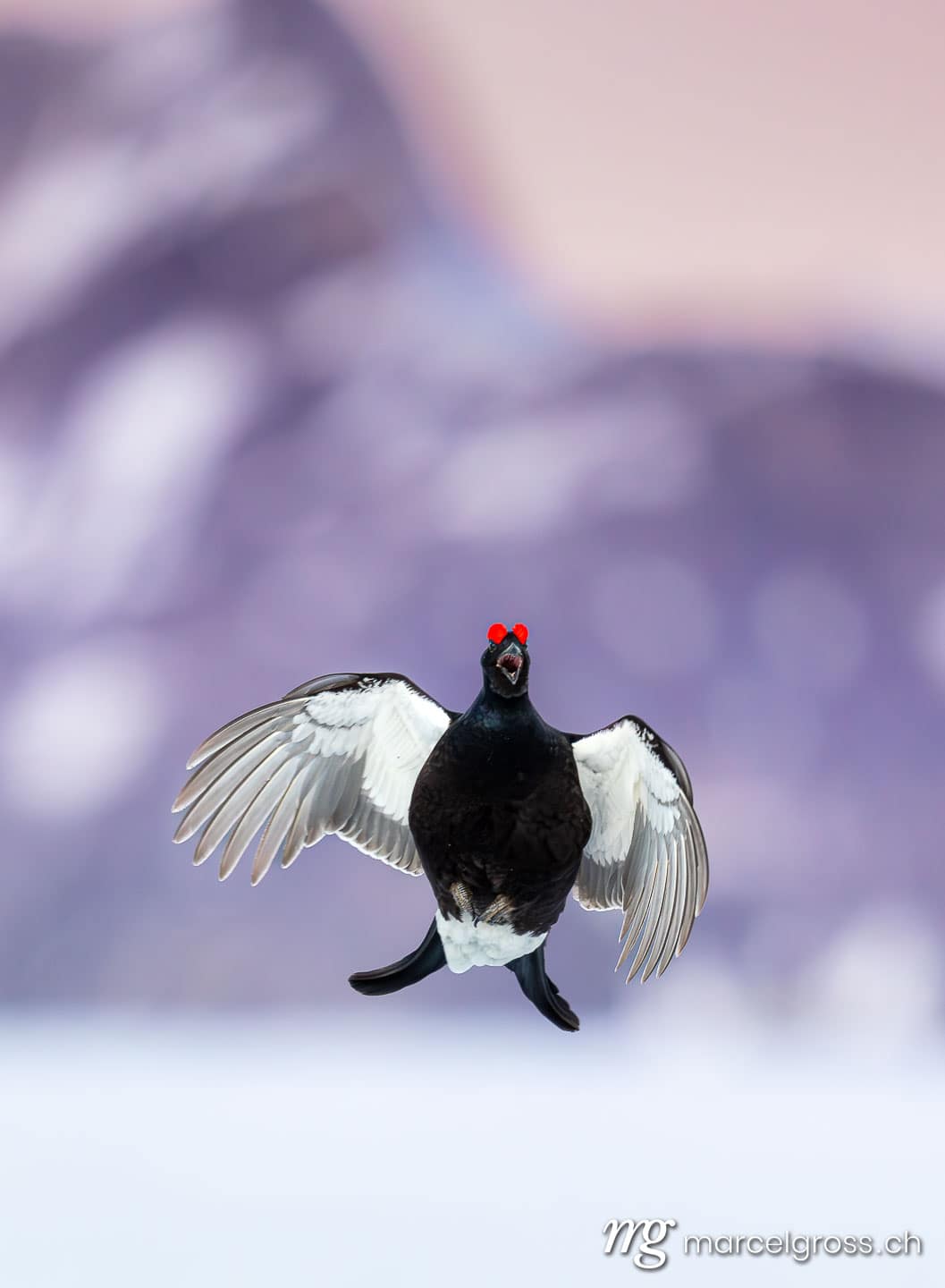
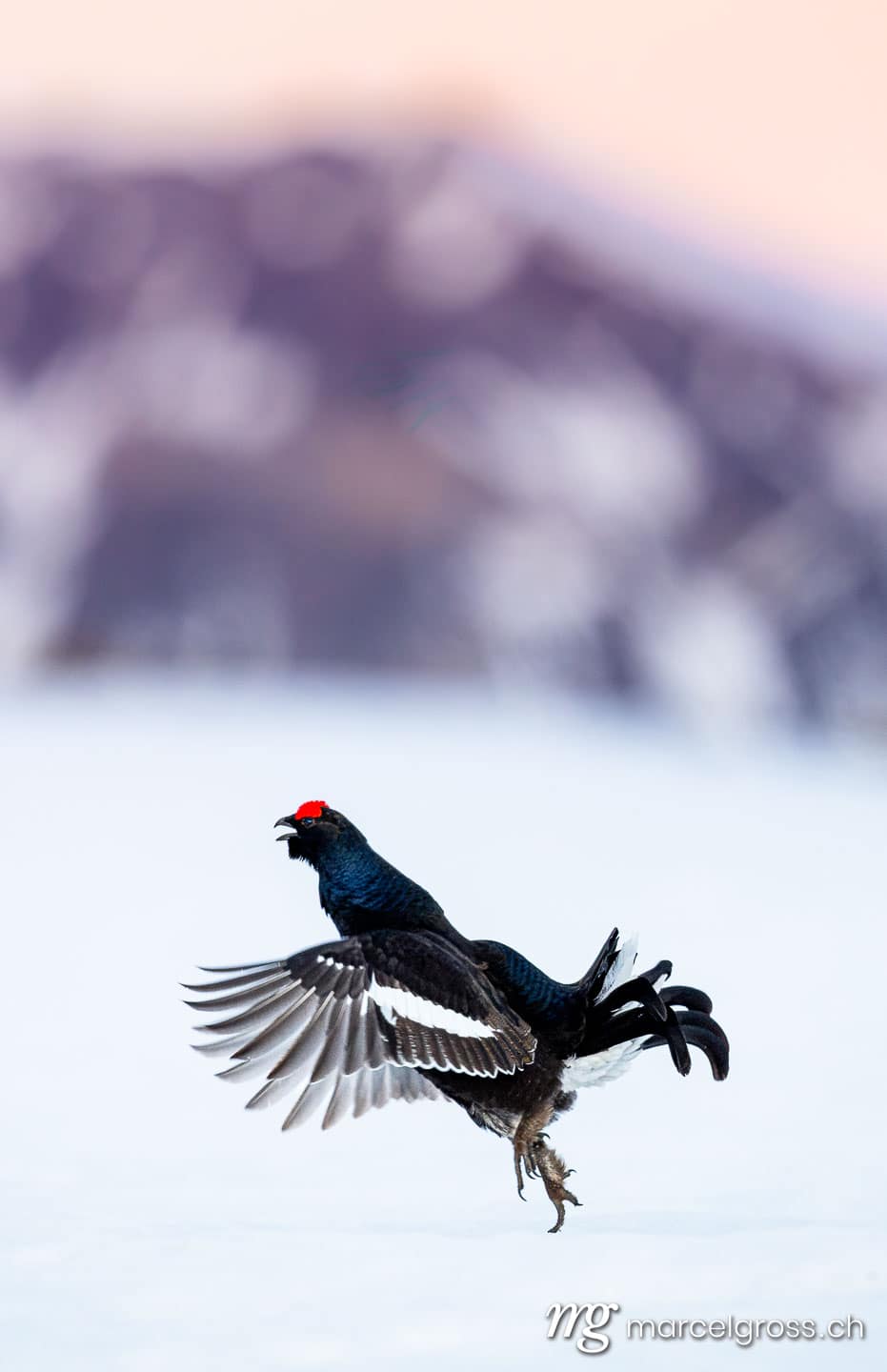
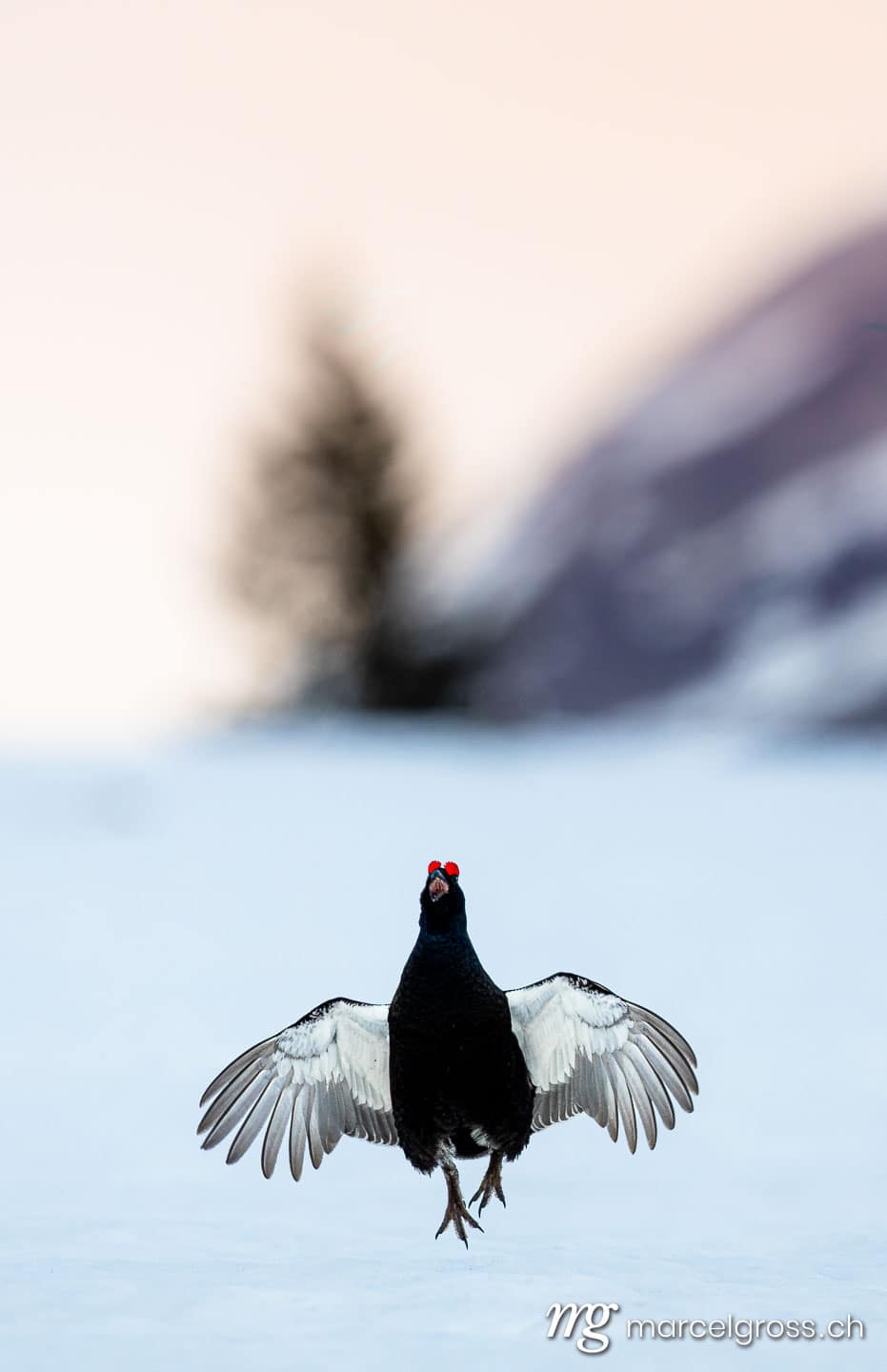
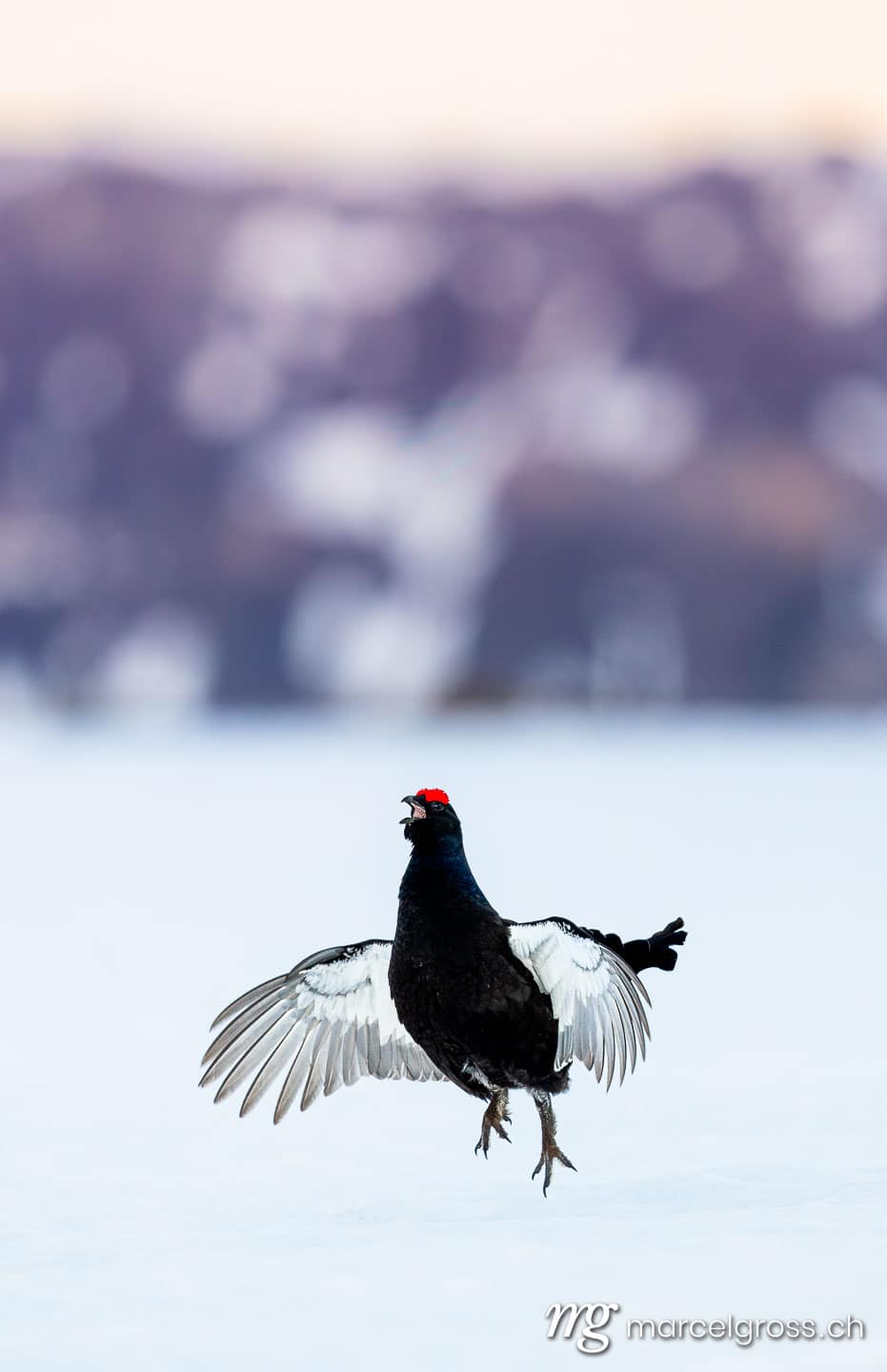
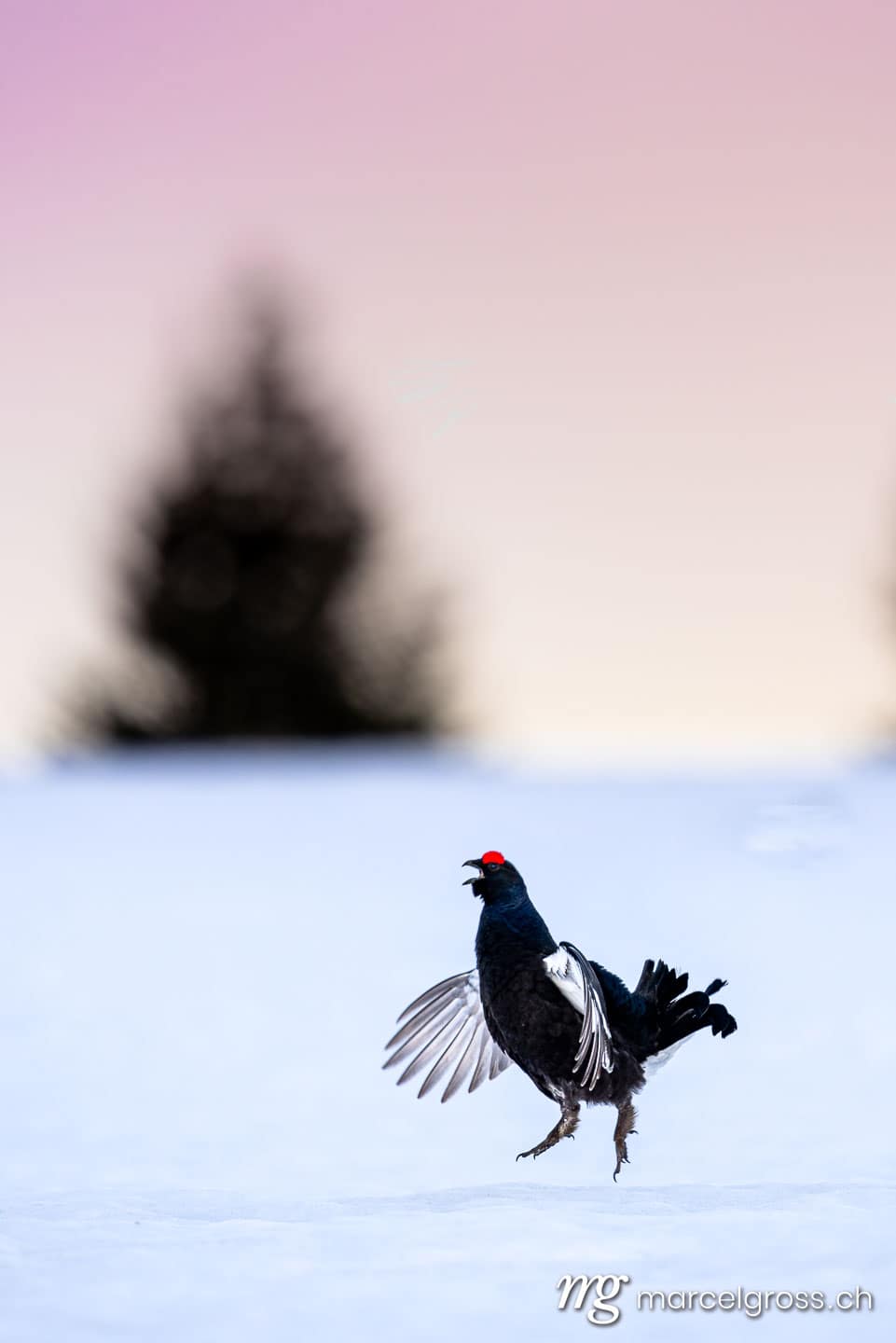
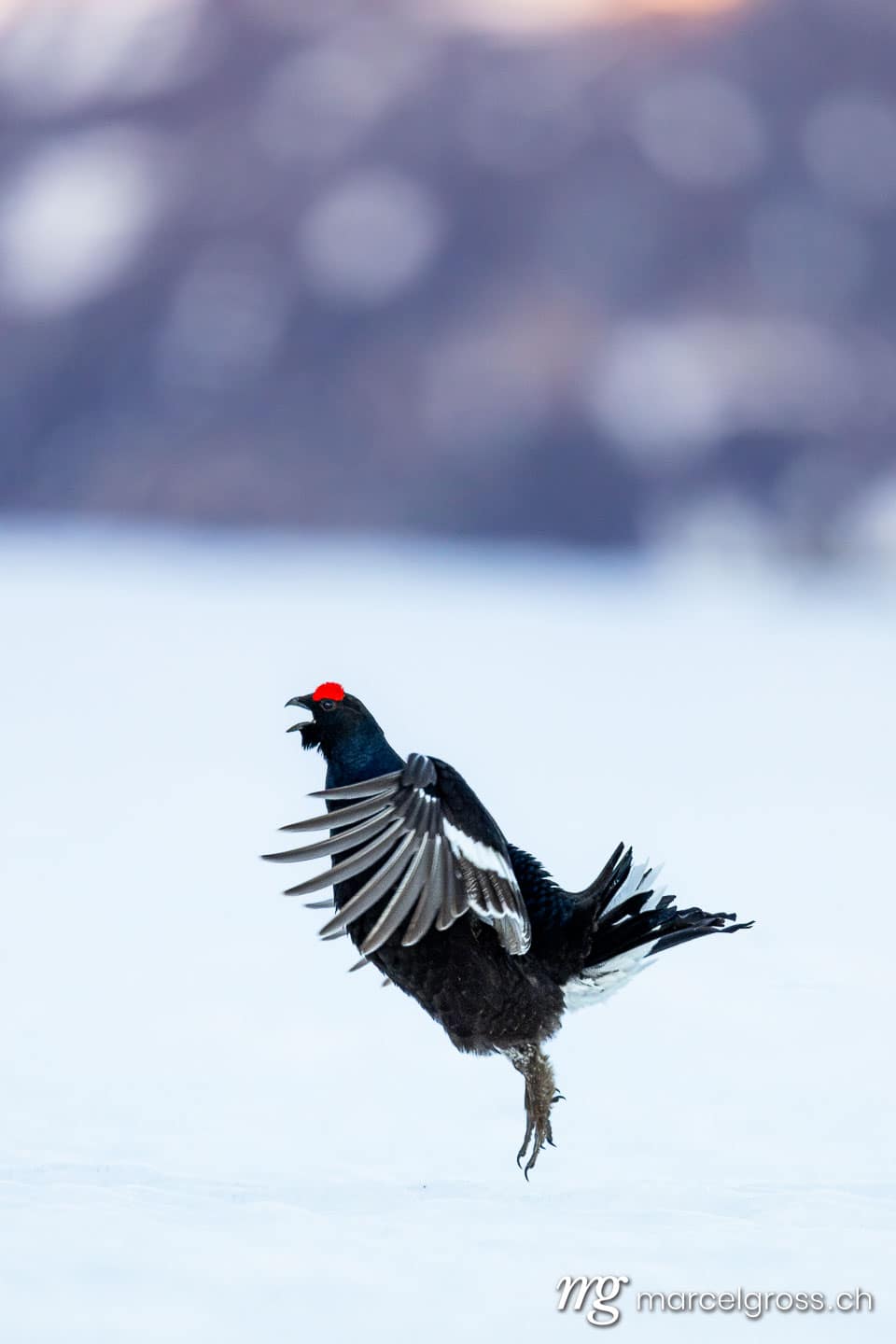
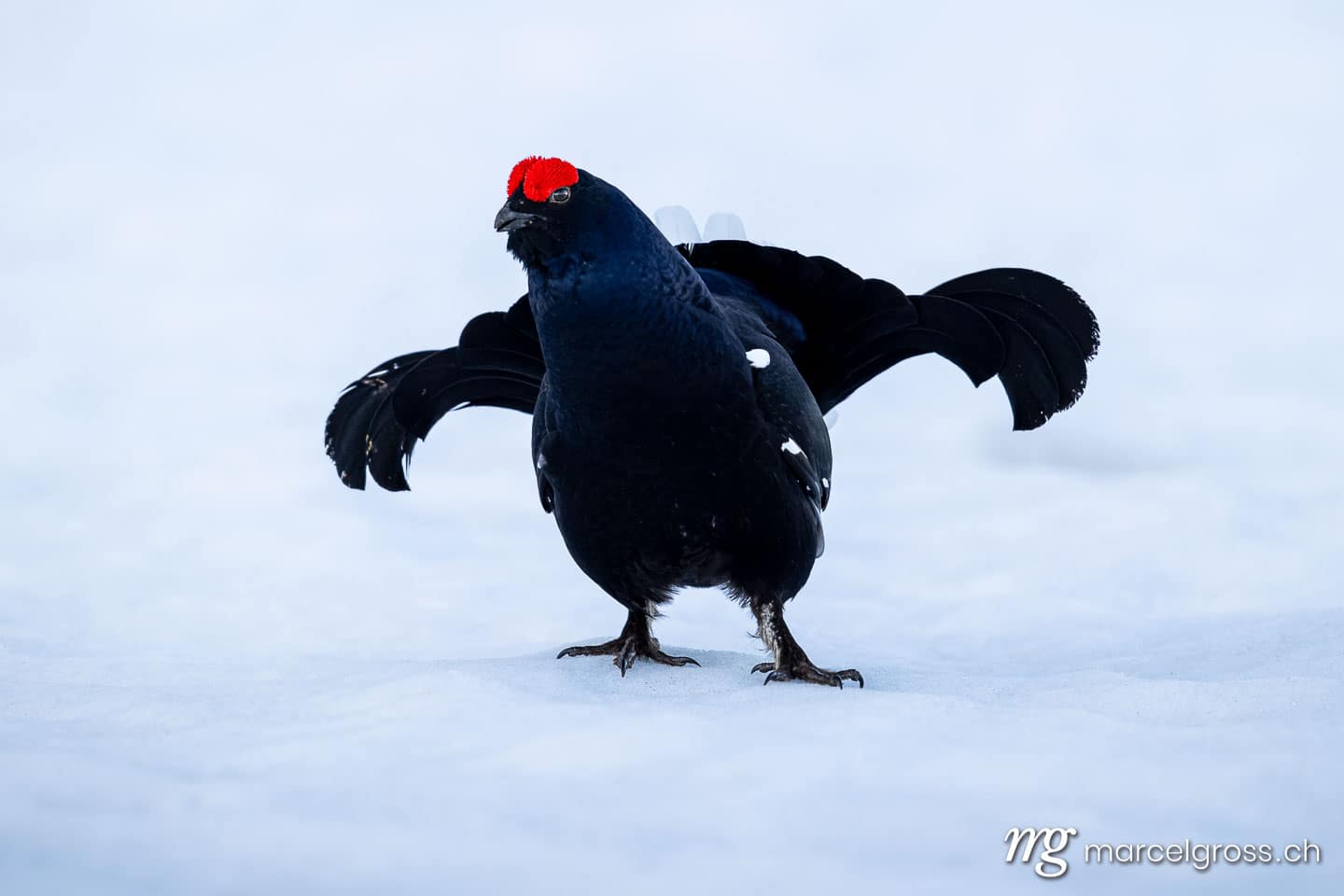
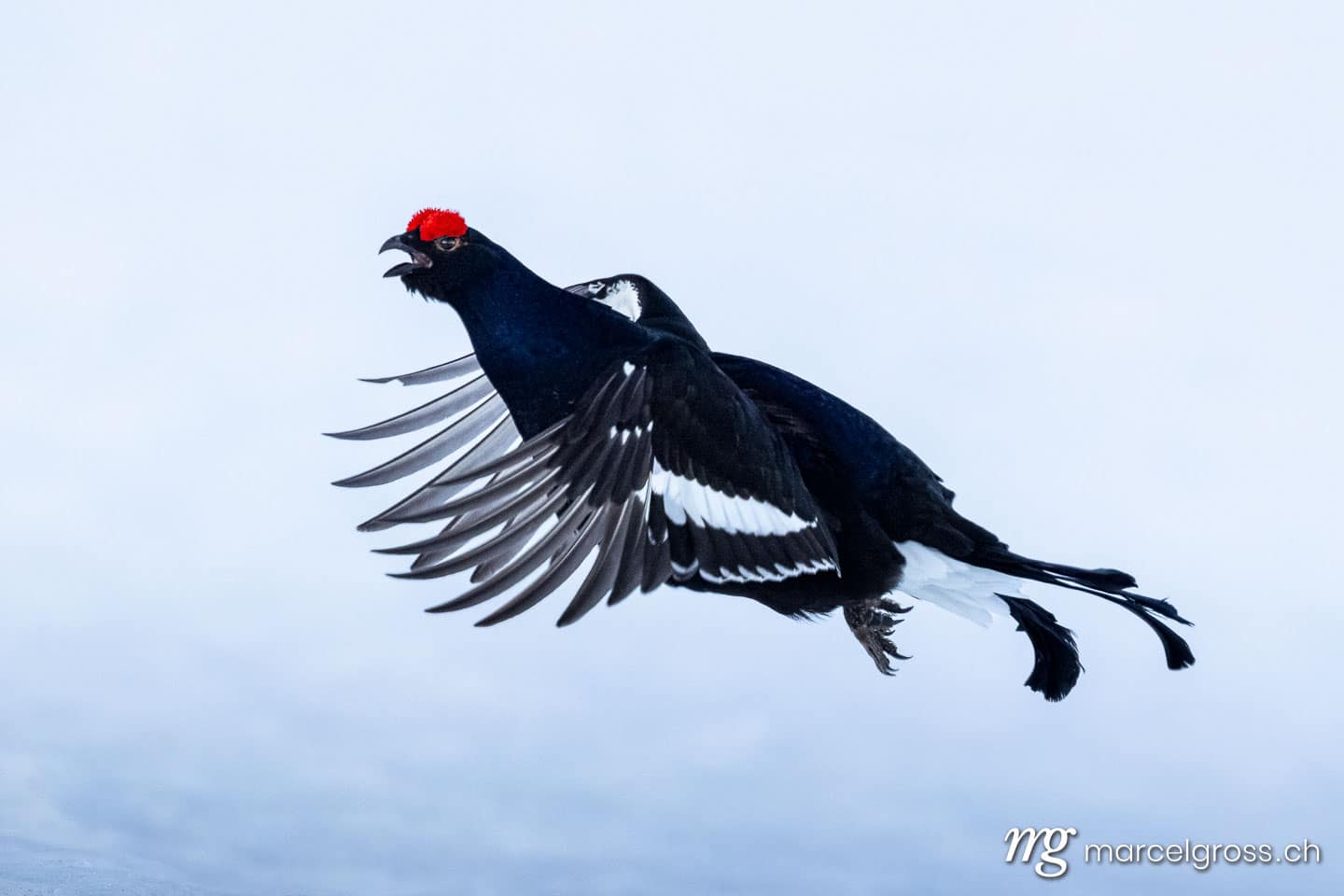
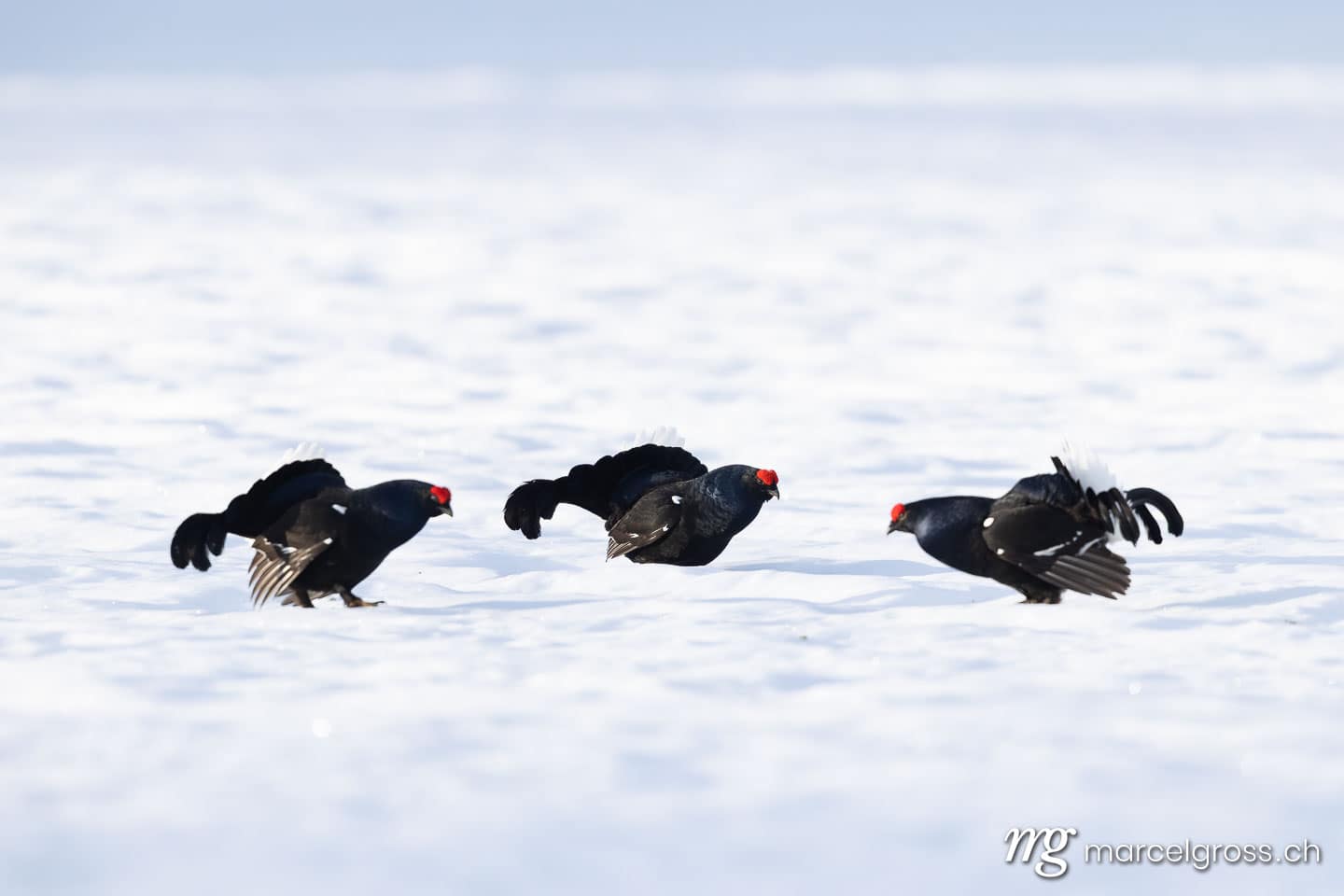
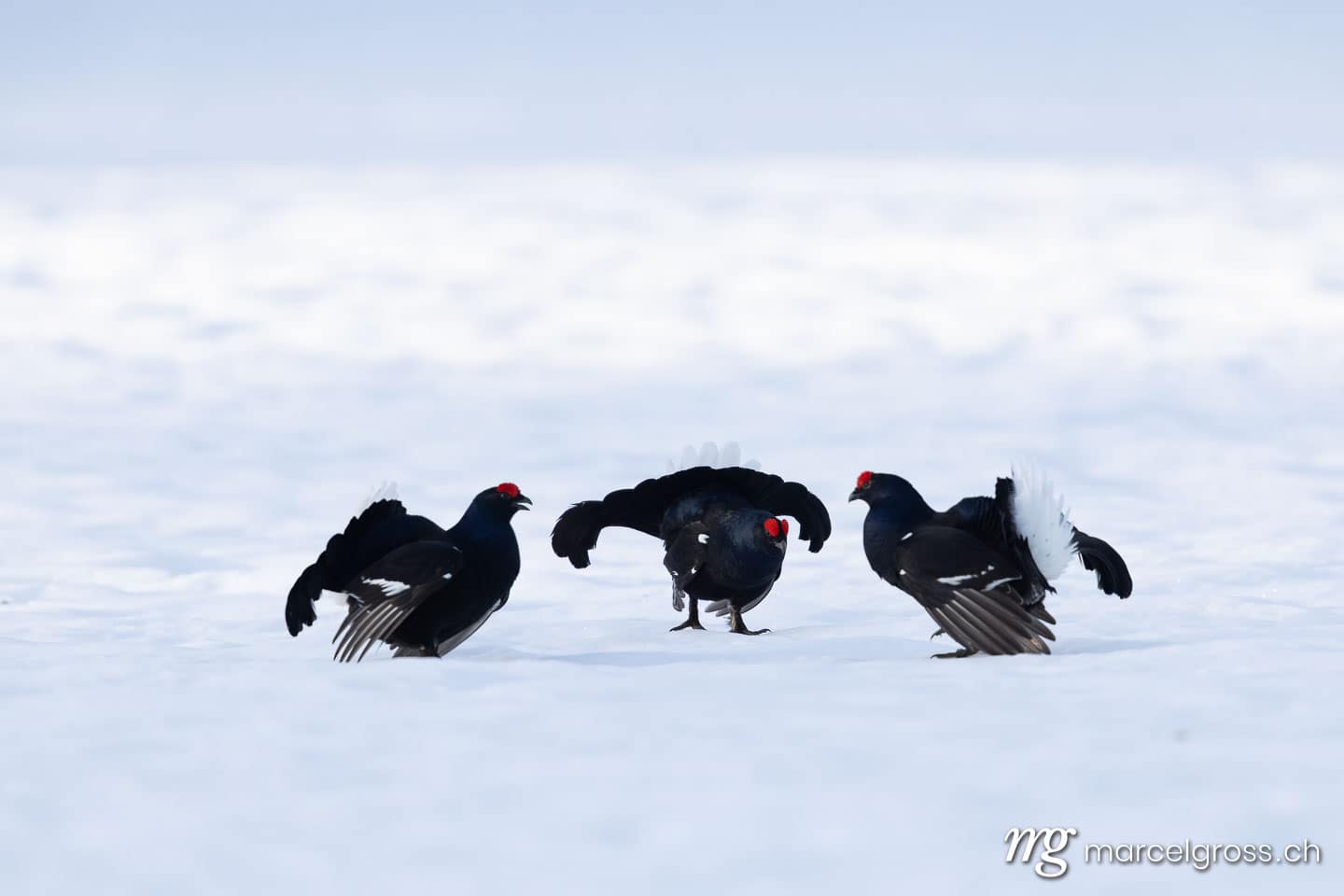
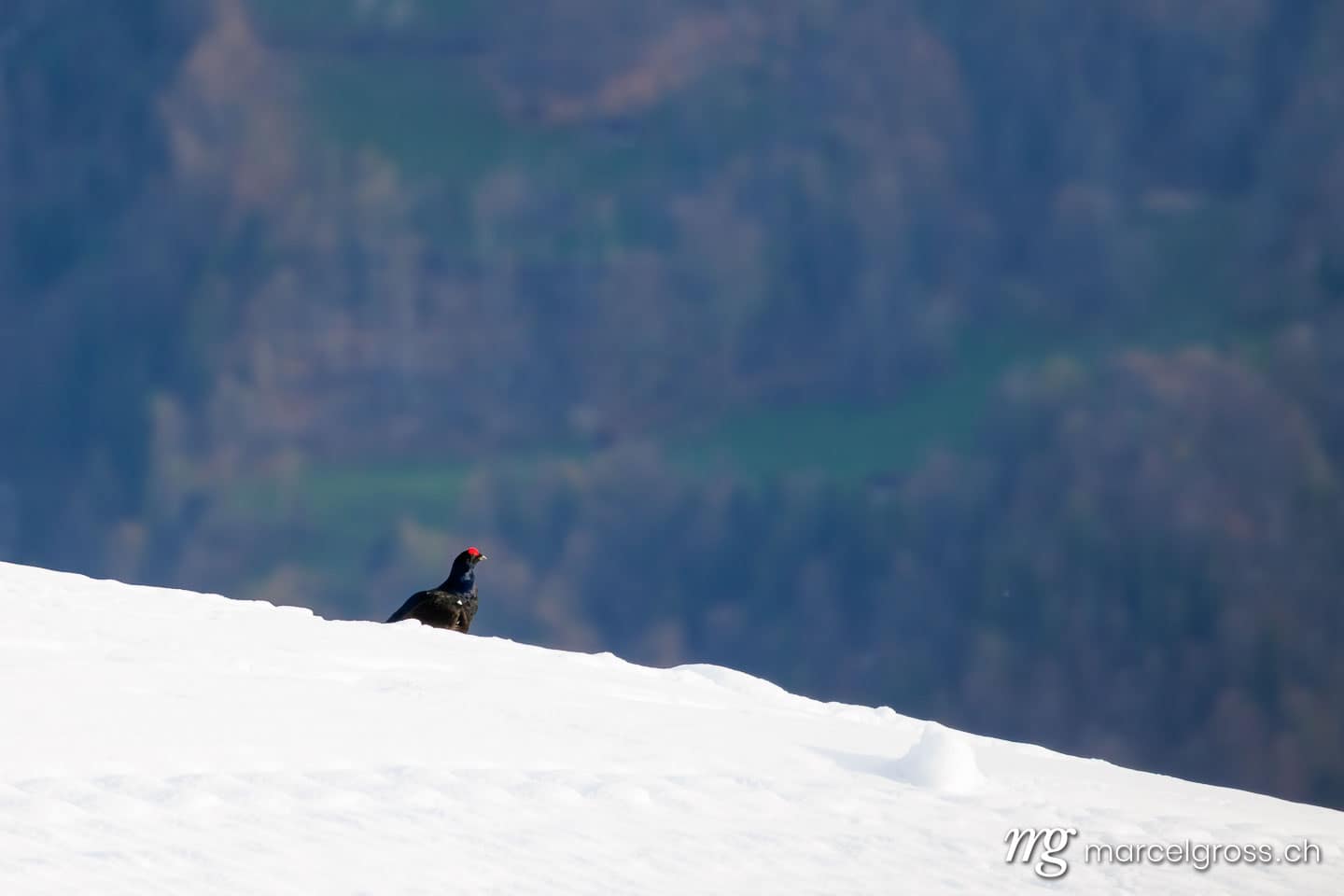
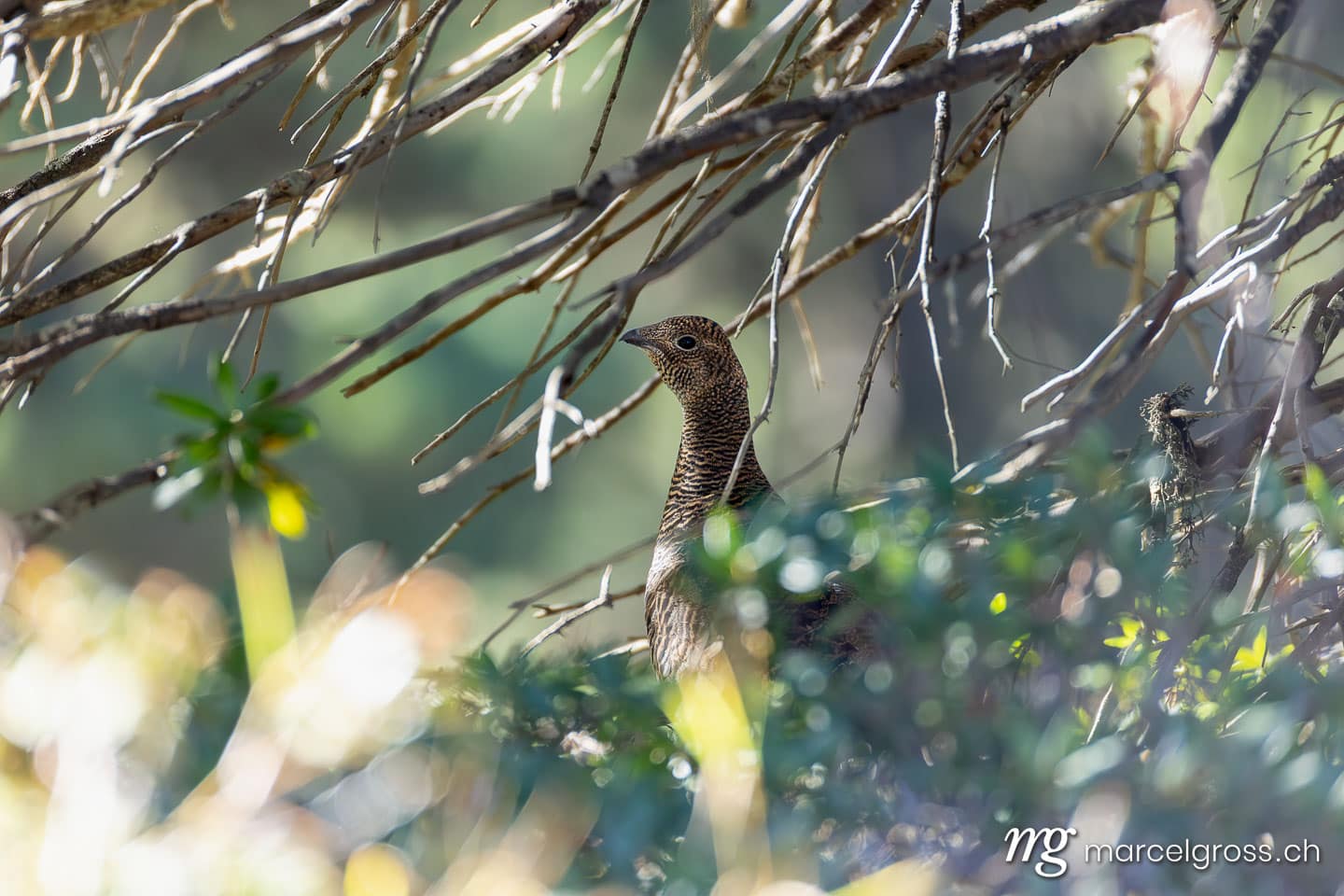
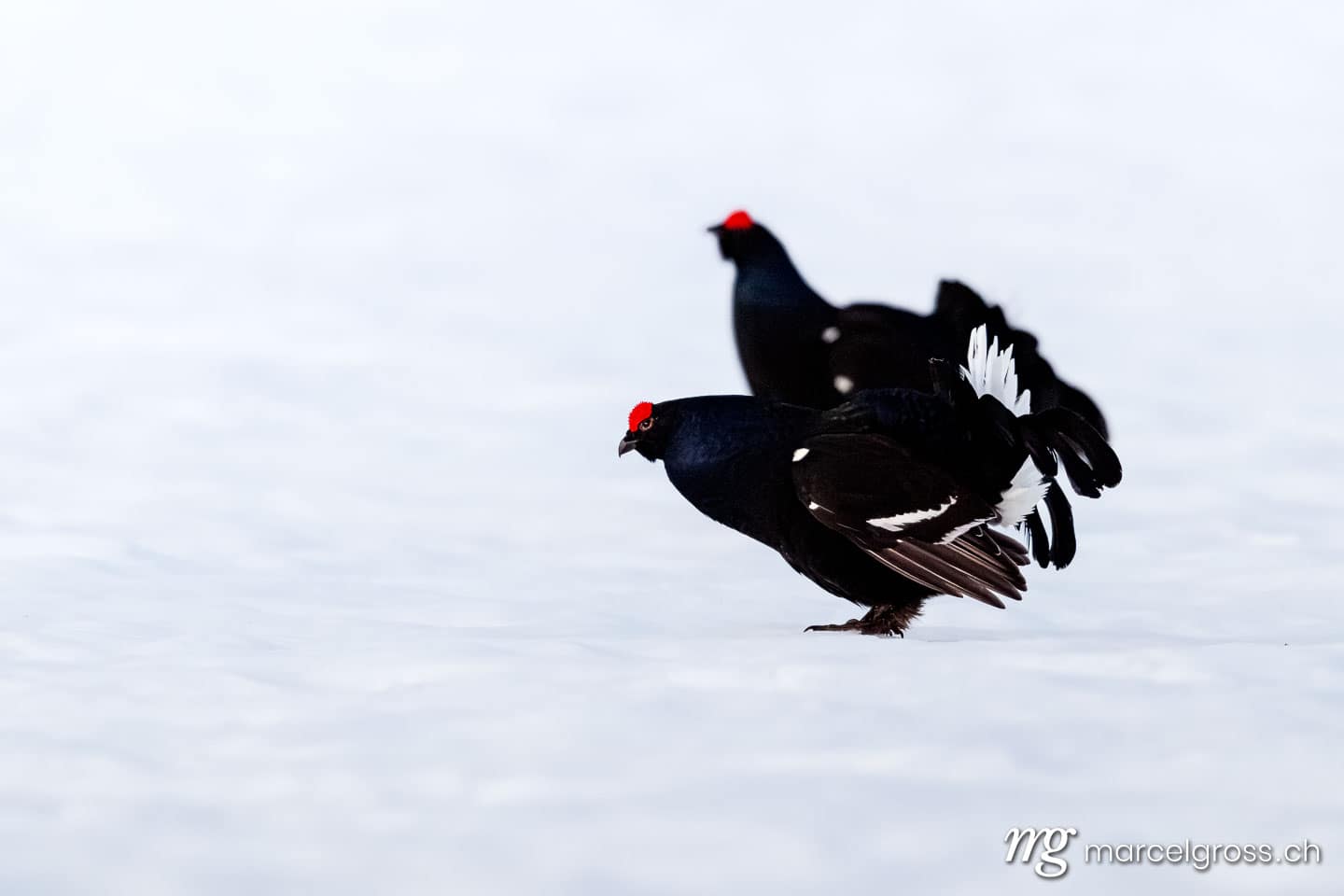
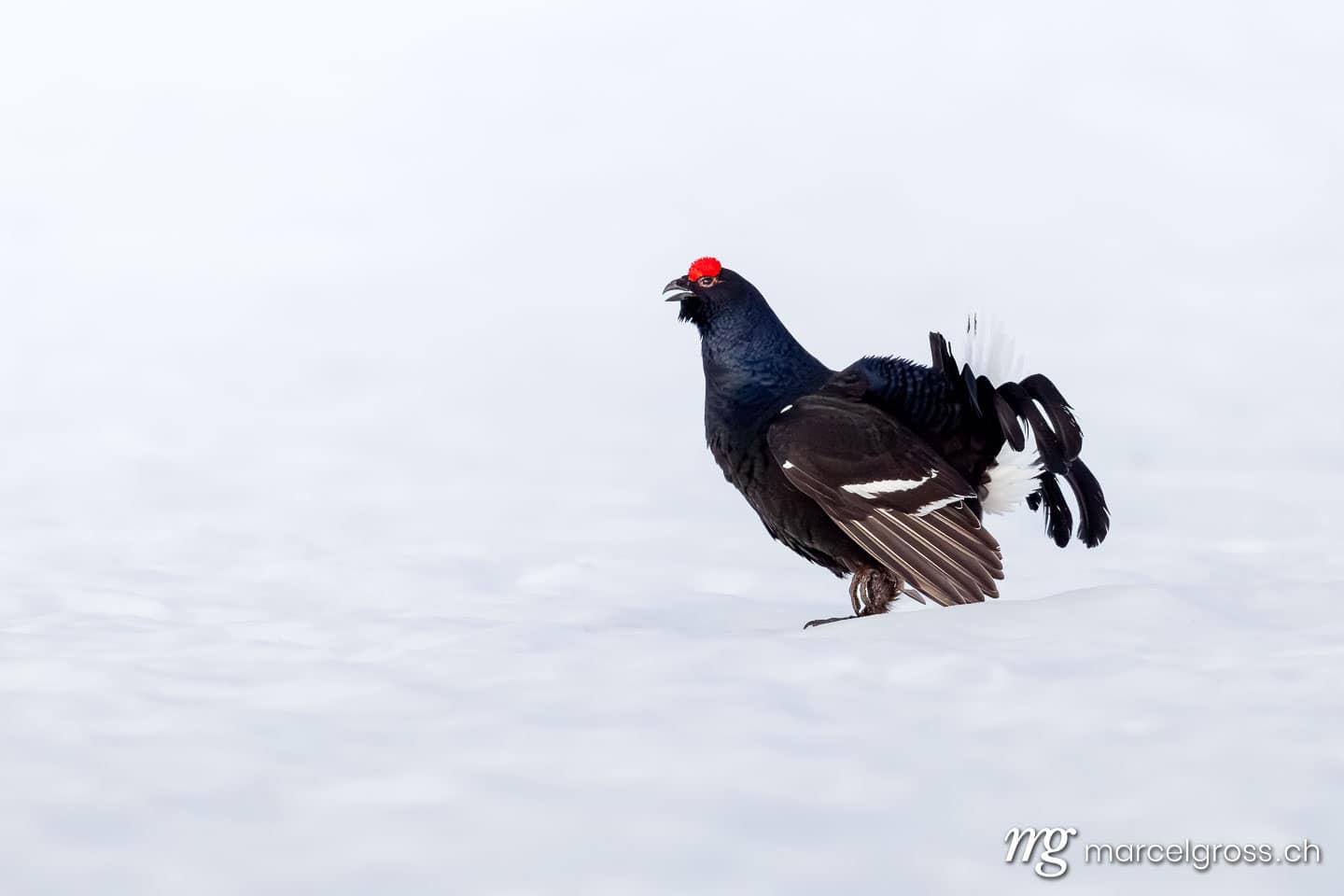
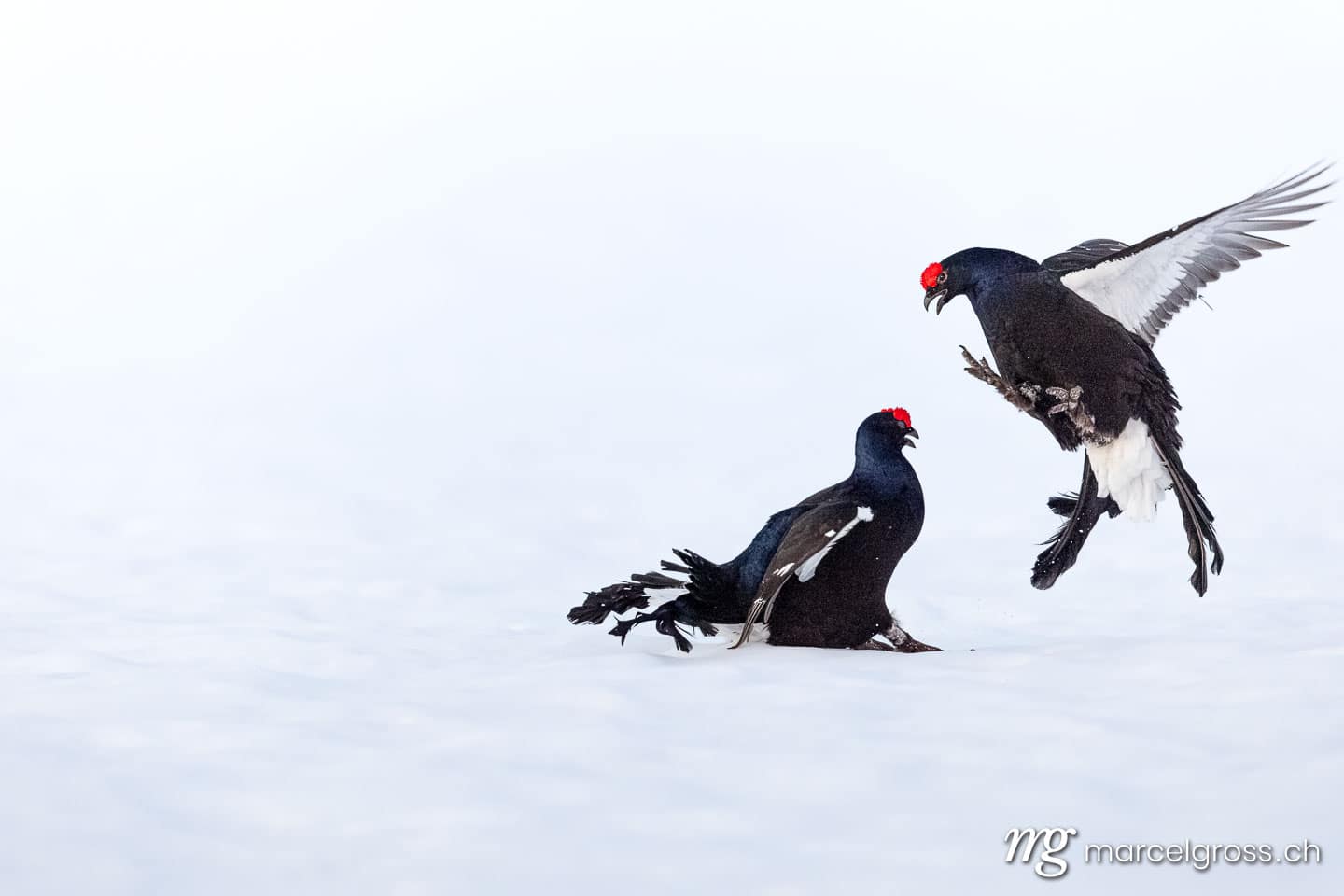
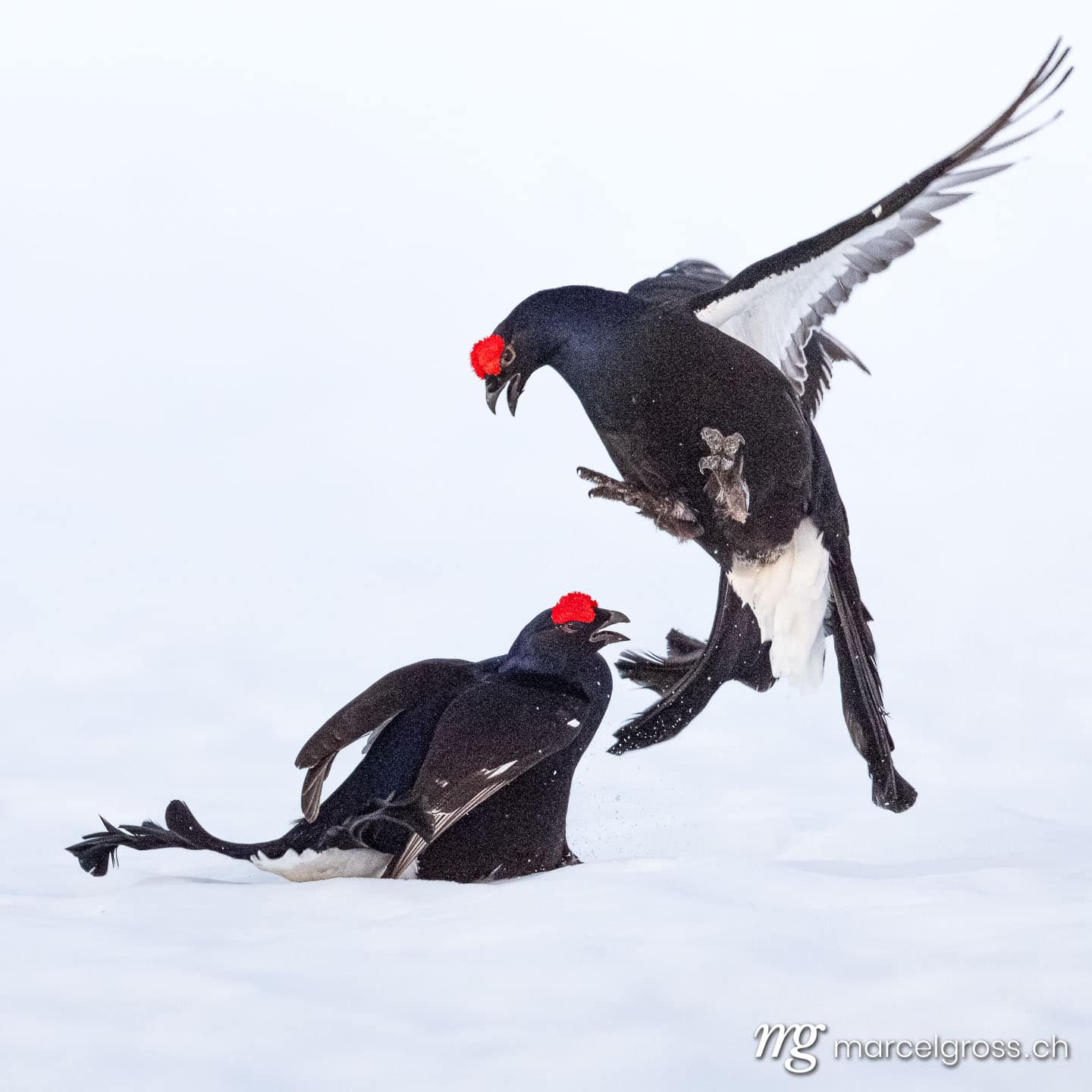
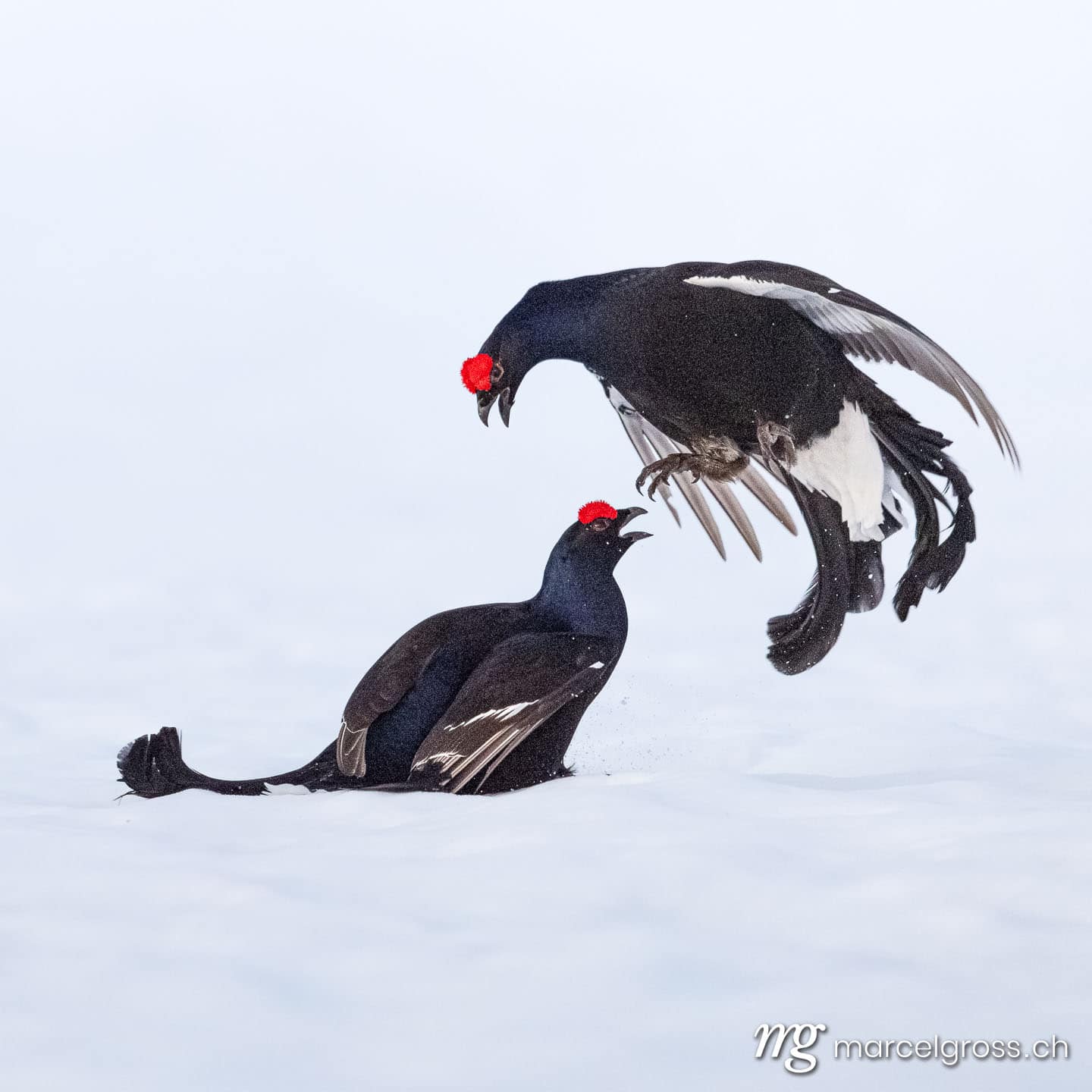
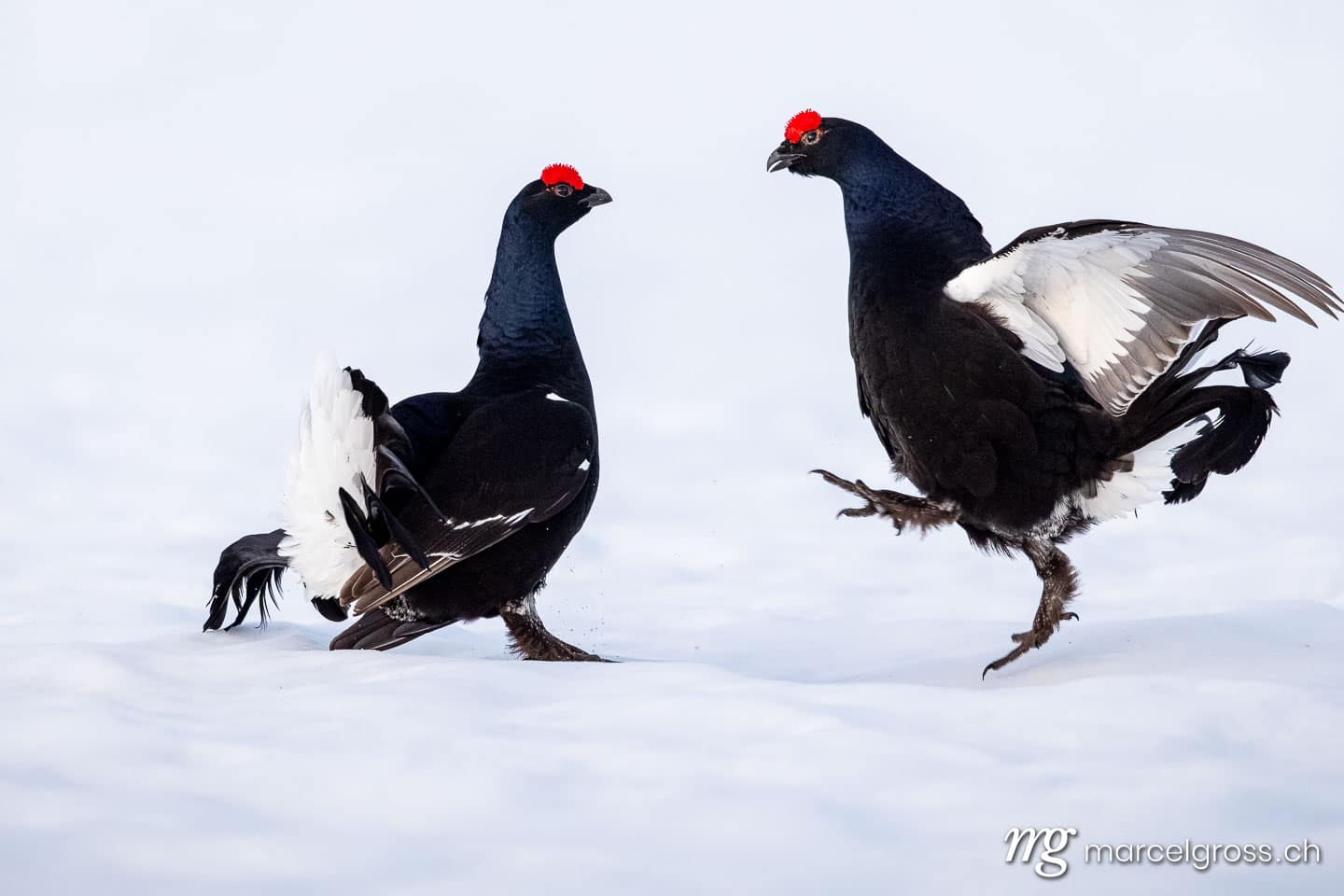
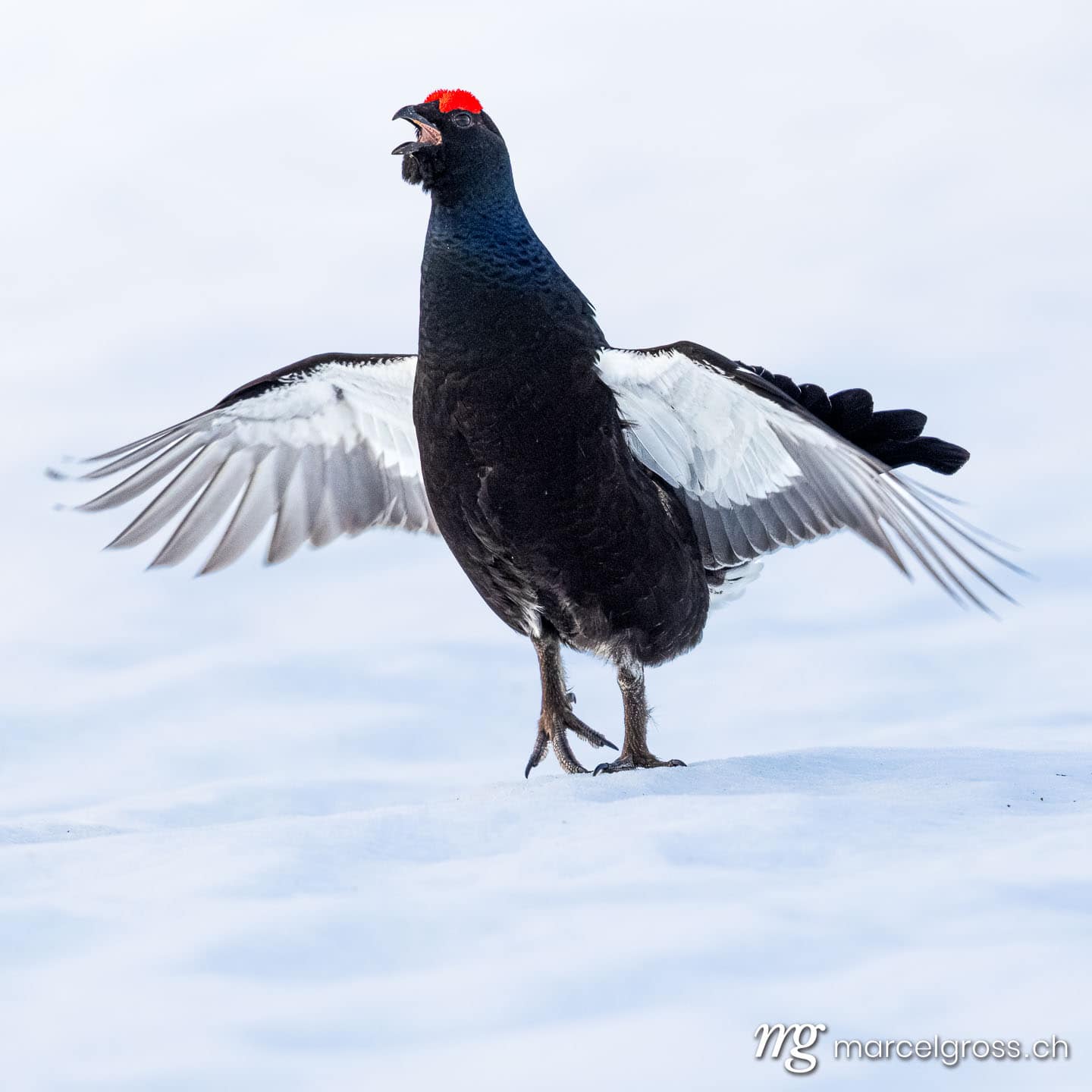
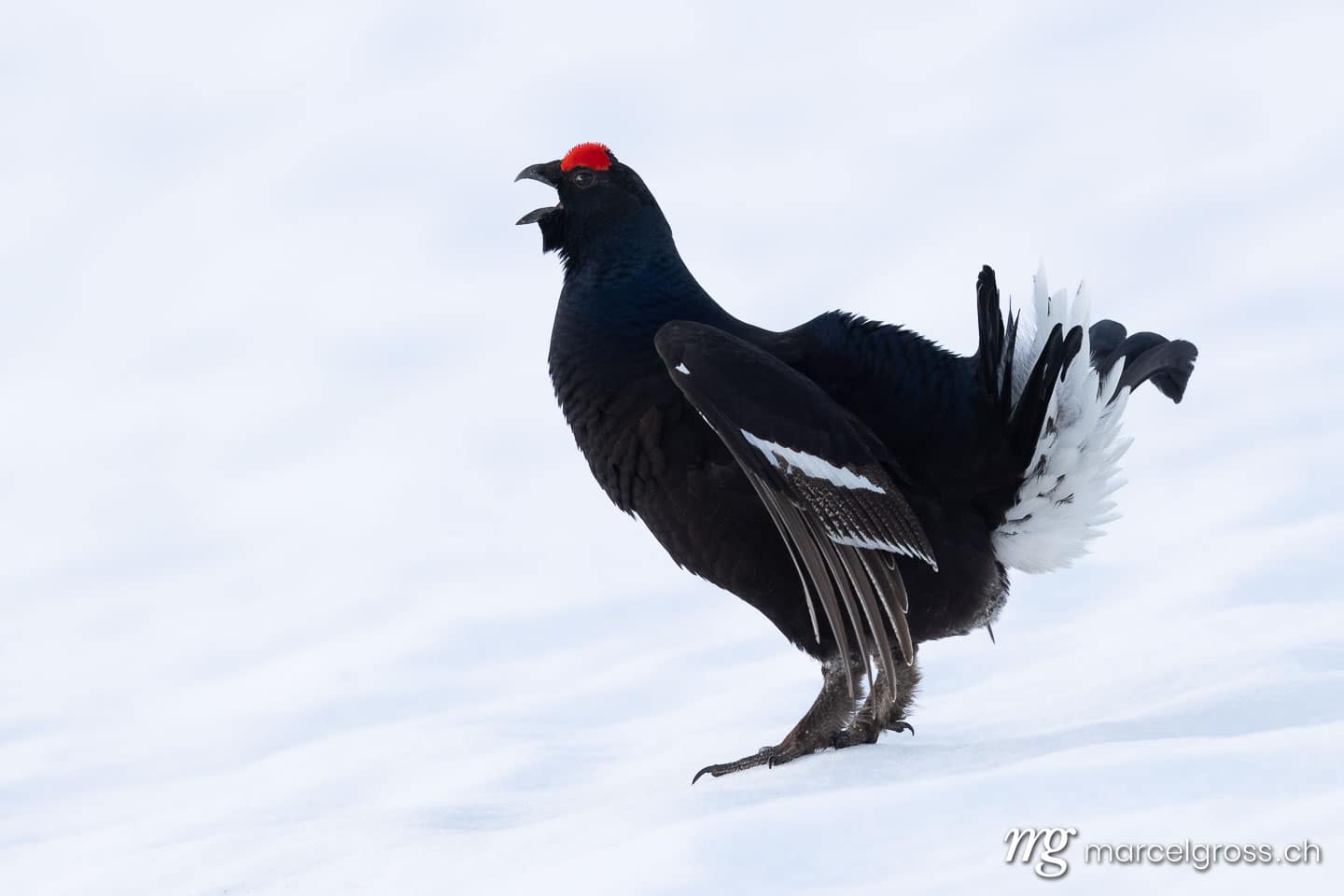
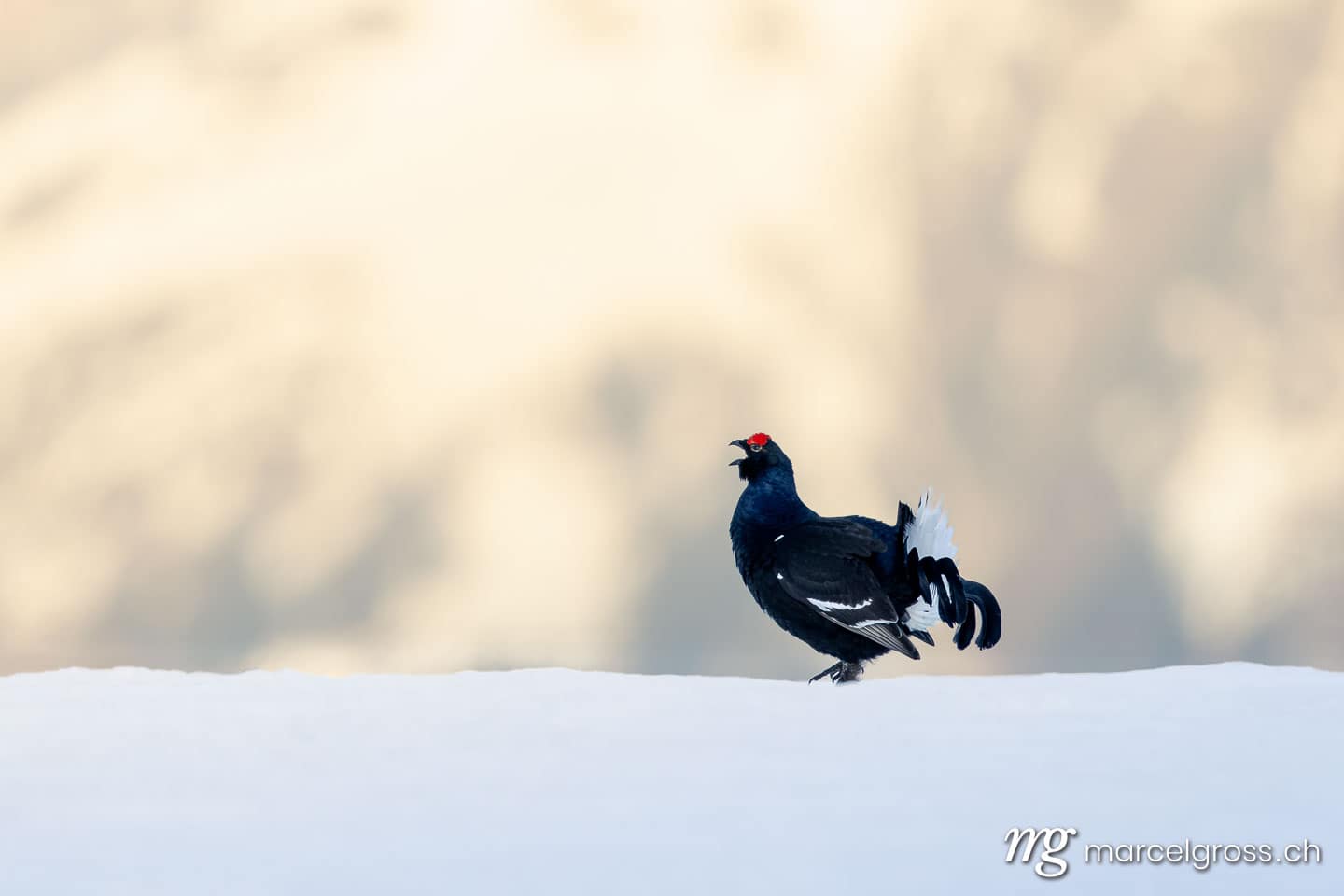
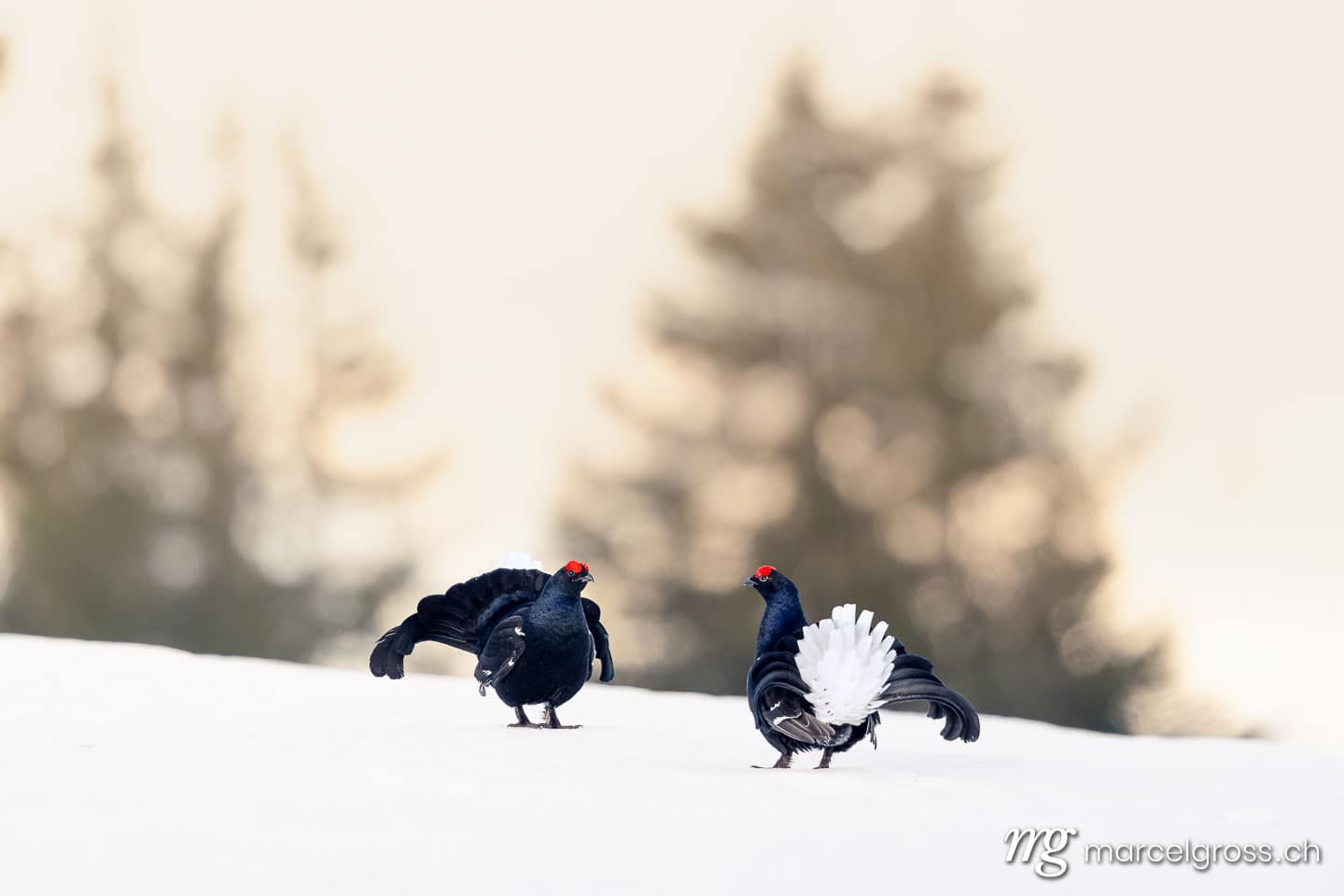
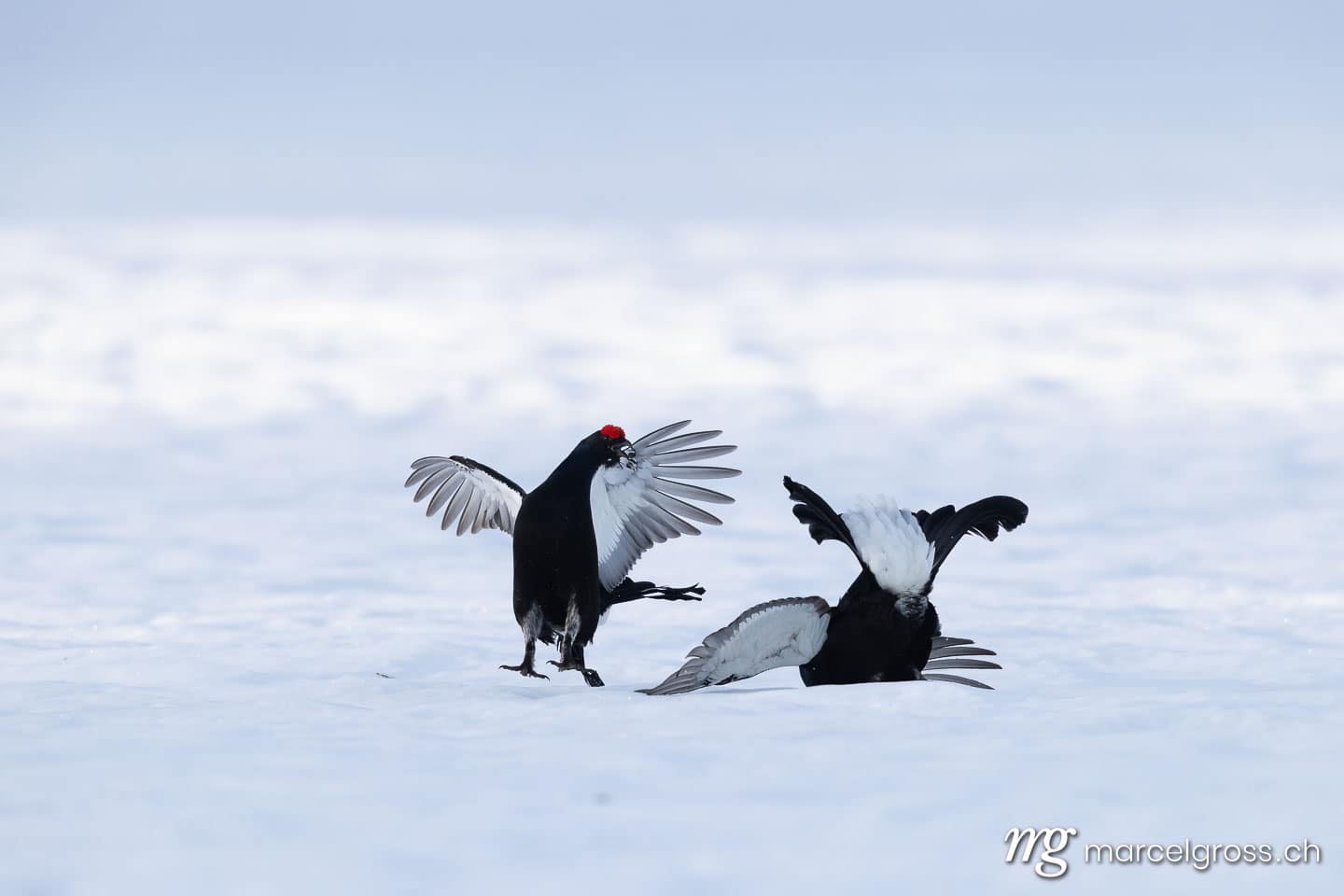
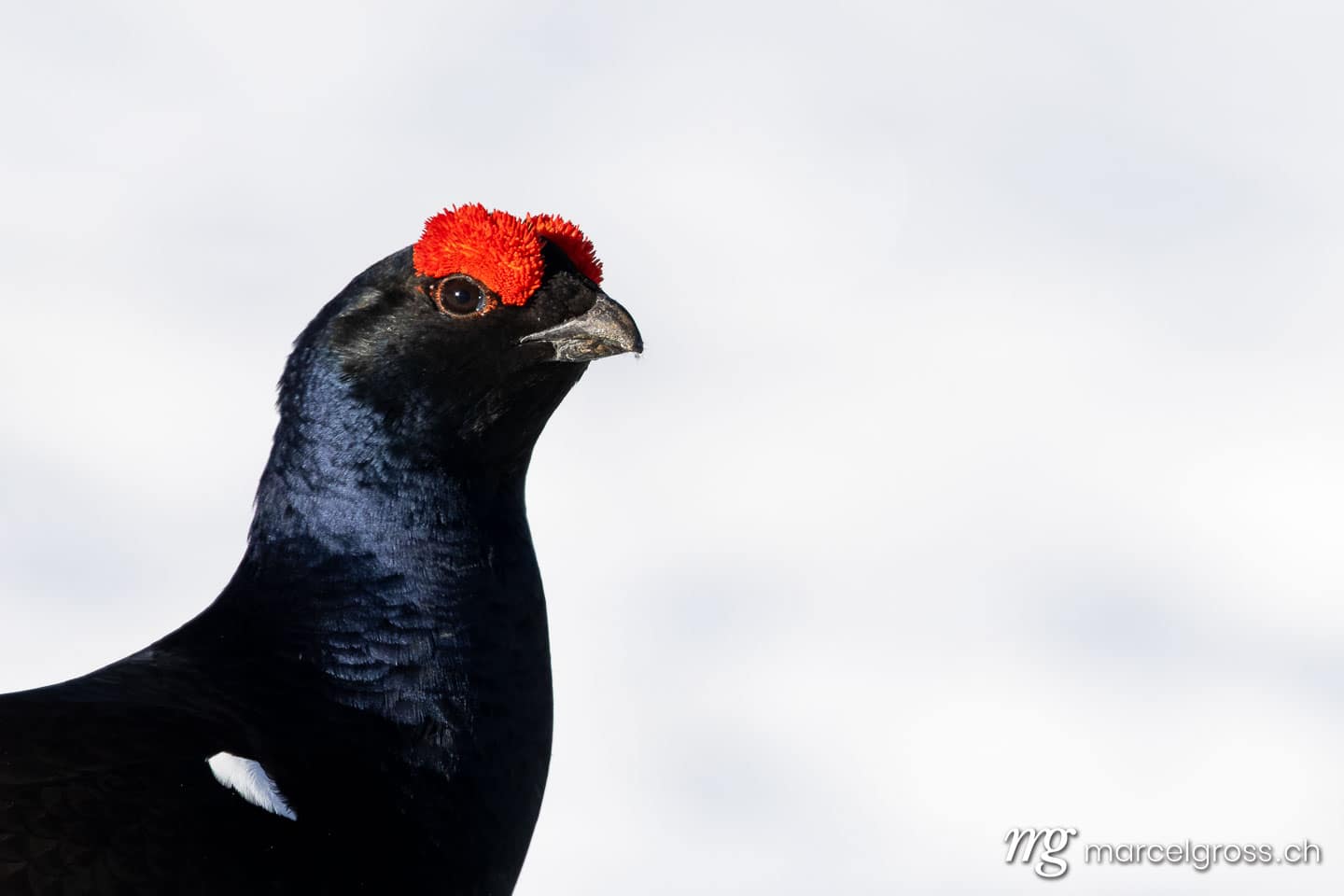
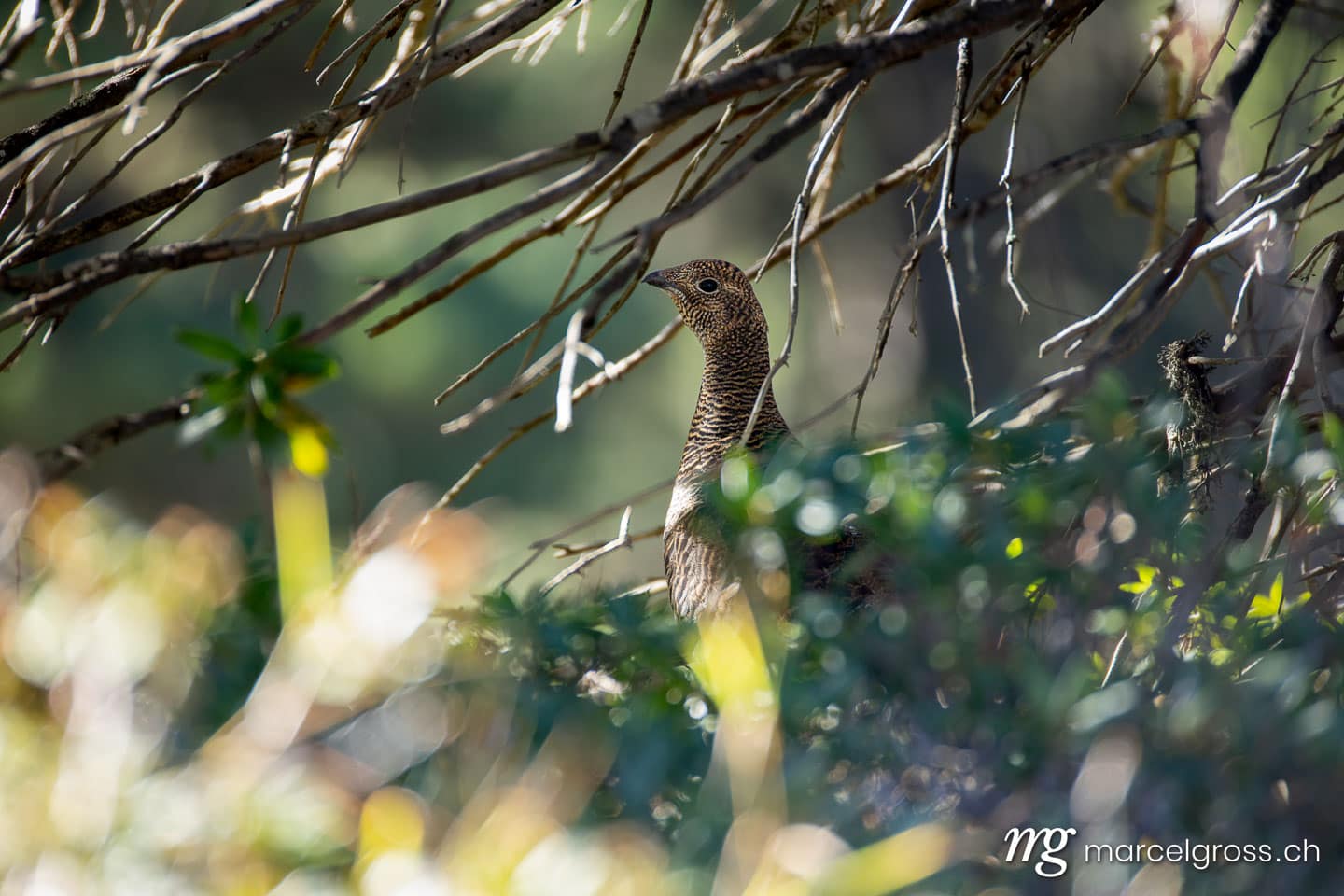
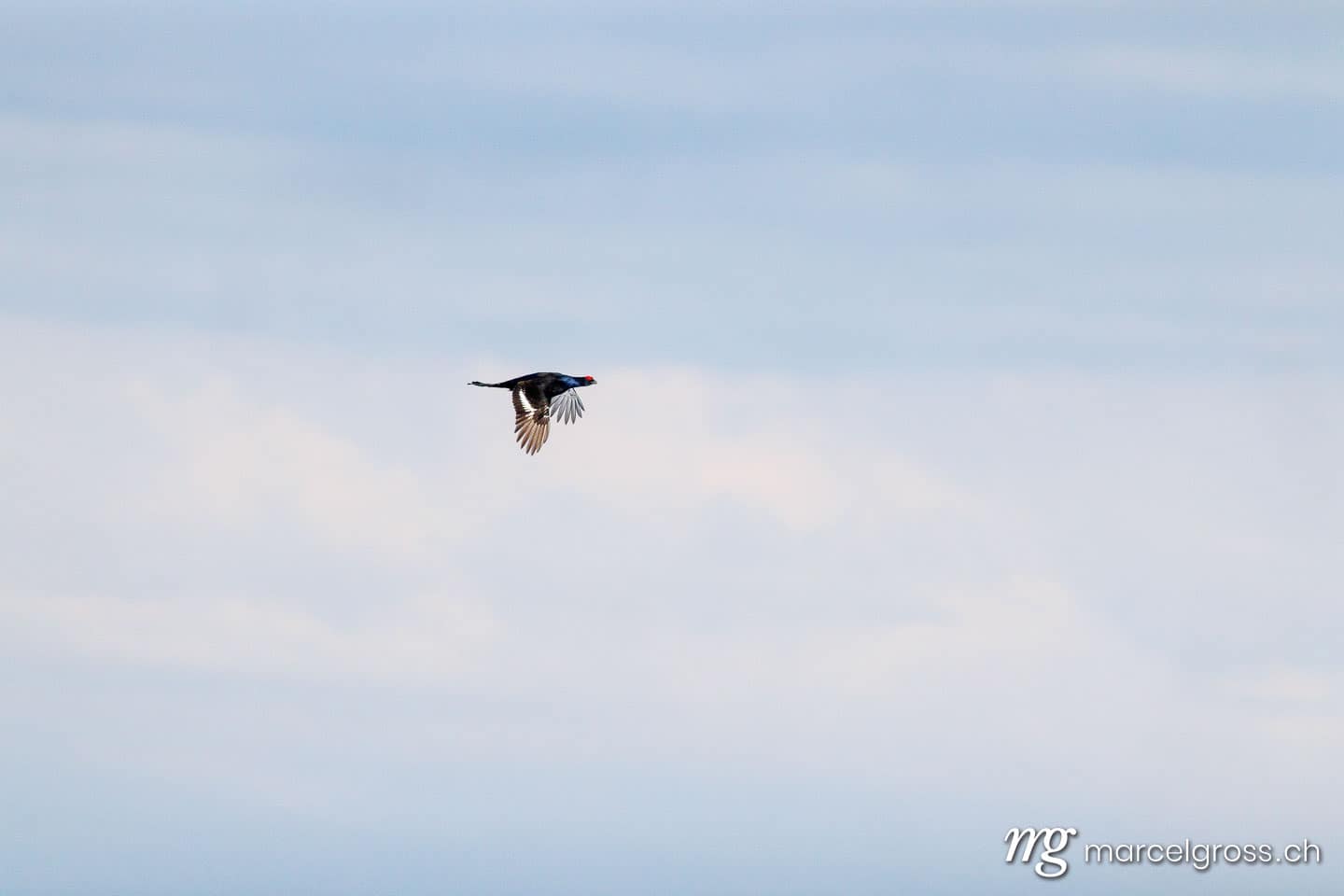
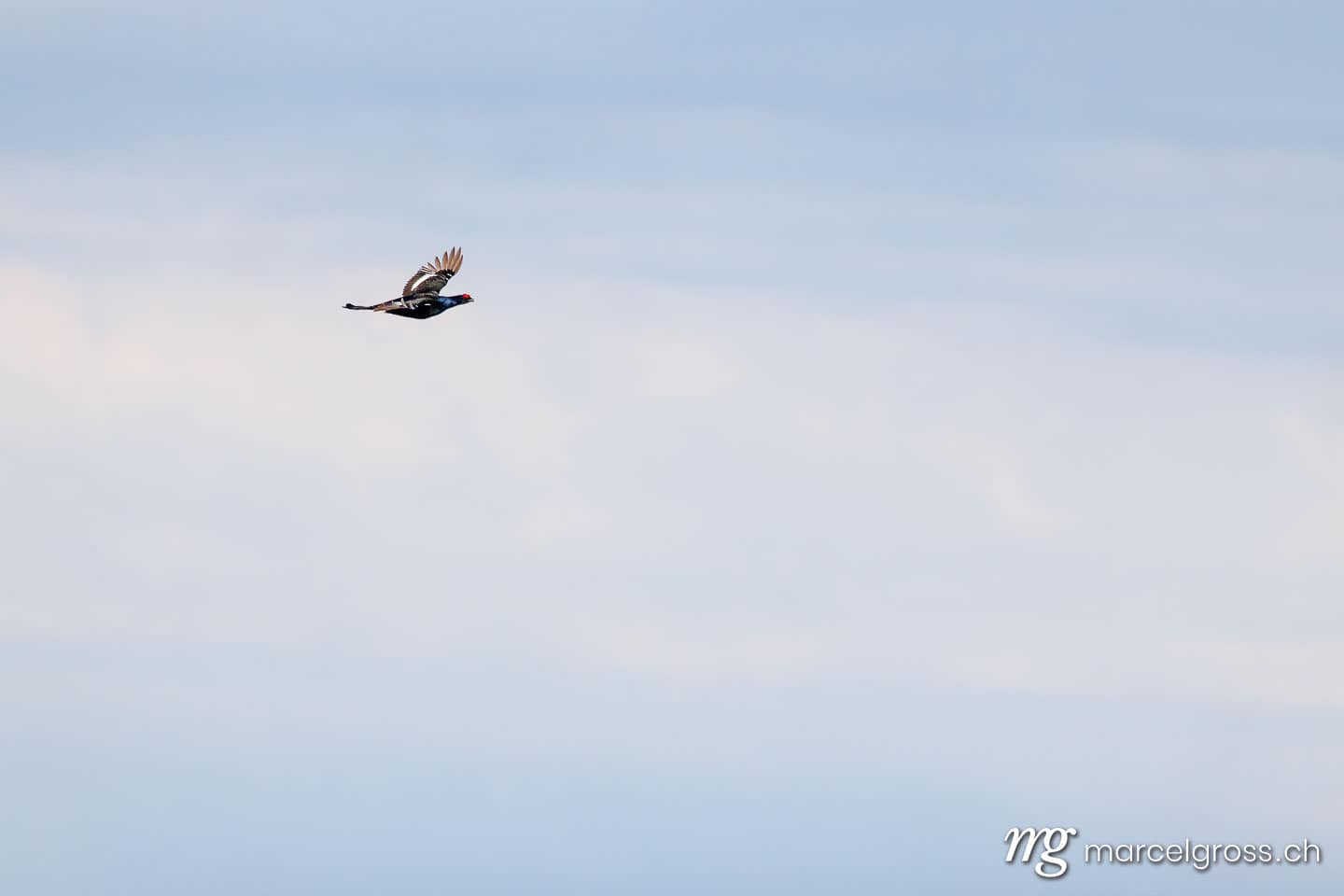
The black grouse (Lyrurus tetrix) is a shy inhabitant of the upper tree line and one of the most sought-after subjects for nature photographers in the Swiss Alps. The male has glossy blue-black plumage with lyre-shaped tail feathers and bright red tufts above the eyes, while the female is an inconspicuous grey-brown with barring. Anyone lucky enough to spot this elusive bird needs patience, quiet, and plenty of distance. On this page, you'll find my most beautiful photos. Black grouse pictures from the Swiss Alps, as a fine art print or wall art for your home.
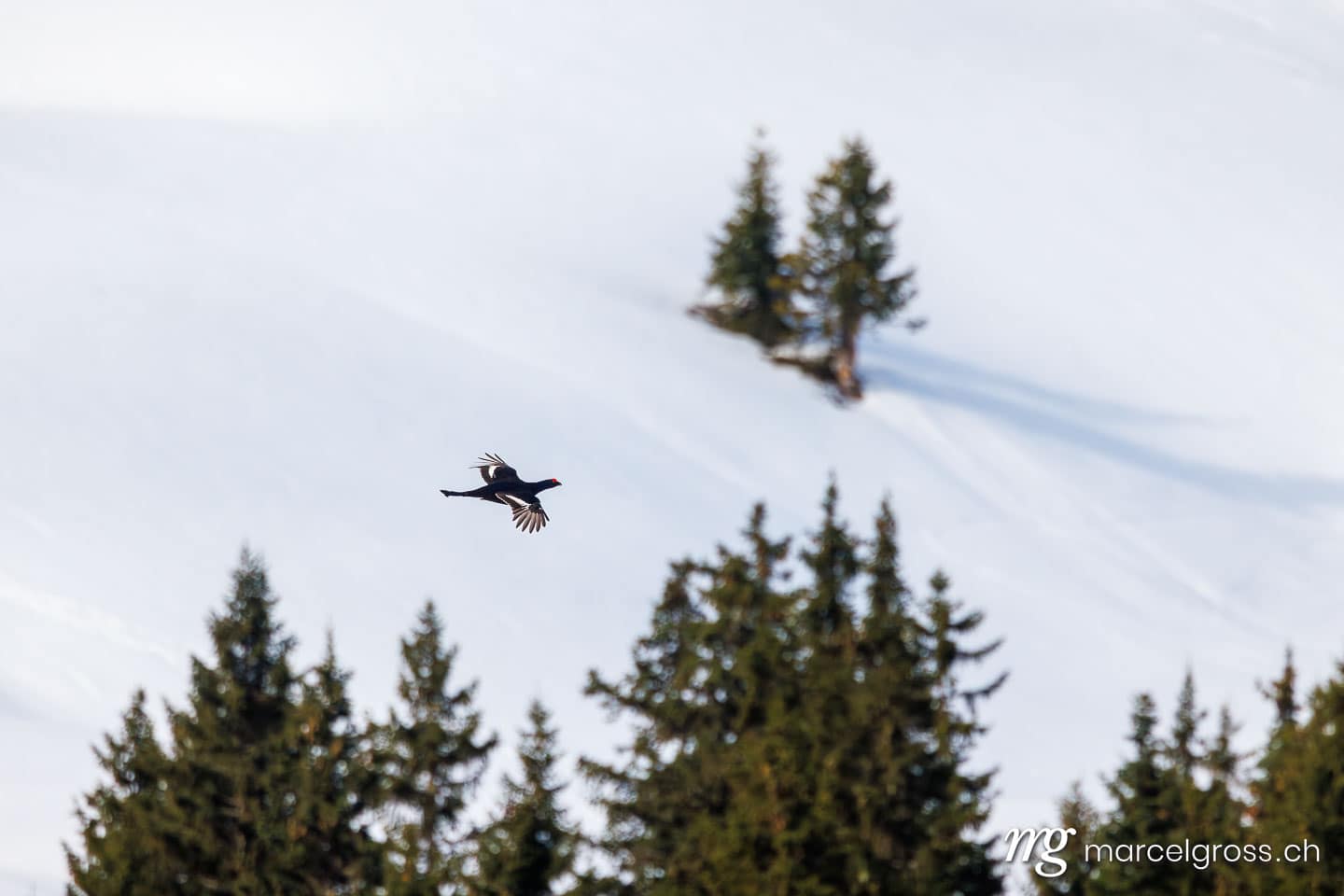
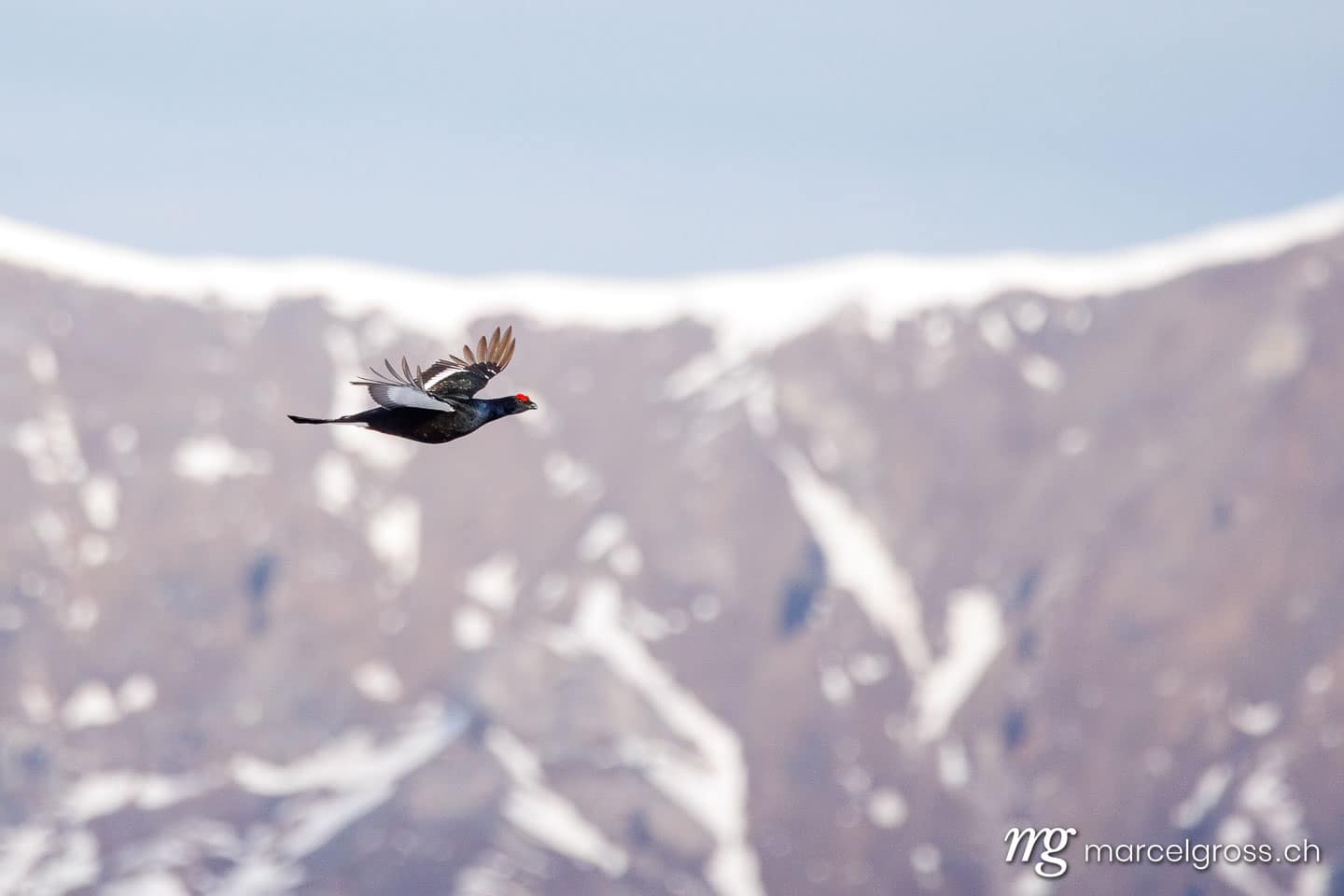
Black grouse pictures from the tree line – Black grouse in flight over the Bernese Alps
Footage of the grouse in flight is rare, as these birds are extremely shy and usually only fly short distances and low over the terrain. Between flights, they rely on their camouflage and their stillness on the ground. In winter, the birds remain in the high mountains and often survive the cold nights in snow burrows they dig themselves. The loose snow provides surprisingly good insulation, yet any disturbance costs them valuable energy that is needed for survival. The densely feathered legs, which give the grouse its name, offer additional protection against the cold.
Lyrurus tetrix – Rooster and Hen in Comparison
In this species, formerly known as Tetrao tetrix, the sexes look very different: the males weigh up to 1.5 kilograms and have a glossy blue-black coat, while the females weigh up to 1 kilogram and are gray-brown barred. This camouflage protects them when brooding on the ground. The conspicuous male needs his plumage to impress, the inconspicuous female for survival. A white wing bar and white undertail feathers make the male easily recognizable even in flight.
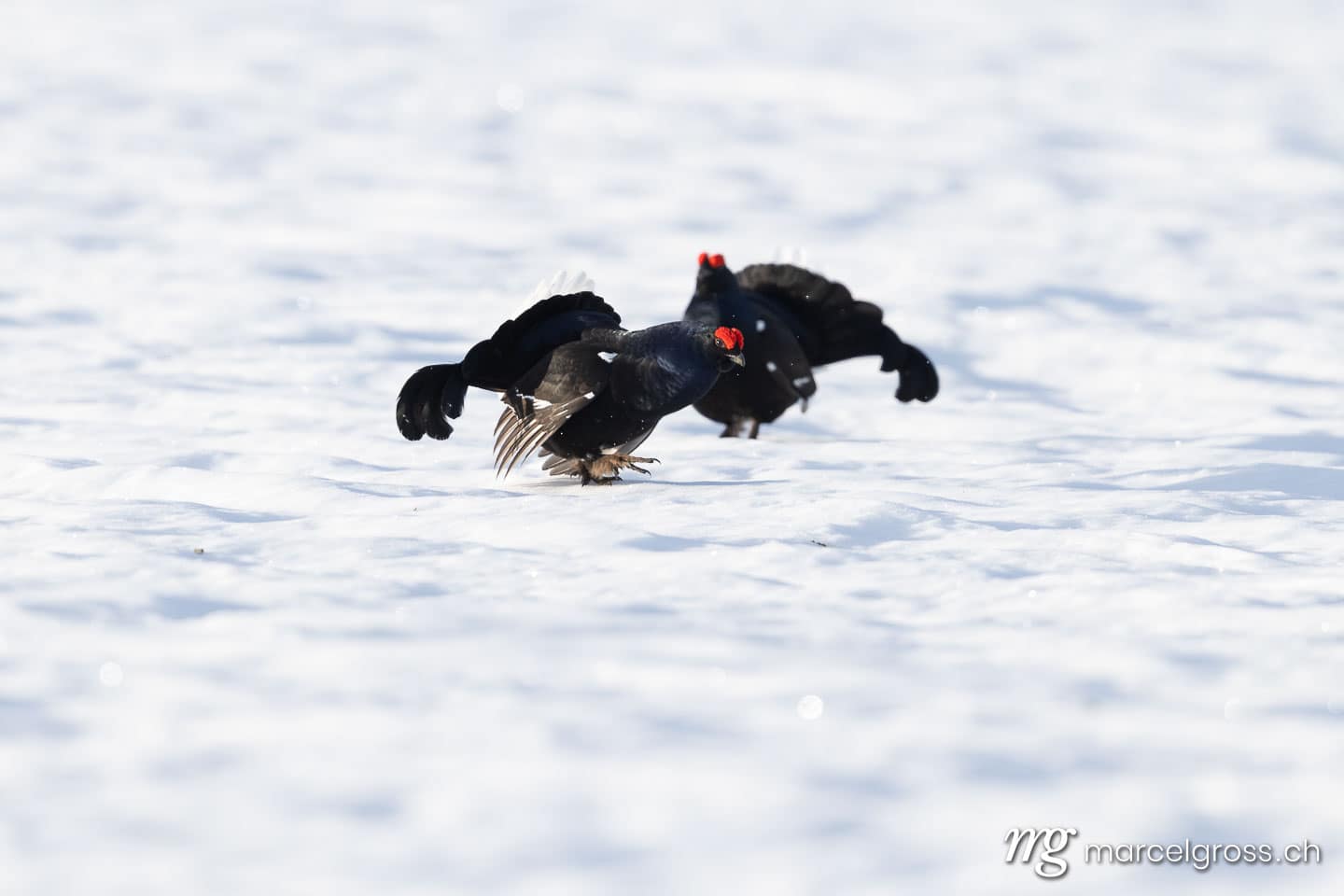
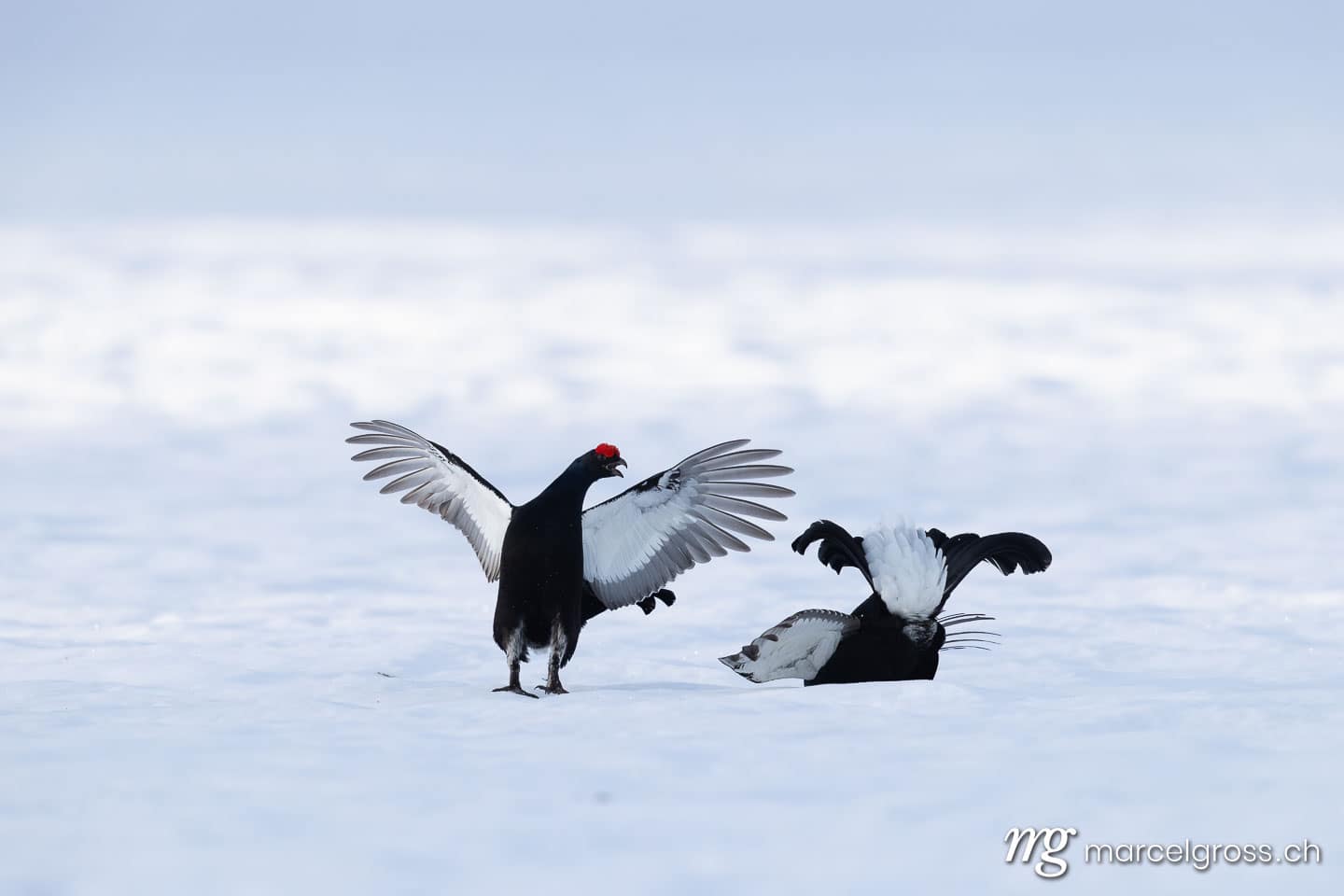
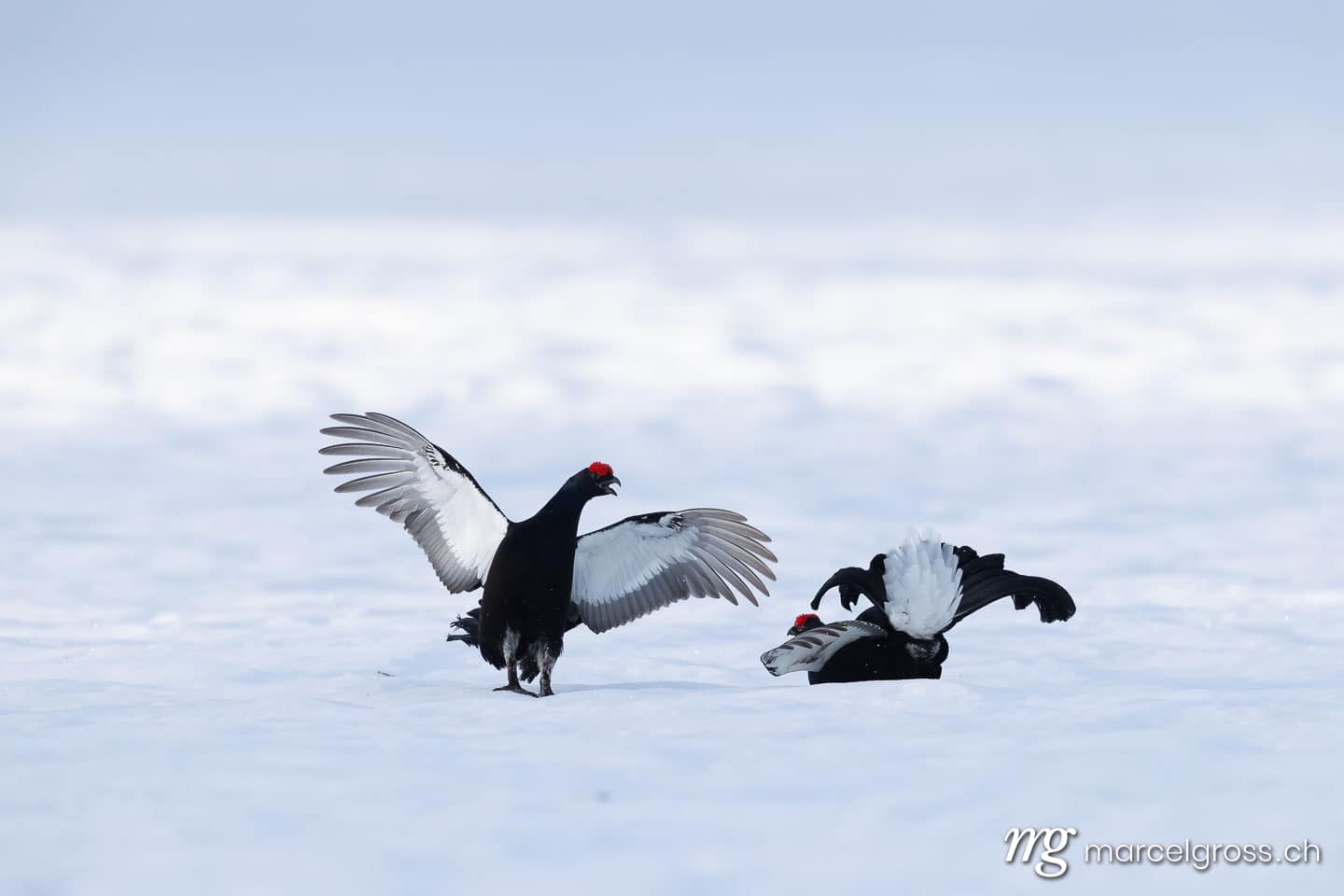
Courtship at dawn – rolling around on the mating ground
Courtship takes place in May and June. The males arrive at the lek long before sunrise, emitting their chugging and hissing calls. They spread their wings, lower their wings, and fluff up their physiques to impress the females. Several males display together in the same spot, which is often used for years. Lek sites are extremely sensitive to disturbance, so I do not disclose their locations.
Swiss Alps – Habitat at the tree line
Black grouse live at altitudes between approximately 1,500 and 2,300 meters at the upper tree line, where dwarf shrubs cover the ground. Typical habitats include bilberry bushes, juniper, and open larch forests, which provide both cover and food. This narrow strip of habitat between forest and rock has long been under pressure from recreational activities and climate change. As temperatures rise, the tree line shifts upwards, and the open habitat shrinks.
Hens and chicks – feeding and rearing
Black grouse eat leaves, buds, and berries, and in winter, primarily needles. The chicks feed on insects for the first few weeks and are precocial, following the hen just a few hours after hatching. The hen incubates the eggs alone on the ground for more than three weeks, well camouflaged in a hollow under a dwarf shrub, and then leads the chicks without the help of the male. After a few weeks, the young are already able to fly short distances.
Grouse under pressure – Interesting facts about the black grouse
Natural predators include hawks, eagles, and foxes. However, the greatest danger is disturbance by humans, especially in winter. Ski tours, snowshoe hikes, and unleashed dogs disturb the birds and force them to flee, depleting their already limited energy reserves. Wildlife sanctuaries and considerate behavior are therefore vital for the survival of this species. Those venturing into the mountains can help by staying on marked trails.
Black grouse photos as fine art prints – wall decorations from the mountains
All designs are available as high-quality prints. A fine art print brings a piece of rare Alpine wilderness into your home, whether as a tranquil motif in the hallway or as a large picture on the wall. The atmosphere at the treeline, with its soft colors, is particularly well-suited to living spaces intended to exude serenity. Browse our selection. Webshop or write to me if you are looking for an image in a specific format.
A notice: All photos are taken with respect for the animals. The habitats and mating grounds of this bird species are very sensitive to disturbance; please stay on the paths and avoid wildlife sanctuaries.