Badger pictures – Meles meles in the Emmental



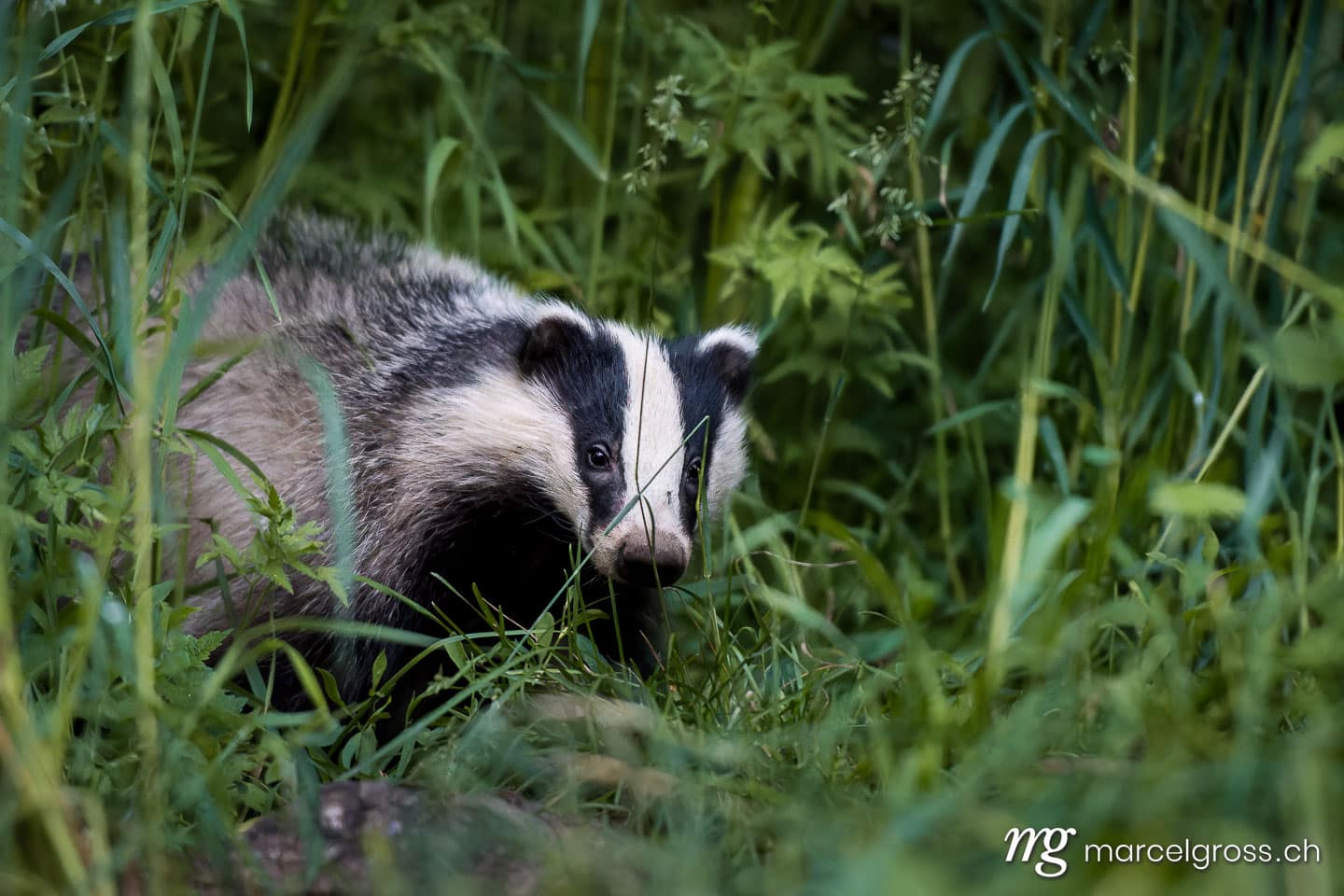
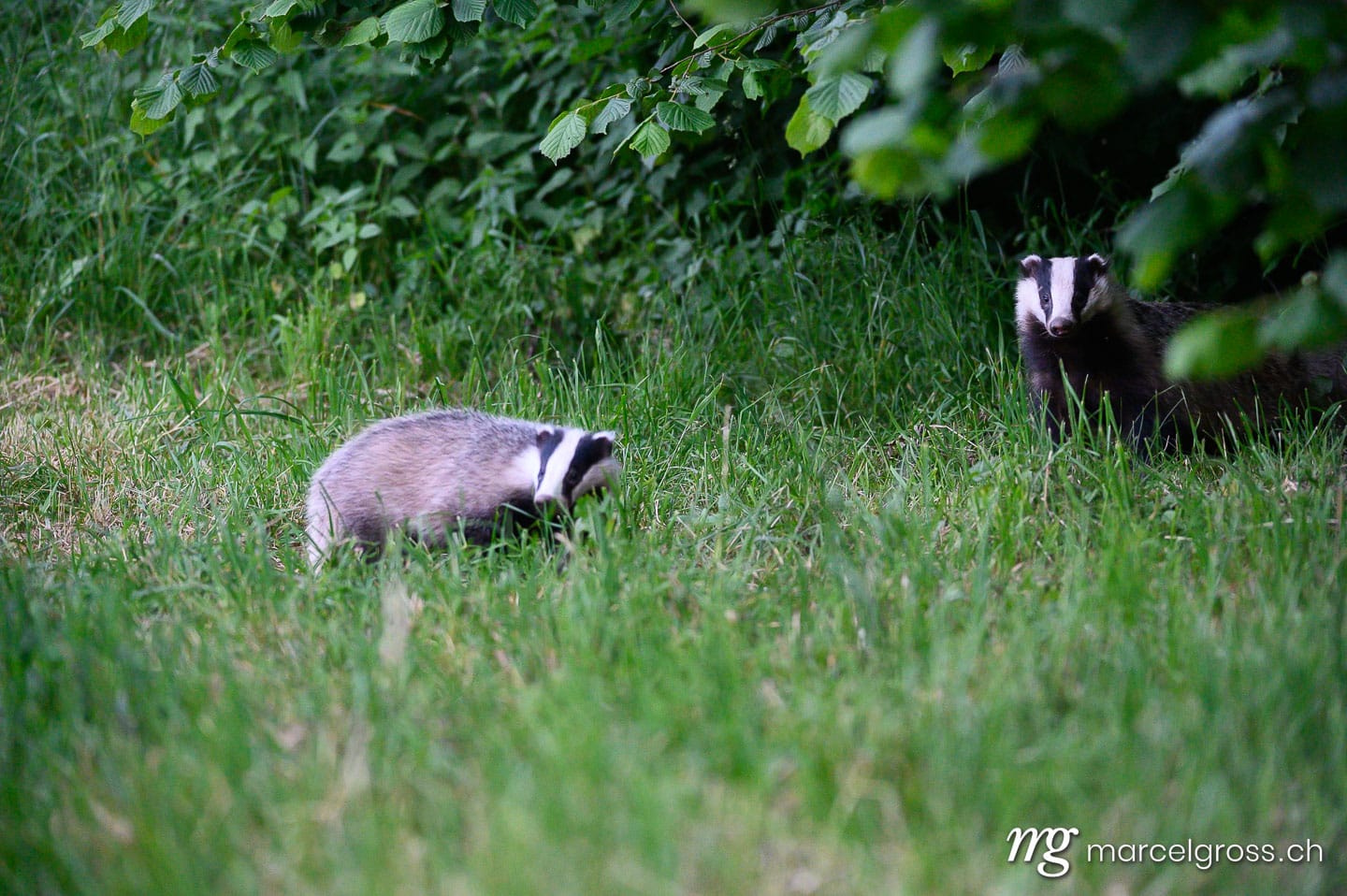


The badger (Meles meles), known in fables as "Master Grimbart," is a shy inhabitant of our forests and fields and is rarely seen. During the day, it sleeps in its underground burrow; only at dusk does it begin its rounds through meadows, hedgerows, and forest edges. As a nature photographer, encountering this member of the mustelid requires a great deal of patience, quiet, and distance. On this page, you will find my most beautiful photos. Badger Pictures from the Emmental region, as a fine art print or wall art for your home.
Badger pictures from the Emmental – hills, meadows and forest edges as habitat
The Emmental With its hills, meadows, and forest edges, this area provides an ideal habitat for this undemanding omnivore. During the day, it sleeps in its underground burrow and only becomes active at dusk. On its nightly forays, it primarily seeks earthworms, but also insects, snails, mice, fallen fruit, and berries. Its keen sense of smell guides it safely through the darkness, while its eyesight is rather weak. In fables, it is known as Grimbart; in nature, it is a silent creature that avoids disturbances. Those who wait patiently and keep the wind in their faces will be rewarded with quiet encounters.
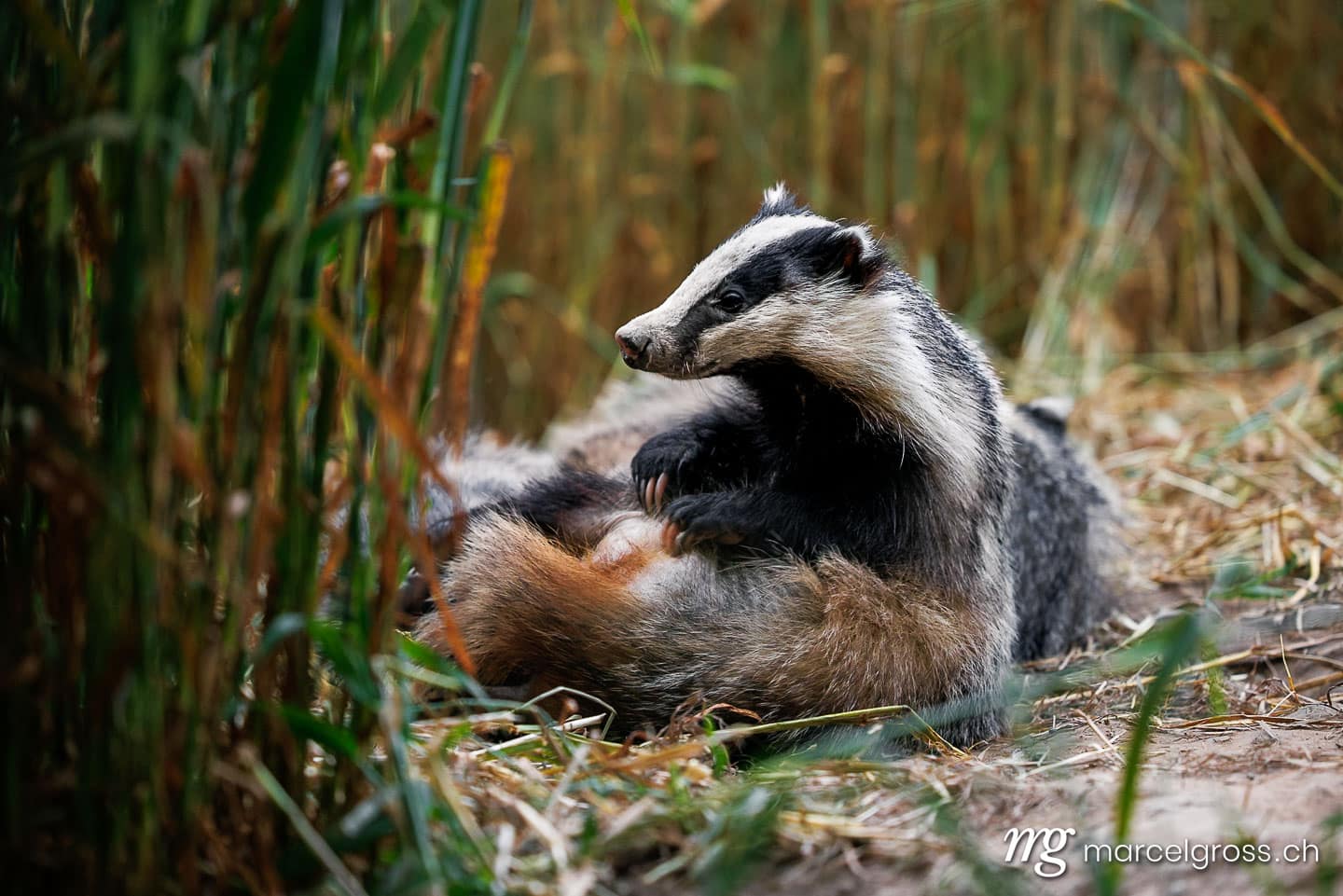
Badger family in a wheat field – clan bathed in golden evening light
Among the tall stalks, an entire family can sometimes be seen foraging for food. In the golden evening light, their striking black and white facial markings are particularly beautiful. This is likely a warning mark, signaling to predators that the formidable marten knows how to defend itself. The animals live in groups, known as clans, and share a common den. Cultivated land with fields, meadows, and hedgerows offers them a rich buffet, provided there is sufficient cover. Such scenes connect wilderness and cultivated land in a completely natural way.
Dachsburg under roots – large structures and quiet scenes in the forest
In the forest, the family lives in large burrows with many entrances, often used and expanded over generations. These structures are also called castles. With its powerful digging claws, the animal excavates branching tunnels and chambers, which it lines with dry leaves and grass. Remarkably clean, it regularly changes the bedding and establishes its latrines outside the burrow. The entrances are recognizable by the large mounds of earth in front of them and the well-worn paths leading to the feeding areas. Here, the family can be seen sniffing, digging, and playing among the roots and leaves. These are tranquil scenes that require patience and a respectful distance.
Puppies at the construction site – offspring on their first outings
The young are usually born in the burrow in February or March and don't appear outside for the first time until spring. At birth, they are blind and very helpless, and are nursed by their mother for the first few weeks. Young animals are curious, playful, and not yet very shy; they wrestle with each other and explore the area around the entrance. Over time, they learn from the adults where to find food and what dangers lurk. These photos show them on their first excursions around the burrow.
Meles meles – Interesting facts about Master Grimbart
This predator belongs to the weasel family and is easily recognizable by its black and white striped face. When fully grown, it reaches a length of approximately 70 to 90 centimeters and weighs between seven and twelve kilograms, depending on the season. It weighs considerably more in autumn than in spring because it builds up fat reserves for hibernation. As an omnivore, it feeds on worms, insects, fruits, and small mammals, which gives it ample space in cultivated landscapes. It has its own name in the animal fable of Reynard the Fox, a name that is still known today. With its powerful digging claws, it constructs extensive burrows in which several members of a family live together.
Badger photos as fine art prints – wall decorations from the Emmental region
All designs are available as high-quality prints. Whether as a bold statement piece or a tranquil motif in the hallway, a fine art print brings a touch of Emmental nature into your home. The warm evening light scenes and serene forest scenes are particularly well-suited for living rooms, offices, or stairwells. Browse our selection. Webshop or write to me if you are looking for a specific format.
A notice: All photos and videos are taken with respect for the animals. Burrows are sensitive refuges; please always keep a safe distance and do not disturb the animals, especially at dusk and during the breeding season.